You Planted Too Much Zucchini Because You Planned in Plants, Not Meals
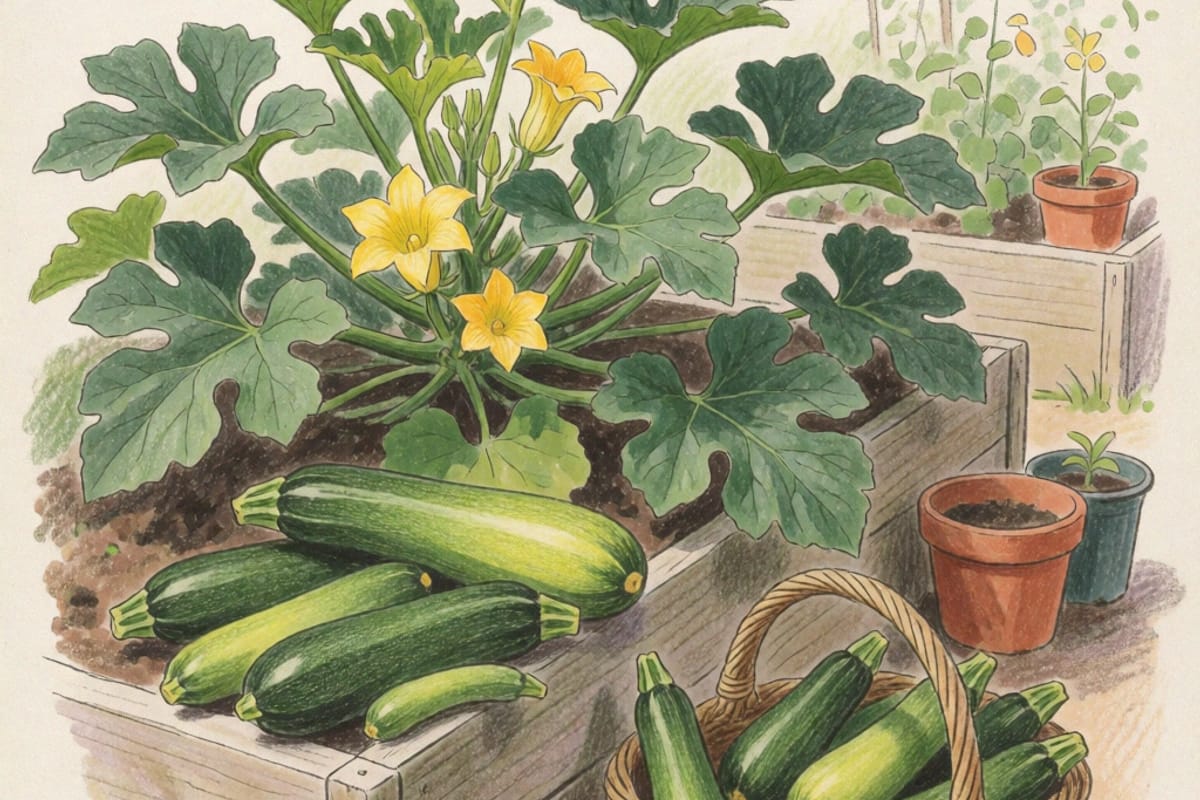
Every August, someone leaves a carrier bag of zucchini on a neighbour’s porch and drives off before they can be caught. Some of those zucchini are the size of a forearm. Everyone laughs about it, as if it were weather, something that just happens to gardens in summer.
It doesn’t just happen. It was decided in January, at a kitchen table, by someone looking at a seed packet that held twenty-odd seeds and a bed with room for “a few” squash. That person was planning in plants. They asked how many zucchini plants they could fit, and the answer was always going to be more than they could eat.
The question that fixes it is how many times a week your household will actually eat zucchini, and how much of it each time. Start there and the number of plants falls out at the end, and it’s almost always smaller.
Why we count plants
Plants are what the whole system sells you. Nurseries sell seedlings in packs. Seed packets give spacing in inches and a number of days to harvest, and say nothing about how much food arrives once it starts. Garden plans are drawn as grids of circles. So the natural unit, when you sit down in winter with the catalogue, is the plant.
And plants are cheap and hopeful. You sow four zucchini seeds “in case some don’t come up”. All four come up. You can’t bring yourself to pull a healthy seedling, so they all go in, and in July each of them starts producing on the same week.
I did this for years. I’d grow three or four zucchini plants and twelve onions and wonder why I was giving away squash in August and buying onions in October. It took me an embarrassingly long time to notice that the plan made no reference to anything I cooked.
What a meal-first plan looks like
Before you open a seed catalogue this winter, write down what you buy most often in the produce aisle from June to October. A grocery receipt or two will remind you. For each item, write roughly how often you eat it and how much goes into a typical meal.
Then, for the crops you can grow, ask how many weeks of the year the plant produces, and how much one healthy plant gives in that time. That last number is the soft one. It depends on your season, your soil, the variety, and how often you pick. Your own records are better than any chart for it, which is why it’s worth keeping them.
Do zucchini this way and the answer most households reach is one plant. Maybe two, if you eat it most days or you want a spare in case squash vine borers or mildew take the first. A healthy plant in full summer swing can give you more than a couple of fruits a week if you pick them small, and picking small keeps it going. One plant in its peak weeks keeps most kitchens busy. If you’ve ever grown four, you already know.
Zucchini only needs one plant to set fruit, too. Each plant carries both male and female flowers. A plant that’s flowering but not fruiting in early summer is usually just waiting for its female flowers, as this post on zucchini flowering explains, and a second plant won’t fix that.
The same mistake in the other direction
Planning in plants causes shortages too, and they’re harder to spot, because nobody leaves a bag of missing onions on your porch.
Onions and garlic are the obvious ones. Most kitchens go through an onion a day, or close to it, and plenty of gardens grow a dozen. Paste tomatoes are another. If you want to make enough sauce to see you through the winter, you need a lot more of them than the three plants that felt generous when you were filling a bed plan in January.
And there’s timing, which is the part the plant count hides completely. A household that eats salad four times a week needs a little lettuce every week from spring to fall. Thirty lettuce plants sown on one Saturday give you a fortnight of more salad than you can eat, and then they all bolt at once. Ask the meal question and the answer is a short row every two or three weeks.
Doing the sums once, then trusting your own numbers
The first year you plan this way, the yield figures are guesses, and that’s fine. The sums will still be closer than counting plants, because you’re at least asking how much your household eats.
The second year is where it gets good. If you weighed or counted what came off each crop last summer, you know what one zucchini plant did in your garden, in your soil, with your picking habits. Garden Planner Pro keeps a harvest log and a running savings total for exactly this, so the number you plan from next winter is your own rather than a guess.
Then go back to the bed plan and give the space where the extra three zucchini would have gone to something your kitchen runs out of. A 4x8 bed holds fewer plants than most people think, and one zucchini plant can easily spread across a square metre or more on its own. Every square foot you give back is a square foot of onions, or another row of beans, or a second sowing of lettuce in May.
So when the seed packet in January has twenty-five seeds in it and the bed has room, sow two. Keep the stronger seedling, and give the other one to someone who hasn’t read this.