8 Vegetables You Should Never Start Indoors
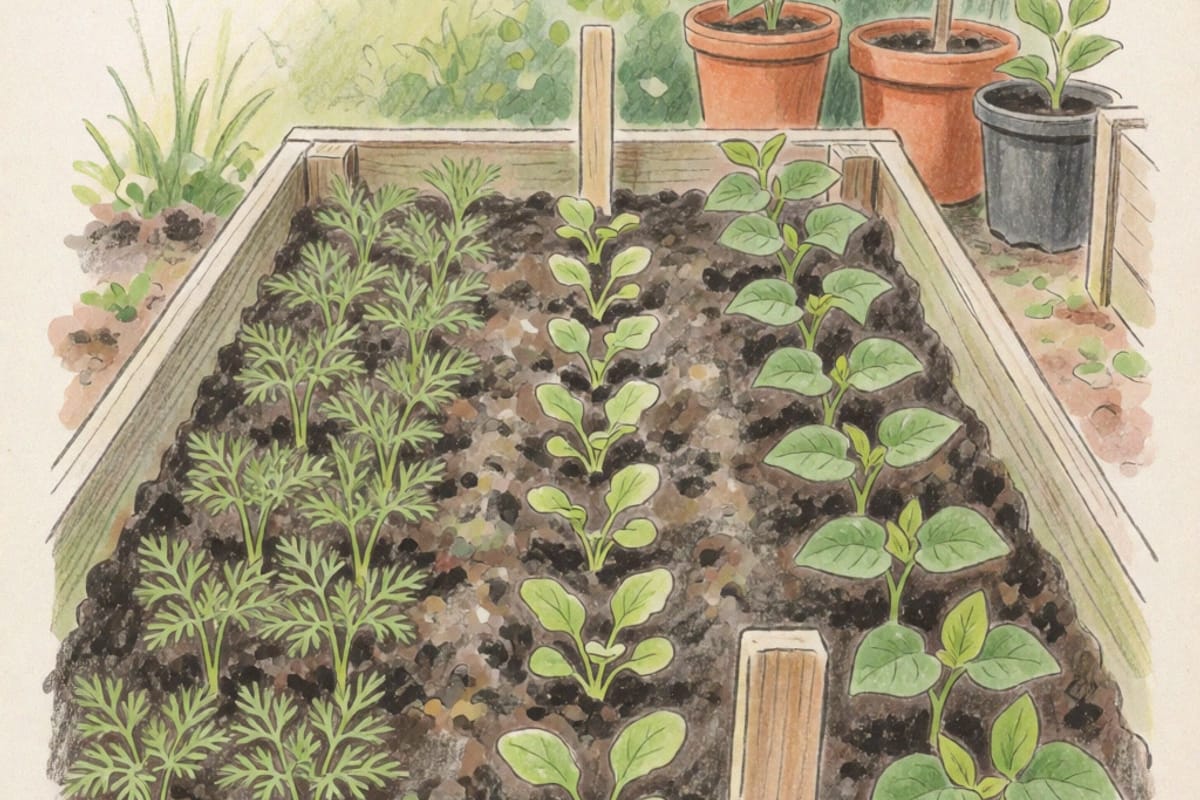
Somewhere around February, a new gardener with a shelf, a grow light and a stack of seed packets starts every packet they own in a tray. I did. The tomatoes and peppers loved it. The carrots came out of their cells as little orange corkscrews, and the beans sat on the patio in shock for two weeks while the ones a neighbour sowed straight into the ground overtook them.
Some vegetables don’t want a head start. Either their roots hate being moved, or they grow so fast from seed that a transplant gains you nothing, or both. I’m writing this in November on purpose. By the time the seed catalogues arrive in January and you’re working out how many trays to buy, it helps to know which packets never need to go near them.
Each one below gets sown straight into the garden. Where there’s an honest exception, I’ve said so.
The eight
1. Carrots
A carrot is one long taproot, and the root is the crop. Grow it in a cell and the tip hits the bottom within a couple of weeks and starts to bend. Move it and the damaged tip tends to fork, stall or twist. You can transplant a carrot seedling and get something edible, but it’ll rarely be the straight root you sowed it for.
Sow thinly where they’ll grow, a couple of weeks or so before your last frost, into soil you’ve loosened well. The hard part is that carrot seed is slow and the surface has to stay damp until it comes up, which can take two or three weeks in cool weather. The carrot guide has more on keeping that seedbed wet.
2. Parsnips
Everything true of carrots goes double for parsnips. The root is longer, the season is longer, and the seed is even slower to come up. A transplanted parsnip is a stunted, forked parsnip.
Buy fresh seed each year, because parsnip seed loses its viability fast, and sow it in spring once the soil is workable. Some people sow a few radishes in the same row to mark it, since the radishes are up in days and the parsnips can take weeks.
3. Radishes
Spring radishes go from seed to harvest in around a month. A radish started indoors spends a chunk of that month in a cell, then sulks after it’s moved, and the root often comes out misshapen or the plant bolts instead of swelling.
Sow them outside from about a month before your last frost, a short row at a time every week or two, and you’ll have a steady trickle rather than one glut. Radishes are also the most forgiving seed there is for someone who has never sown anything before.
4. Turnips
Turnips are radishes with a little more patience. The quick salad types are ready in five or six weeks, and like any root crop they swell best where they germinated.
Sow them in early spring once the soil can be worked, or in late summer for a fall crop, which is when they’re sweetest. The honest exception: some growers, mostly in the UK, sow turnips a few seeds to a module and plant the clump out whole, roots undisturbed. It works. It’s also extra work for a crop that comes up happily in the bed.
5. Rutabagas
Rutabagas (swedes, if you’re in the UK) are slower and bigger than turnips and need a long, cool run to finish. In most US gardens they’re sown in early summer so they mature as the weather cools, because frost sweetens them. In cooler summers they go in a little earlier.
None of that timing lines up with an indoor seed tray in March. The same module exception applies as for turnips, and some people use it to get seedlings past flea beetles. For a first-timer, sowing in the row is easier.
6. Beans
Bush and pole beans germinate fast in warm soil, usually within a week to ten days, and their roots really don’t like being disturbed. A transplanted bean tends to stall while a direct-sown one, planted the same day, races past it. The bean guide says the same thing more bluntly.
The catch is that beans need warmth. Sow them after your last frost, once the soil has warmed up, because bean seed rots in cold wet ground. The exception is a garden where slugs or birds clear every row as it comes up. Sowing into biodegradable pots a couple of weeks ahead and planting pot and all is a fair compromise there.
7. Cut-and-come-again salad
A mix of baby lettuces, mustards, arugula and the like is meant to be sown thickly in a band and cut with scissors when the leaves are a few inches tall, then cut again as it regrows. You’d be transplanting hundreds of seedlings to recreate something you could have sprinkled down in thirty seconds.
Sow a short band every couple of weeks from early spring. Head lettuce is a different story, by the way. Starting lettuce for full heads in cells and planting them out is perfectly sensible.
8. Peas
Peas are the one on this list I’d argue about with myself. Direct-sown peas are easy: they go in four to six weeks before your last frost, and they come up in cold soil (slowly). For most people in most springs, that’s all there is to it, and it’s why they made the list.
But early peas in cold, wet soil can rot, and mice will dig up a fresh row one seed at a time. The old fix is sowing them in a length of rain gutter under cover and sliding the whole strip into a trench when they’re a few inches tall, which the pea guide describes. That’s a real technique and it works. It’s also a clever way of avoiding a disturbed root, and loose peas in a seed tray still don’t move well.
What the eight have in common
Look down the list and there are two reasons, sometimes both. The root is the harvest, or the taproot goes deep fast, so moving it costs you the crop. Or the plant is quick enough from seed that a few weeks indoors buys you nothing you couldn’t get by sowing the row a week sooner.
The trays are for the things that need the time: tomatoes, peppers, eggplants, onions from seed, and the brassicas. Every crop on this list gets dated from your last frost instead. Garden Planner Pro’s planting calendar counts its dates from your own local frost dates, so you aren’t doing that arithmetic by hand for every packet in the box.
Whatever you buy in January, buy fewer cells than you think you need. The packets that stay out of them will do fine.