Why Are My Seedlings Falling Over? If the Stem Is Pinched at the Soil, It's Damping Off
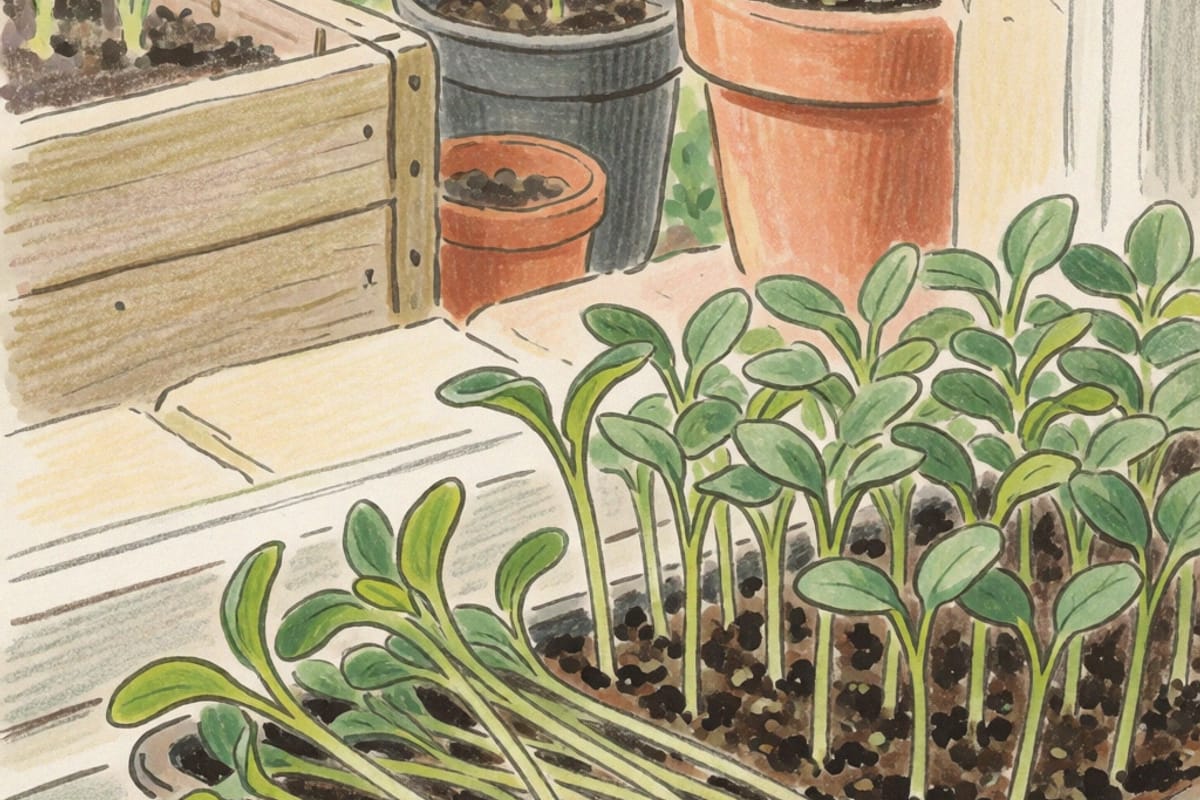
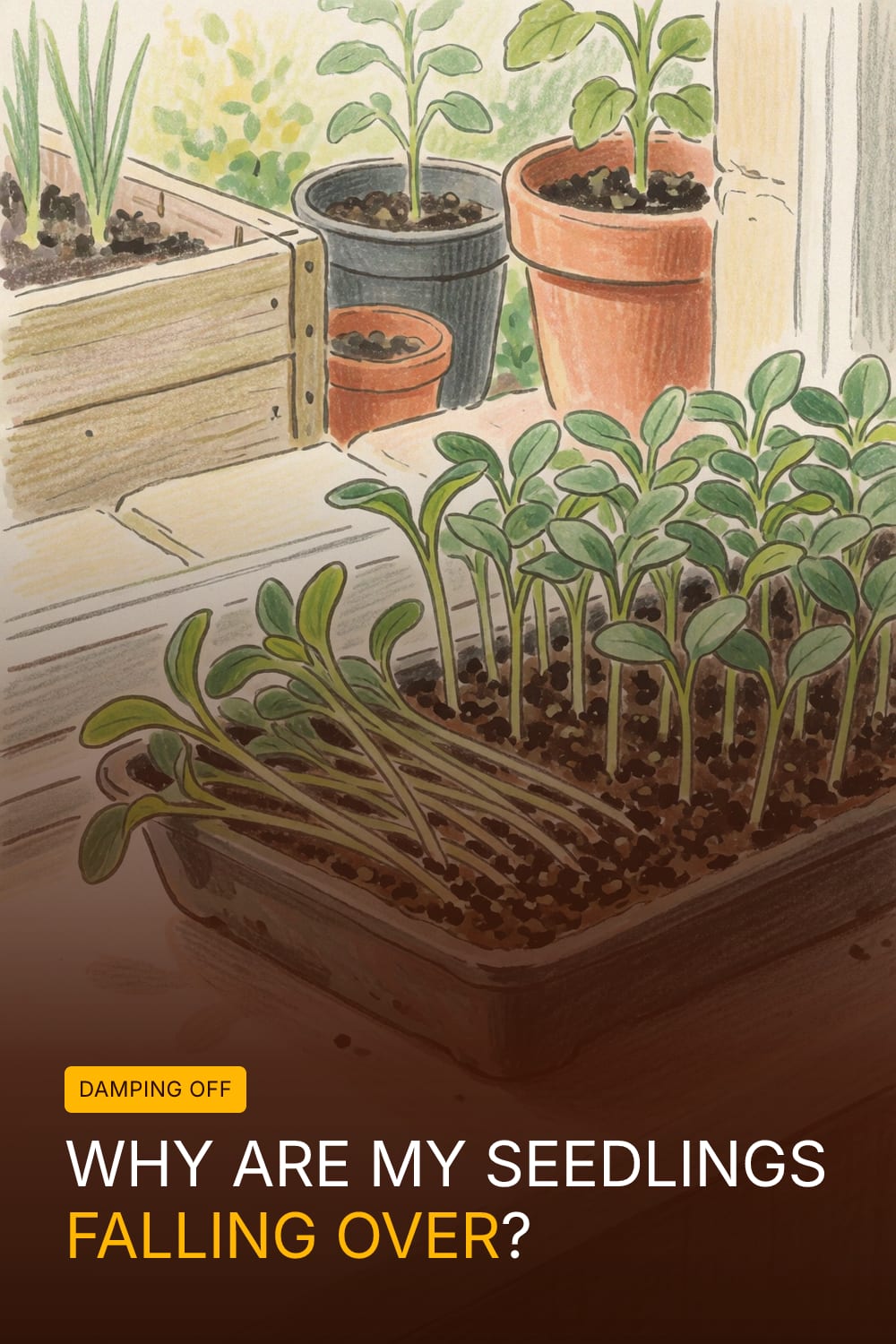
Yesterday the tray looked perfect. This morning a patch of seedlings in one corner is lying flat on the mix as if something had stepped on them. They’re still green. The leaves look fine. But when you lift one, the stem just above the soil has gone thin and dark and soft, like a wet thread, and the seedling can’t hold itself up on it.
That is damping off, and I’m sorry, because those ones are gone. It’s caused by a handful of soil-dwelling fungi and water moulds that attack the stem right at the soil line, where it’s wettest. Nothing brings a seedling back once the stem has collapsed. What you can do is stop it walking across the rest of the tray, and set up the next sowing so it doesn’t happen again.
I’m writing this in October on purpose. If you’re going to start onions or peppers indoors in January or February, this is the problem most likely to cost you a week or two of growing time, and it’s much easier to fix with clean trays and the right habits before the first seed goes in than after.
Is it damping off, or something else?
Three things make seedlings fall over, and they’re easy to mix up at seven in the morning.
Damping off pinches the stem. Look at the stem right where it meets the mix. If it’s narrower there than higher up, darker, and looks water-soaked or has gone brown and shrivelled, that’s the one. It usually starts in a patch and spreads outward over a few days, and you might see a faint white cobweb of growth on the surface of the mix in that corner.
Legginess is a stem that’s simply too long. The seedlings are pale and tall, they lean toward the window, and eventually they flop from their own weight. The stem is thin all the way up and firm to the touch, with no pinch at the bottom. That’s a light problem, and the fix is more light, closer.
Drying out makes the whole seedling wilt, leaves and all, often across the whole tray at once. Water them and they stand back up within an hour or so. Damping off doesn’t recover with water. Usually water is what it wanted.
There’s also a version you never see. If a row of seeds simply fails to come up while the others in the tray did fine, damping off can kill a seedling before it ever breaks the surface. Old seed is the other usual reason, so it’s worth digging one up to look before you blame the packet.
What to do this morning
Take out the collapsed seedlings and the mix immediately around them with a spoon, and throw it away rather than into the compost you’ll use for next spring’s seedlings. The ones next to the patch that are still standing are at risk too, and you’ll lose some of them over the next few days whatever you do.
Then change the conditions, because that’s what decides how far it goes.
Let the surface of the mix dry out. Stop watering from the top, and give water from underneath instead by standing the tray in an inch of water for twenty minutes and then draining it. Take any lid or plastic dome off; it was useful for germination and now it’s keeping the air around the stems damp.
Get air moving. A small fan on its lowest setting, a few feet away, makes a real difference to how long the stems stay wet. It also toughens the stems up, which you want anyway.
If the seedlings are packed in tight, thin them with scissors. Crowded seedlings hold damp air between them and pass the problem from stem to stem.
I’ve tried sprinkling cinnamon and watering with cold chamomile tea, both of which you’ll see recommended. I can’t say either did anything I could see, and I wouldn’t rely on them in place of the drier, airier conditions.
Why it happens, so it doesn’t happen in February
The organisms behind damping off are common, and the conditions that let them win are cool, wet mix, still air and weak young stems. Most of the prevention is about not giving them that combination.
Use fresh seed-starting mix, not garden soil and not last year’s tray of potting compost. Seed-starting mixes are fine and light, drain freely, and start out with far less in them to cause trouble.
Clean the trays and pots. Anything that grew seedlings last spring can carry the problem over. Scrub off the old soil and soak them in a dilute bleach solution, roughly one part household bleach to nine parts water, then rinse well and let them dry. It’s a job for a dull afternoon in December, and it’s the one I most often skip and most often regret.
Water less than you think. A seed tray should be damp, like a wrung-out sponge, rather than wet. Once the seeds are up, let the surface dry slightly between waterings and do it from below.
Keep the mix warm while the seeds germinate. Cold mix slows germination down, and a seed that takes three weeks to come up is three weeks sitting in damp soil with its defences down. A heat mat under peppers and tomatoes is worth having for this reason alone. Once they’re up, the mat can come off and the light goes on.
Sow thinner than the packet tempts you to. Two or three seeds to a cell, then thin to the strongest, is plenty.
Timing helps more than you’d expect
A lot of seedling trouble comes from starting too early. Seeds that go in weeks before they need to sit under lights for longer, get leggy, get watered too often to keep them going, and end up exactly where damping off likes them.
That’s the part Garden Planner Pro is good for. It works out your seed-starting dates from your own frost dates, so the peppers go in when the peppers should and the tomatoes a few weeks later, instead of everything on the first warm Saturday in February.
If you lose a tray this winter anyway, don’t take it as a sign you can’t grow from seed. Everyone who has started seeds indoors has lost a tray to this at some point. Clean the tray, start a fresh batch with a fan running, and you’ll usually have caught up within a couple of weeks.