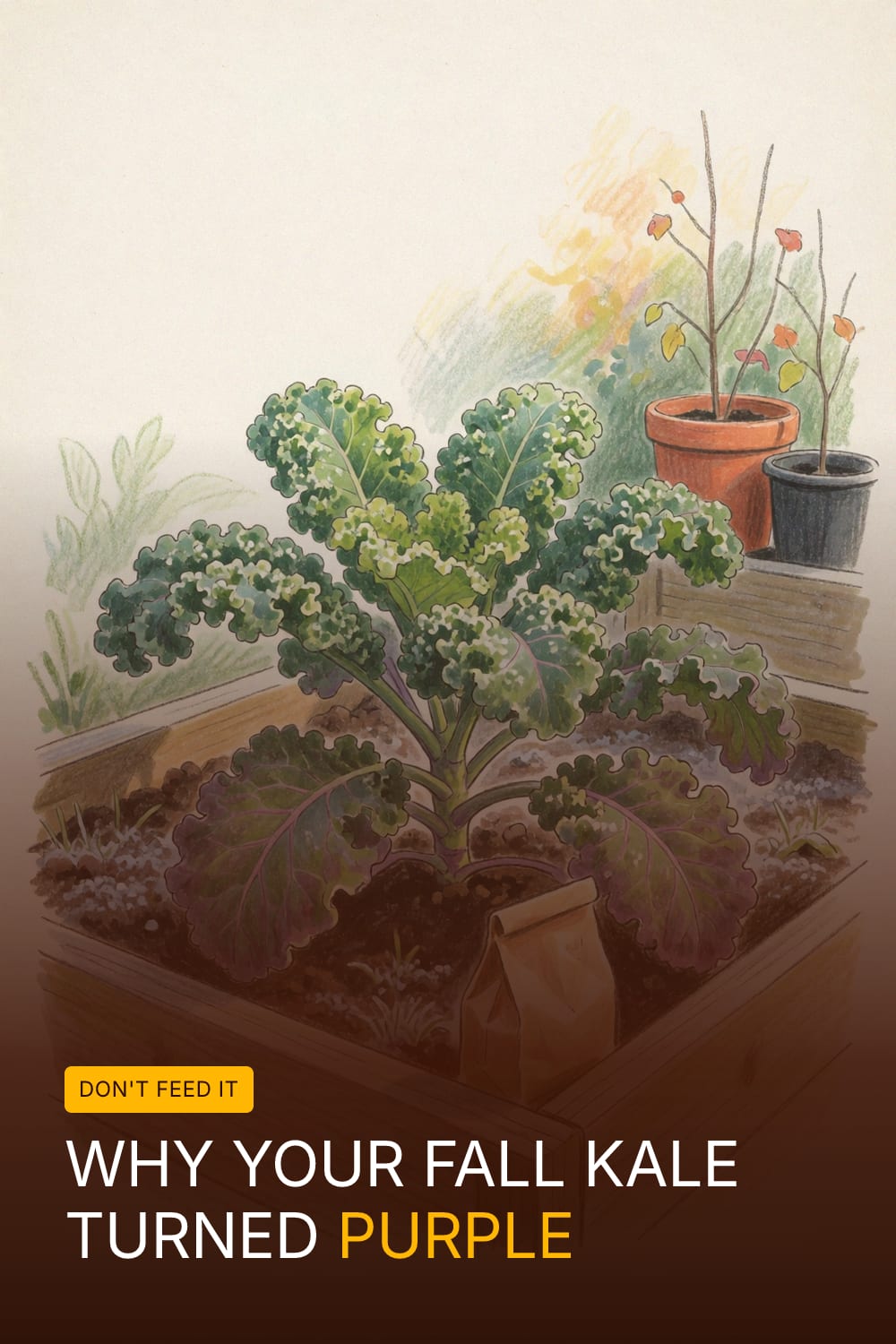
Your Fall Kale Turned Purple. Put the Bone Meal Down.
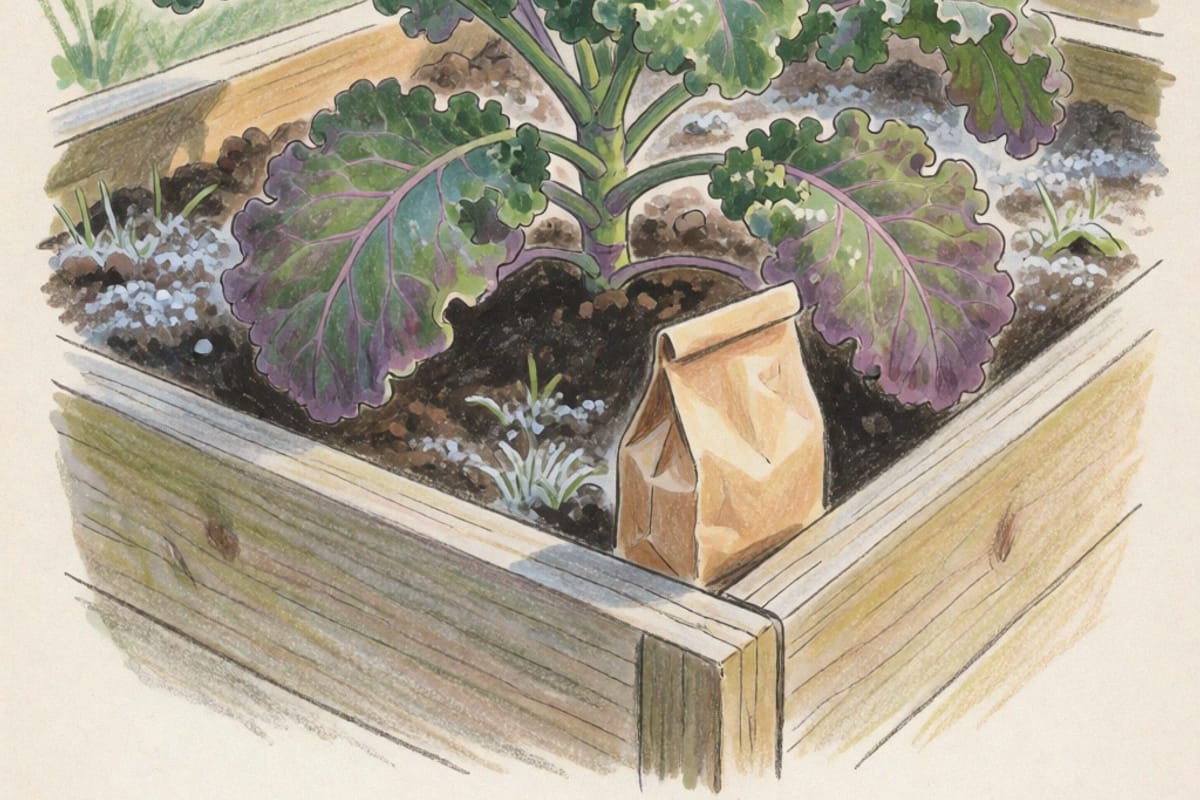
The advice you’ll find first, if you search for purple leaves, is that it means phosphorus deficiency and you should feed with bone meal or a high-phosphorus fertiliser. In a summer seedling tray, that can be true. On kale, cabbage, broccoli or lettuce in the garden in late October, it almost never is.
What you’re looking at is the plant’s reaction to cold nights. Put the bone meal back on the shelf. The purple is harmless, it often means the leaves are about to get sweeter, and adding fertiliser won’t turn it back.
Why cold turns leaves purple
Leaves are full of red and purple pigments called anthocyanins all year; most of the time the green of the chlorophyll hides them. When nights get cold, a lot of plants make more anthocyanin, partly as a sort of sunscreen for leaves that can’t use light as efficiently at low temperatures. So the purple shows through, usually starting on the older, outer leaves and along the veins and leaf edges.
The cabbage family does this readily, and so do red and bronze lettuces, which can go from faintly tinted to deep burgundy in a single cold week. Kale is the one that frightens people, because a green variety like a Scotch curled can come out looking bruised. It isn’t. I pulled a whole row of kale one October because I’d convinced myself it was sick, and I still think about what I threw away.
Where the phosphorus idea comes from
The advice isn’t invented. Phosphorus deficiency really does cause purpling, on the older leaves first, and the textbook photos look a lot like a cold kale plant.
The part people miss is that cold soil slows down how much phosphorus a root can take up, even when there’s plenty in the ground. So in autumn the plant may be showing mild phosphorus stress without the soil being short of anything. Adding more phosphorus doesn’t help a root that is too cold to take it in, and in a few weeks it won’t be growing much anyway.
Bone meal is a particularly poor fix. It releases its phosphorus slowly, and very little of it at all in alkaline soil. And home vegetable beds that have had years of compost and manure often already carry more phosphorus than they need. Extra phosphorus isn’t free: what the plants don’t use can wash out of the bed with the winter rain.
When purple does mean something
There are times it’s worth taking seriously.
If it’s summer, the nights are warm, and a young plant is purple and small and not growing, that’s a different story. A plant that is stunted as well as coloured is the one to worry about. Same if the purple comes with dead, brown or scorched edges, or if it’s on the youngest leaves in the middle rather than the old ones round the outside.
Tomato and pepper seedlings are the classic case in spring. Purple undersides on seedlings that have been sitting in a cold room or a chilly cold frame usually clear up once they’re warmer. If they’re warm and still purple and still not growing, it’s worth a soil test before you feed anything.
That’s the answer to phosphorus questions generally, really. A basic soil test tells you whether you’re short. Guessing from leaf colour mostly tells you what the weather did last week.
What to do with purple fall greens
Keep picking. Nothing about the colour makes the leaves less edible, and the same cold that brings the purple out also makes kale and cabbage taste better. As temperatures drop, these plants convert some of their starch to sugar, which acts a bit like antifreeze in the leaf. That’s why kale picked after the first frosts is so much sweeter than August kale.
Take the lowest, oldest leaves first, the way you would anyway. They’re the ones that colour up first and they’re also the ones slugs hide under.
If you want to hold onto the harvest longer, a row cover or a cold frame will keep the worst of the cold off. The plants will stay greener, and they’ll also be a little less sweet. That’s a trade I’m happy to make in November, not in October.
If you keep notes, it’s worth writing down the week your greens first colour up. The garden journal in Garden Planner Pro keeps each season next to the last, so the next time a row of kale goes purple you can see that it did the same thing, around the same week, the year before.
Varieties that are supposed to be purple
A last check before you worry at all: some of it may be the seed. Red Russian kale has purple stems and veins, Redbor is purple all over, and red cabbage and most red lettuces are meant to be exactly that colour. Cold just makes them deeper. If the packet is gone and you can’t remember what you sowed, look at the stems. Anything with purple stems in August was purple on purpose.