Your Garlic Sprouted Before Winter. Is It Ruined?
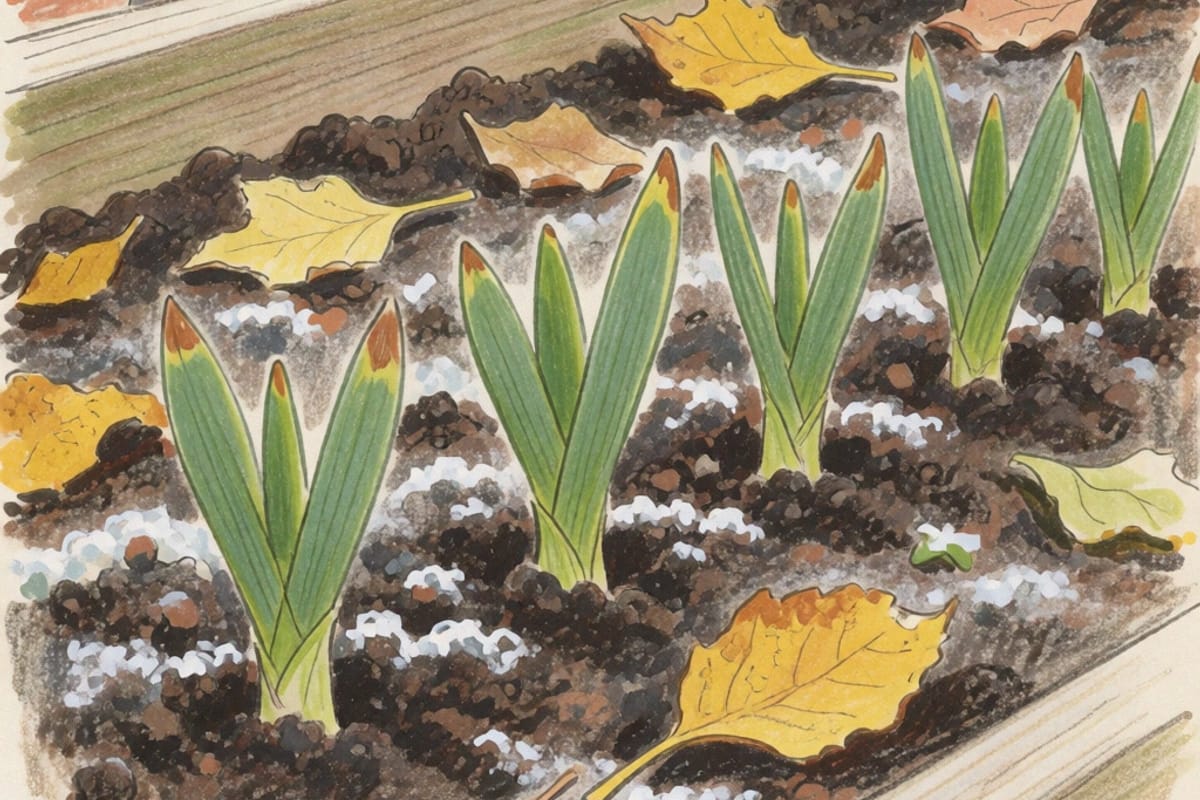
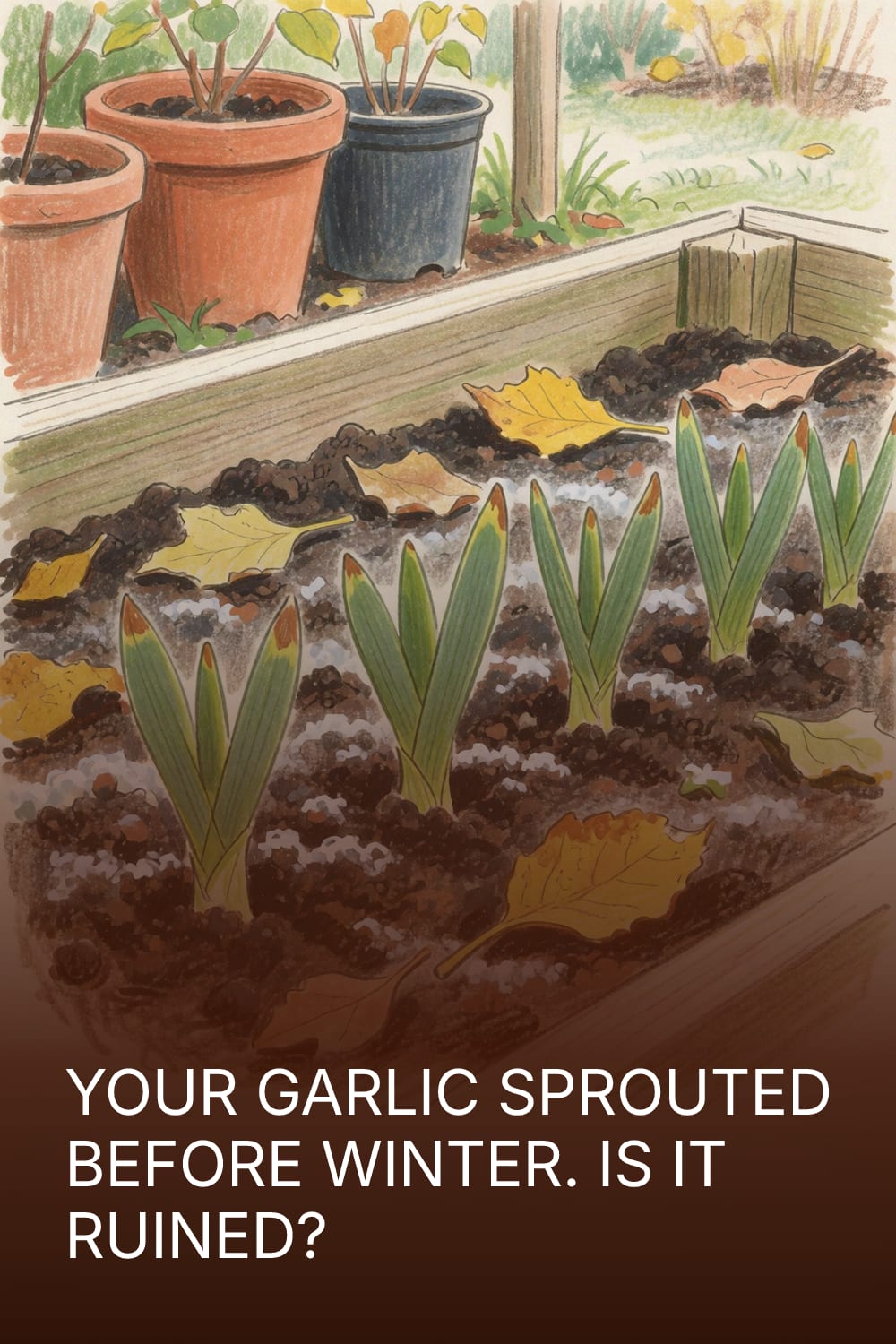
You planted the garlic a few weeks ago, and this morning there are green shoots standing three or four inches out of the bed. Every garlic guide you read said it would sit quietly underground until spring. Now winter is a month or two away and those tender green leaves are sticking up into it.
It’s fine. Garlic that sprouts in the autumn is normal, it happens to plenty of growers every year, and in the large majority of cases it makes no difference you’d notice at harvest. Don’t dig it up, don’t cut the leaves off, and don’t replant. The rest of this is about why it’s fine, and the few situations where it’s worth doing something.
Why the idea that it should stay underground is half right
The reason we plant garlic in autumn is so the clove can grow roots before the ground freezes. Roots are the point. A clove that goes into winter with a good root system comes up strongly in spring and has the long cool season it needs to make a big bulb.
What the guides tend to skip is that a clove that is growing roots will often grow a shoot as well, if the soil stays warm enough for long enough. That’s the plant doing what it was planted to do. An early planting, a mild October, or a softneck variety in a warm spell can all mean leaves above ground before Halloween.
I panicked about this the first year I grew garlic and nearly pulled the lot up to “replant later”. I didn’t, mostly through laziness, and that bed gave me some of the best heads I’ve grown.
What winter will do to the leaves
Frost will probably burn the leaves. Through the winter you may see the tips go yellow or brown, or the top couple of inches flop and die back. It looks bad, and it doesn’t matter much.
The part of the garlic plant that matters through the winter is below ground. The growing point sits down in the clove, protected by the soil, and as long as the roots are anchored and the clove is sound, the plant will send up new leaves when the weather turns in spring. The damaged leaves from autumn just wither away among them.
Garlic is very cold hardy, which is a large part of why it’s grown the way it is. It’s grown in places with winters a great deal harder than most of us get, and it comes through with its autumn leaves looking battered every time.
When it is worth doing something
There are a few cases where I’d change what I’m doing.
If you live somewhere with a hard winter and little reliable snow cover, mulch the bed. Once the soil has cooled right down and you’ve had a few hard frosts, put three or four inches of straw or shredded leaves over the bed. Spread it around and between the shoots rather than burying them flat, and the leaves can keep poking through. The mulch is mostly there to stop the soil freezing and thawing over and over, which can lift the cloves up out of the ground. It also takes the edge off the worst cold for the base of the plant.
If the cloves have been pushed out of the soil, which you’ll see as a clove sitting on the surface with its roots in the air, press it gently back in and firm the soil around it. This happens more in bare beds than mulched ones, and it’s the one thing on this list that can kill a garlic plant over winter.
If the shoots are already very tall, a foot or more, the garlic probably went in too early for your area. It will most likely still be fine. I’d mulch it well this year and plant a couple of weeks later next autumn, and I’d be a little less confident about the size of the heads.
What you should not do
Don’t cut the green leaves back. Those leaves are photosynthesising, sending energy down to the roots on every mild day, and taking them off just costs the plant.
Don’t cover the shoots with something heavy or airtight like a sheet of plastic. Garlic leaves can take cold. What they handle badly is being kept wet and dark for weeks at a time.
Don’t dig them up to check on them. If you need to know how things are going, pull one clove from the end of the row, look at the roots, and put it back or eat it. A white, spreading mass of roots means everything’s working.
The one sign that is a problem
There is one thing that looks a bit like this and isn’t fine. If parts of the row have no shoots at all while the rest came up well, dig at one of the empty spots. A clove that has gone soft, mushy, or covered in blue-green or white mould has rotted, usually from wet soil or a clove that was damaged or diseased when it went in. Pull those out and throw them away rather than composting them, and next year, plant in a better-drained bed and use only firm, clean cloves.
Shoots, by comparison, mean the clove is alive and working.
For next autumn
If you’d rather your garlic stayed underground until spring, the lever is timing. In colder areas the usual target is a few weeks after your first frost and well before the ground freezes, which gives the cloves time to root without much encouragement to send up leaves.
That date moves a lot depending on where you are, which is exactly what the planting calendar in Garden Planner Pro works out from your own frost dates. It’ll tell you when garlic goes in for your garden rather than for whoever wrote the back of the seed garlic box.
In the meantime, leave the shoots alone. Look at them over the winter if you like. They’ll look worse before they look better, and in late March you’ll go out one morning and find new green leaves coming up through the old.