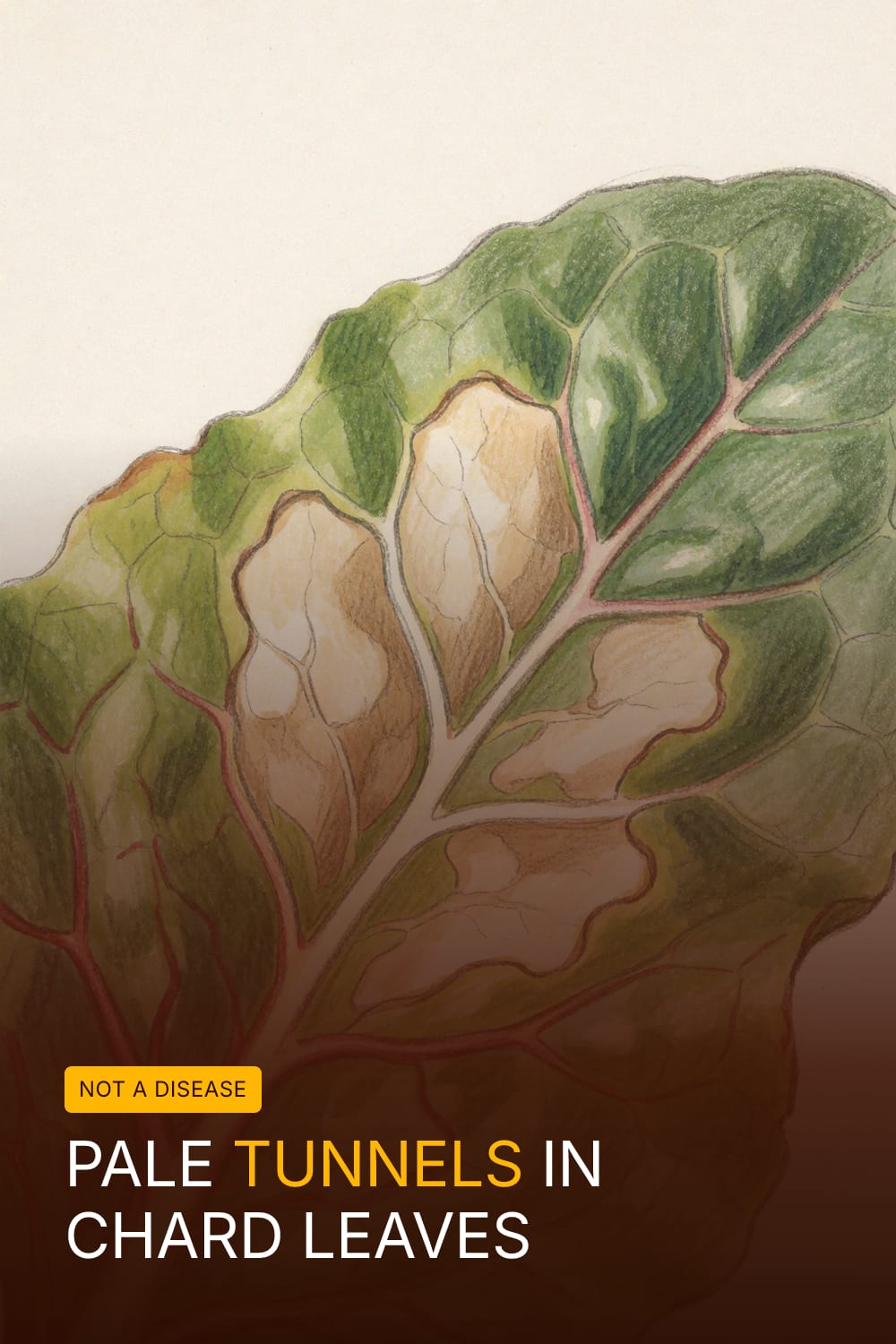
Those Pale Tunnels in Your Chard Leaves Aren't Disease
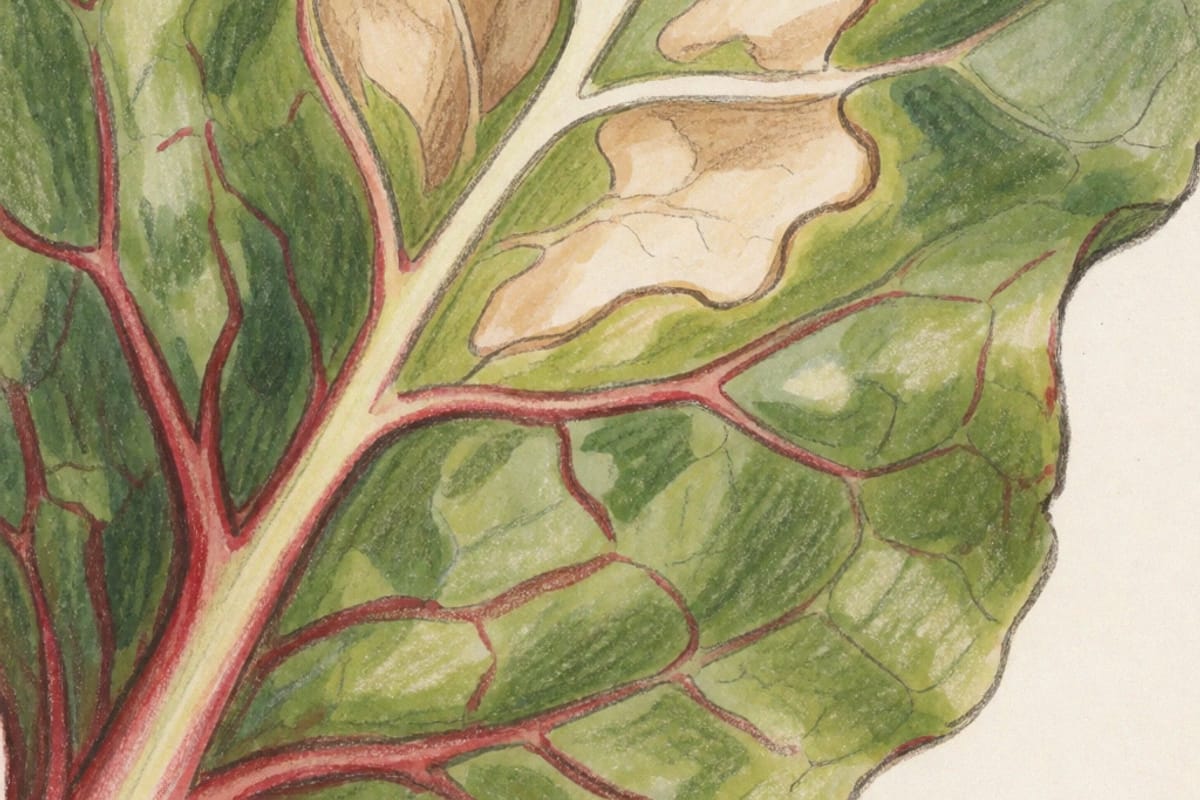
Go and hold one of the bad leaves up against the light before you read any further. If the pale patch is a tunnel with a definite edge, a shape that wanders and then widens into a blister, and the leaf between the two surfaces feels papery and hollow under your thumb, you have leaf miners. There is a larva in there right now, eating sideways between the top and bottom skin of the leaf.
That matters mainly because of what it rules out. Everybody’s first instinct with a blotchy chard leaf is fungus, and half the internet will tell you to reach for a spray. A miner is inside a sealed sandwich of leaf tissue. Nothing you spray on the surface reaches it.
How to be sure it is miners and not something else
The tell is the edge. A leaf-miner mine has a hard boundary, like something was traced on the leaf, and the tunnel usually starts narrow and gets wider as the larva grew. Hold it to the sun and you can often see the larva itself as a small dark comma inside the blister, and a trail of dark specks behind it.
Downy mildew, which shows up on the same crops in the same damp autumn weather, looks different: soft yellow patches on top with a grey or violet fuzz on the underside when the morning is humid, and the edges are vague rather than drawn. Cercospora leaf spot makes round tan spots with a distinct darker rim, scattered all over rather than winding. Sunscald is bleached and dry and it only happens on the leaves that were most exposed. None of those are hollow between the surfaces. That hollow feeling under a thumbnail is worth more than any photo comparison.
Turn the good leaves over
This is the part that actually changes your season. The adult is a small grey fly, and it lays its eggs on the undersides of leaves in a tidy little row of white ovals, usually two to five of them, lying flat side by side like grains of rice. Once you have seen one row you will spot them forever.
Go through the bed and turn leaves over. Every row you find and wipe off with a thumb is a set of tunnels that never happens. This is the only stage of the whole thing you can intervene in cheaply, and it takes about four minutes for a short row of chard. I do it while I am out there picking anyway, which is the only reason I keep doing it at all.
What to do with the leaves that are already mined
Pick them. Not the whole plant, just the affected leaves, and either crush the blister between finger and thumb before it goes in the compost or bin them outright. A mined leaf is not going to recover, the larva finishes feeding and drops out to pupate in the soil below, and every one you let complete that trip is next spring’s fly.
Chard and beet leaves regrow readily from the crown at this time of year, so stripping a plant back to its smallest clean leaves in late September costs you a couple of weeks and nothing else. And the mined part is only cosmetically ruined, for what it is worth. If you cut around a small mine the rest of the leaf is perfectly good food. I would not serve it to a guest, but I have eaten around plenty of them.
Stopping it next time, which is mostly a cover
The reliable control is a physical one. A light insect mesh or floating row cover over chard, beet and spinach, put on at sowing and held down properly at the edges, keeps the fly off entirely. It works because the pest arrives by air and has nowhere else to go, and it is the only method here that does not depend on you noticing anything.
Two things make covers fail. Putting them on a bed that grew the same crop last year, when the pupae are already in the soil underneath, so you have fenced the fly in rather than out. And leaving chenopod weeds around the edges, especially lamb’s quarters and fat hen, which are wild hosts and keep a population going right beside your covered bed. Pull those when you pull anything else.
The bit people get wrong in autumn
There is a temptation, at this point in the year, to decide it does not matter. The chard looks rough, frost is coming, and who cares.
It matters because the last generation of the season is the one that overwinters as pupae in the top inch or two of soil under the plants, and that is where next May’s outbreak comes from. Stripping the mined leaves off in late September and lightly disturbing the soil surface under the plants before you mulch is a genuinely cheap way to make next year quieter. Five minutes now against a month of ruined spring spinach is a trade I will take every time.