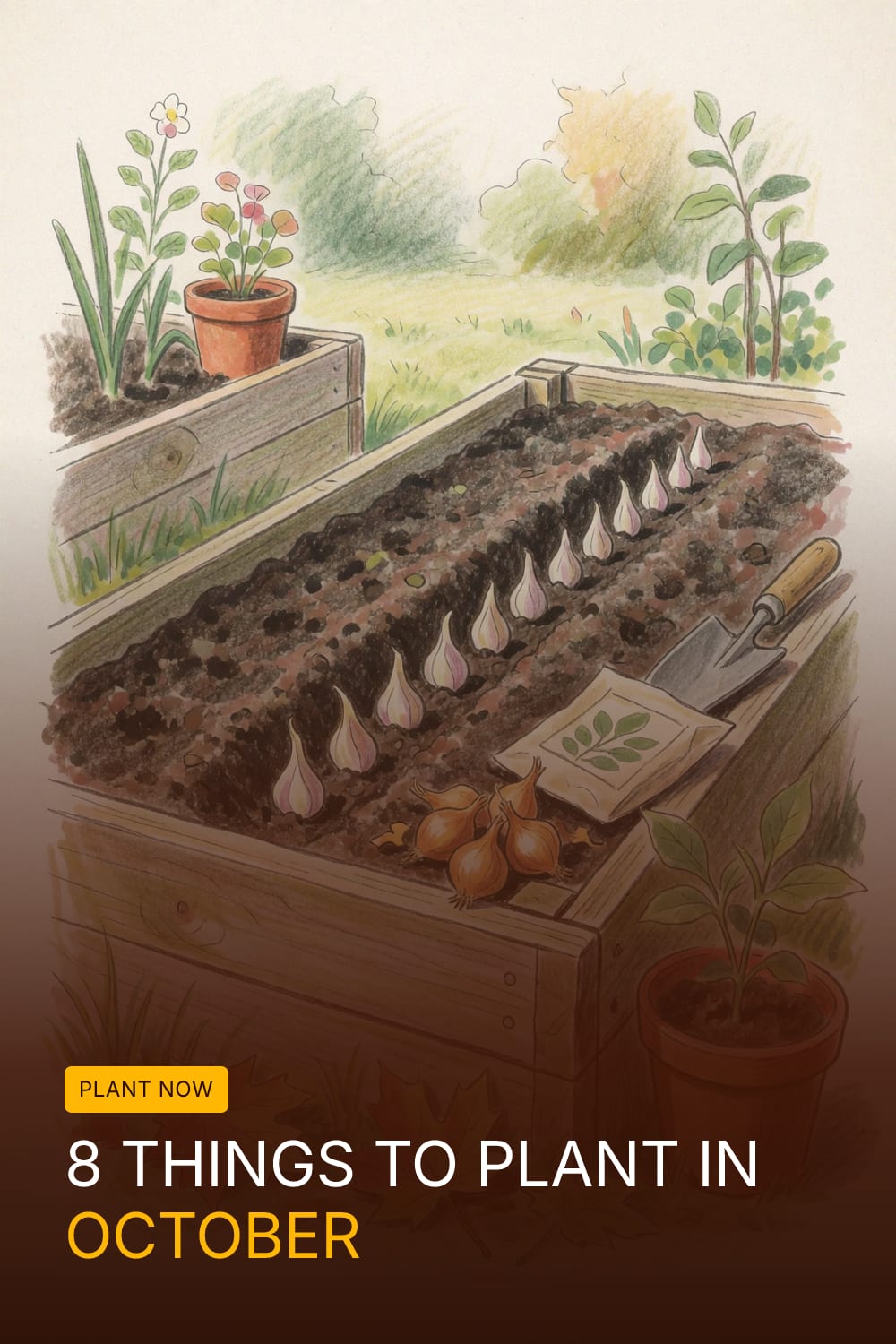
8 Things to Plant in October While the Soil Is Still Warm
The thing that trips people up about October is that they plant by how it feels on their face. It feels finished. The mornings are cold, the tomatoes are ugly, and the whole garden has that end-of-term look.
But soil holds heat much longer than air does. A bed that was baking in August is still perfectly comfortable in the first half of October in most places, and roots do not care what the thermometer on your porch says. That gap between warm soil and cold air is the entire window, and it closes quietly. Once the ground goes properly cold, anything you push into it just sits there until March.
So here are eight things worth getting in while that window is open. Some feed you in a few weeks. Most of them feed you next spring, at the point in the year when the garden is bare and the shop is charging the most for exactly what you are growing.
1. Garlic
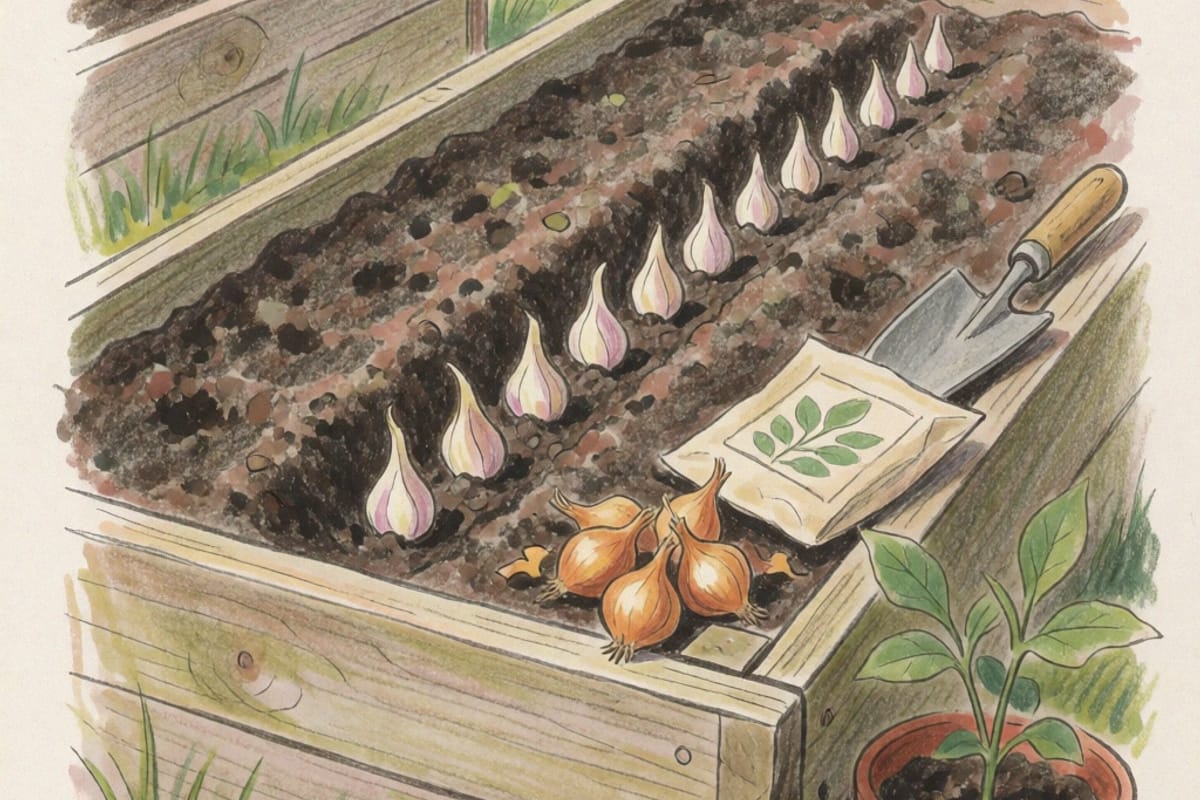
This is the one everybody knows about and half of us still leave too late. Garlic wants a few weeks of warm-ish soil to push roots out of the base of the clove, then a long cold spell to trigger the bulb splitting properly next year. Plant it in November and it often still works, but the plants come up thinner and you can see the difference at harvest.
Break the head into cloves the day you plant, not a week before, and put in only the fat outer ones. Pointed end up, a couple of inches down, with the small inner cloves going to the kitchen. I used to plant the whole head, runts included, and then wonder why a third of my crop was the size of a marble.
2. Shallots
Shallots go in at the same time and behave the same way, and they are the better buy if you are thinking about the grocery bill at all. A single shallot planted now divides underground into a cluster of them by early summer. You plant one and dig up six or seven.
They sit shallower than garlic, with the tip just breaking the surface, which means birds will pull them out for entertainment. A bit of netting or a scatter of prunings over the row for the first fortnight solves it. After that the roots have hold and nothing shifts them.
3. Overwintering onion sets
Ordinary spring onion sets will rot if you plant them now. The overwintering varieties are bred for this, and they are worth seeking out because they hand you an onion harvest in early summer, weeks ahead of anything you plant in March, back when your spring-planted ones are still finger-thick.
Push them in so the neck is just visible and space them wider than you think looks right. Onions sulk when crowded, and a bed that looks sparse in October looks correct in June. This is the crop I most often get wrong by being greedy with the row.
4. Spinach
Spinach sown in the first half of October germinates in that warm soil, makes a small rosette of leaves, and then stops. It sits there all winter looking like nothing is happening. That is the plan. Come late winter it starts again from an established root system and gives you cutting leaves weeks before a spring sowing has even come up.
The thing that ruins it is sowing so late that the seedlings go into the cold at the two-leaf stage. They want to be a decent little plant by the time the growth stops. If you are already into November where you are, sow it in a pot on a windowsill instead and stop pretending.
5. Corn salad
Also called mache or lamb’s lettuce, and it is the most winter-hardy salad thing I have ever grown. It does not mind frost, it does not mind snow sitting on it, and it keeps producing small nutty rosettes through the months when the only other green in the garden is a weed.
It is slow, which is the catch. Sow it now and you are picking from around midwinter onwards rather than in a month. Broadcast it fairly thickly in a patch rather than fussing over rows, thin nothing, and cut whole rosettes at the base as you want them.
6. Broad beans
Autumn-sown broad beans are one of the genuinely satisfying gardening tricks. They germinate in the warm soil, grow to a few inches, stand through the winter looking unbothered, and then take off in March with a head start no spring sowing can match. They also crop before blackfly really gets going, which is the difference between enjoying them and picking aphids off every pod.
Use a variety sold for autumn sowing rather than whatever is left in the packet drawer. The overwintering types have hardier tops. In an exposed spot they will need something to lean on by February, so put the canes in now while the ground is still soft enough to make it easy.
7. Winter-hardy lettuce
Not any lettuce. The winter types, sown in October under a cloche, a cold frame or even a clear plastic box with the bottom cut out, will give you leaves on and off right through. They grow slowly enough that you harvest a leaf at a time rather than a head, which suits a kitchen better anyway.
Keep the cover ventilated on mild days. The thing that kills winter lettuce is almost never cold. It is the grey rot that sets in when a sealed cover keeps the leaves damp for a week straight.
8. A cover crop on anything left bare
Whatever beds you are not planting, sow something into them. Cereal rye if you want roots holding the soil through every winter downpour, crimson clover or field beans if you want nitrogen left behind for next year’s heavy feeders. Either way you are keeping the soil covered and living instead of letting the rain beat on it for five months.
October is genuinely the last sensible window for this in most places. Rye will germinate in surprisingly cold soil, but it still wants a few weeks of growth before it goes dormant, and a cover crop that never got going is just an expensive way to have bare ground.
The one that decides the rest
If you only get one afternoon, spend it on garlic and shallots. They occupy the bed for the longest, they are the least forgiving about timing, and they are the two on this list where a fortnight of delay shows up as a visibly smaller harvest next summer. Everything else here will tolerate being a week or two late.
And if October has already got away from you, do not let that stop you sowing the corn salad. It germinates in cold soil when nothing else will, and a patch of something green out there in January is worth more to your morale than it has any right to be.