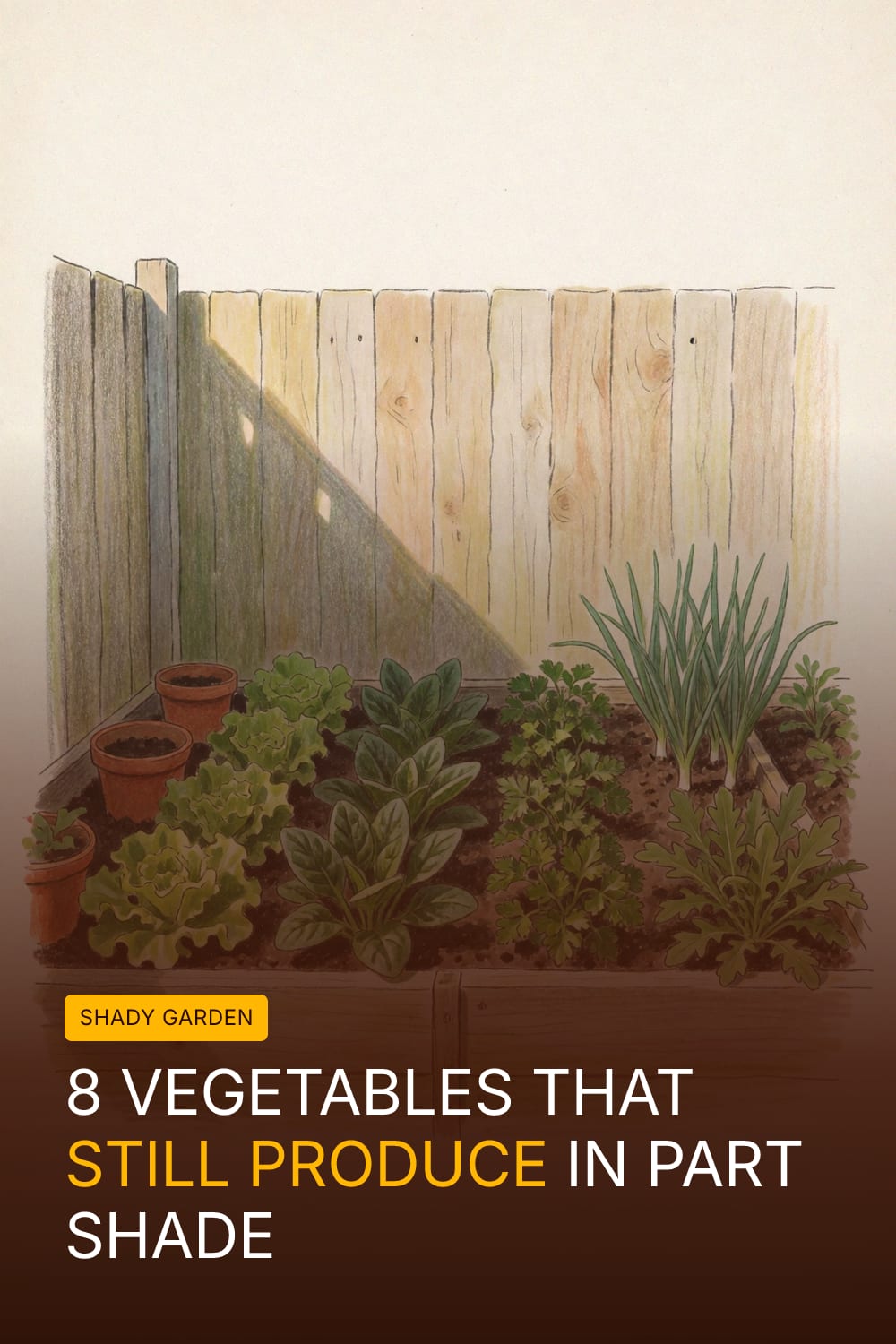
8 Vegetables That Still Produce in Part Shade
Most of us don’t get to choose where the sun falls. There’s the fence, the neighbour’s maple, the house itself for half the day, the balcony that faces the wrong way, and every guide opens with “choose a spot with full sun” as if you could just go and get one.
You can still grow food there. Not everything, and I’ll be straight about what won’t work, but a bed that gets only part of the day’s sun can keep you in salad and greens from spring to autumn. November is a good time to work out which spot gets what, while the beds are bare and you can stand in the garden and think.
What part shade means
Part shade, in the way seed packets use it, means roughly three to six hours of direct sun a day. Bright sky with no sun on the leaves doesn’t count, and nor does sun filtered through a tree canopy for most of the day (though light dappled shade is better than solid shadow).
The catch is that winter is a terrible time to measure it, because the sun is low and the shadows are long. If you can, think back to June, or look at which part of the bed the weeds grew fastest in. Morning sun and afternoon sun also aren’t equal. In a hot summer a bed that gets the morning and loses the afternoon is often kinder to leafy crops than full sun would be.
The ones that need sun
Before the list, the honest part. Anything you grow for its fruit wants full sun, which usually means six to eight hours or more. That’s tomatoes, peppers, squash, cucumbers and eggplant. In part shade they’ll grow leaves, flower a bit, and give you very little. I gave a tomato the shady end of a bed one year out of stubbornness, and it made a tall, handsome plant with about six tomatoes on it all summer.
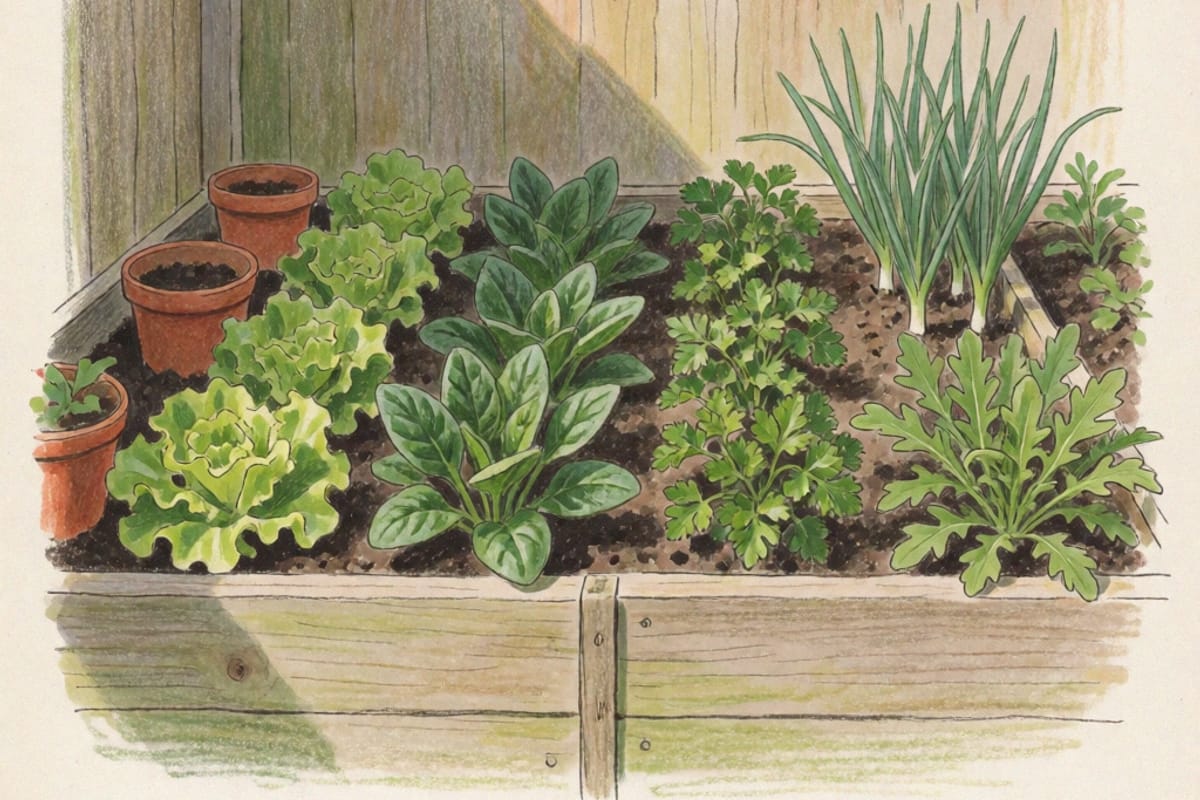
Leaves and roots are a different matter. The eight below are what I’d put in the shady bed.
The eight
1. Lettuce
Lettuce is the obvious first choice, and for once the obvious choice is the right one. Loose-leaf types do best, because you’re cutting leaves rather than waiting for a head to fill out, and a little shade slows the bolting that ends most spring lettuce in early summer.
Sow it in short rows every few weeks rather than all at once. In a shady bed it grows more slowly, which suits picking a few leaves at a time.
2. Spinach
Spinach likes cool weather and bolts fast in long, hot days, so a spot that loses the afternoon sun can stretch your season by a week or two at the warm end. Expect slower growth and slightly smaller plants than in full sun.
Sow it early in spring, as soon as the soil can be worked, and again in late summer for autumn picking.
3. Arugula
Arugula is quick, forgiving, and gets less peppery and harsh when it isn’t baking. In full summer sun it can bolt within weeks of sowing. In part shade it holds on longer.
It’s a good crop for a balcony box, too. A short row gives you leaves within a few weeks of sowing, and you can resow the same box several times a year.
4. Swiss chard
Chard is the one I’d plant if I could only plant one thing in a shady bed. It keeps producing from late spring right through to the hard frosts, it doesn’t bolt easily, and it shrugs off a lot that kills other greens.
In shade the plants stay a bit smaller and the stems a little thinner. You still get months of picking from a handful of plants, which is a good return on a corner nothing else wanted.
5. Kale
Kale grows happily with four or five hours of sun, and it’s the crop most likely to still be standing in the shady bed when everything else has given up for the year. Frost improves the flavour.
Give it room, because even a shaded kale plant gets wide. Pick the lower leaves and let the top keep growing.
6. Parsley
Parsley does well in part shade and is one of the most useful things to grow if you buy herbs in little plastic boxes. Flat-leaf and curled both work. Cilantro also likes a bit of shade, mostly because heat makes it bolt.
Parsley is slow to germinate, so if you’re planning a balcony, consider buying a small plant in spring rather than sowing.
7. Beets
Roots need more sun than leaves, but beets will still produce in part shade. The roots come in smaller and slower. Aim for the sunnier end of the shady bed, nearer six hours than three.
And if the roots disappoint, the greens don’t. Beet tops are good cooked like chard, so a shady row of beets is never a total loss.
8. Radishes
Radishes grow fast enough that a few hours of sun gets them there, though they’ll take a little longer than the packet says. In too little light they put everything into leaf and the root stays thin, so give them the brighter spots.
They’re also a good test. Sow a row in early spring where you’re not sure about the light, and in a few weeks you’ll know.
Making the shady bed work
Shade beds dry out more slowly, which is mostly good, but slugs love them. Keep an eye on young lettuce and spinach in the first wet weeks of spring.
Space a little more generously than you would in sun, because plants reaching for light crowd each other faster. And if you have a balcony, use whatever light you’ve got: a pale wall behind the pots bounces back more than you’d think.
When you sit down over the winter to draw next year’s beds, put these eight at the shady end first, then fill the sunny end with the fruiting crops. The square-foot bed grid in Garden Planner Pro is handy for this: you lay out each square, and the companion scoring flags pairings that won’t get on.
A shady bed full of greens in May feeds you more than a sunny one you never got round to planting.