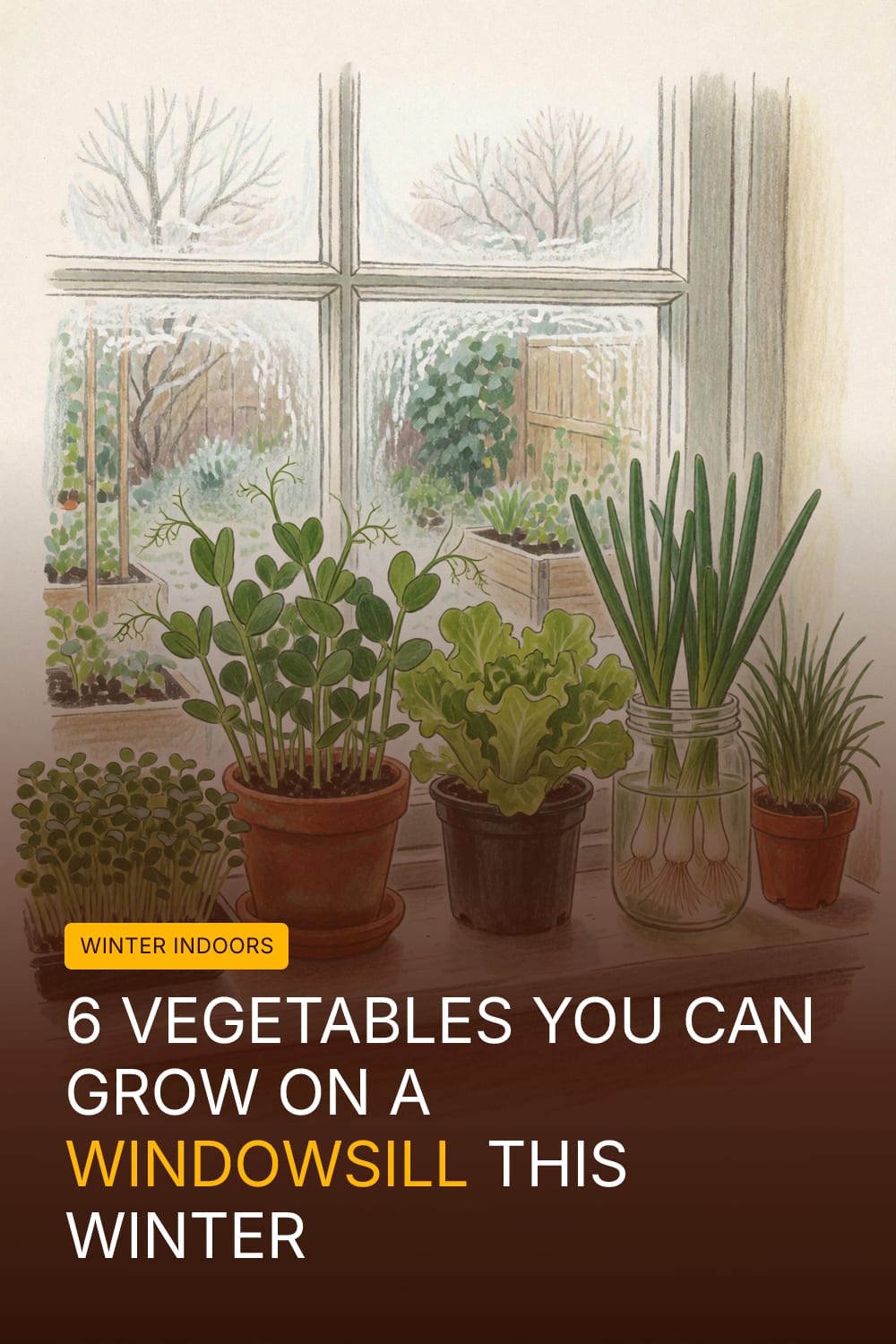
6 Vegetables You Can Grow on a Windowsill This Winter
The outdoor garden is about finished. Maybe there’s kale and leeks still standing, but nothing new is going in for months, and the evenings are dark by the time you get home. This is the week the windowsill takes over.
I’ll be honest about the windowsill, though, because most lists of indoor vegetables aren’t. A window in November gets a fraction of the light a bed gets in June. The days are short, the sun is low, and the glass takes its share. Plenty of things will germinate on a sill in winter. Far fewer will grow into anything worth eating. The six below are the ones that do, roughly from the most forgiving to the most demanding.
Use your brightest window. In the US and the UK that’s usually one facing south, and failing that, east or west. A north window in winter is for scallions in a jar and not much else.
1. Microgreens
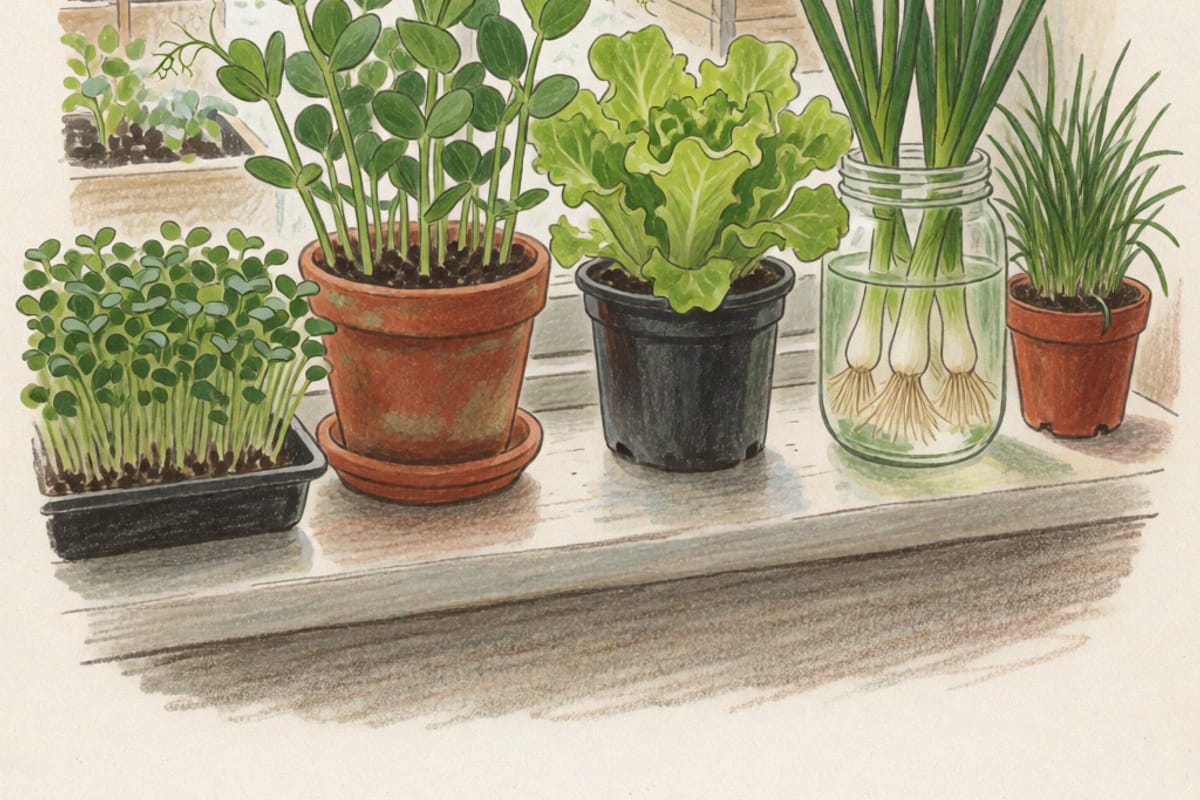
These are the surest thing on the list, because you harvest them before light becomes a problem. You sow seed thickly on a shallow tray of moist mix and cut the seedlings with scissors once the first leaves open, usually a week or two later depending on the crop. Radish, broccoli, mustard and cress are all quick and easy.
They grow tall and pale in a dim spot, and that’s fine for microgreens. You were going to cut them young anyway. Sow a new tray every week or so and you’ll have a steady supply.
2. Pea shoots
Pea shoots are the tender tops of pea plants, cut when they’re a few inches tall, and they taste exactly like fresh peas. Soak dried peas overnight (whole dried peas from the grocery aisle often work, or buy seed sold for shoots), sow them close together in a pot or tray of mix, and cut when the shoots have a few sets of leaves.
If you cut above the lowest leaves, many of them will send up a second, smaller round of shoots. After that the pot is done. Tip the mix into the compost and start again.
3. Scallions regrown from roots
Next time you buy a bunch of scallions, keep the white ends with the roots attached, about an inch or two of them. Stand them in a glass with water just covering the roots, or plant them in a pot of mix, and new green tops will grow from the middle within days.
Change the water every couple of days so it doesn’t go cloudy. They’ll regrow a few times, getting thinner each round, and then they’re spent. This is the one item here that copes with a dull window, because it’s mostly living on what’s stored in the bulb rather than on light.
4. Loose-leaf salad
Now we’re into crops that need real light. Loose-leaf lettuce, arugula and mustard greens will all grow in a pot on a bright sill, sown fairly thickly and cut as baby leaves rather than grown on into heads. Cut the outer leaves and leave the centre, and the same pot keeps producing for a while.
In midwinter everything goes slower, often a lot slower than the packet says. A wide, shallow container works better than a deep one, and turning the pot every few days keeps the plants from all leaning toward the glass.
I’ve grown arugula on a kitchen sill most winters for years. Some winters it’s a proper salad every week. Other winters, in a long run of grey days, it’s a garnish. I still think it’s worth it.
5. Chives
The easiest way to get chives on a winter windowsill is to dig a small clump from the garden or a friend’s garden in autumn and pot it up. Starting them from seed indoors in winter is slow going.
There’s a catch worth knowing about. Chives go dormant in winter, and a clump brought straight in from the garden may sit and sulk. Leave it outside until it has had a few frosts and the leaves have died back, then pot it up and bring it in. It usually sends up fresh growth a few weeks later. Cut the leaves from the base, a few at a time.
Parsley does well indoors in a pot too, if you already have a plant to bring in, and it’s the herb I’d add if you have room for one more pot.
6. Radishes, only in your brightest window
Radishes make the list with a warning attached. In good light they’re quick and easy in a deep pot. In a dim window they do something frustrating: the leaves grow tall and floppy and the root never swells, and you get a pot of stems.
If you have a south-facing window with sun most of the day, or a grow light, try a pot. Pick a small round variety and sow thinly. If your window is shaded or faces north, sow radish microgreens instead. You get the same peppery bite in a fraction of the time.
What won’t work on a winter windowsill
Fruiting crops. Tomatoes, peppers, cucumbers and the like need far more light than a winter window can give, and without strong grow lights you’ll get a leggy plant and very little fruit. Root crops bigger than a radish aren’t worth the pot space either.
If you’d like to stretch what’s possible, a simple LED light helps more than any other change, and it doesn’t need to be an expensive one. What matters most is how close it is to the leaves, which is what we covered in the grow-light post.
Keep an eye on the glass on cold nights too. Leaves pressed against a frosty pane can get cold-damaged, so pull the pots back a few inches after dark.
None of this adds up to a grocery haul, and a windowsill won’t replace the summer garden. But a handful of pea shoots and fresh chives in January tastes like more than it is. If you want to know what it came to, logging each cutting in the harvest tracker in Garden Planner Pro keeps a running total through the winter.
Start the microgreens this weekend. They’re the one thing on this list you’ll be eating before the end of the month.