Why Is My Indoor Basil Turning Black?
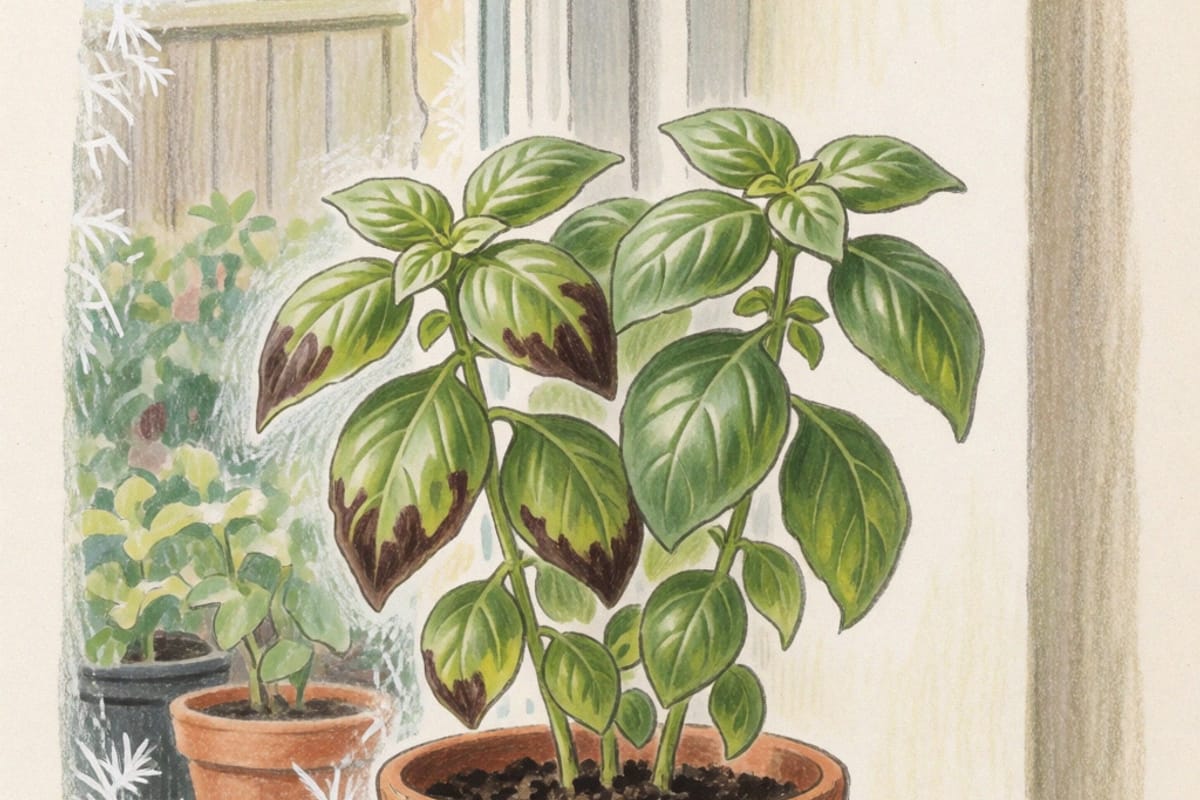
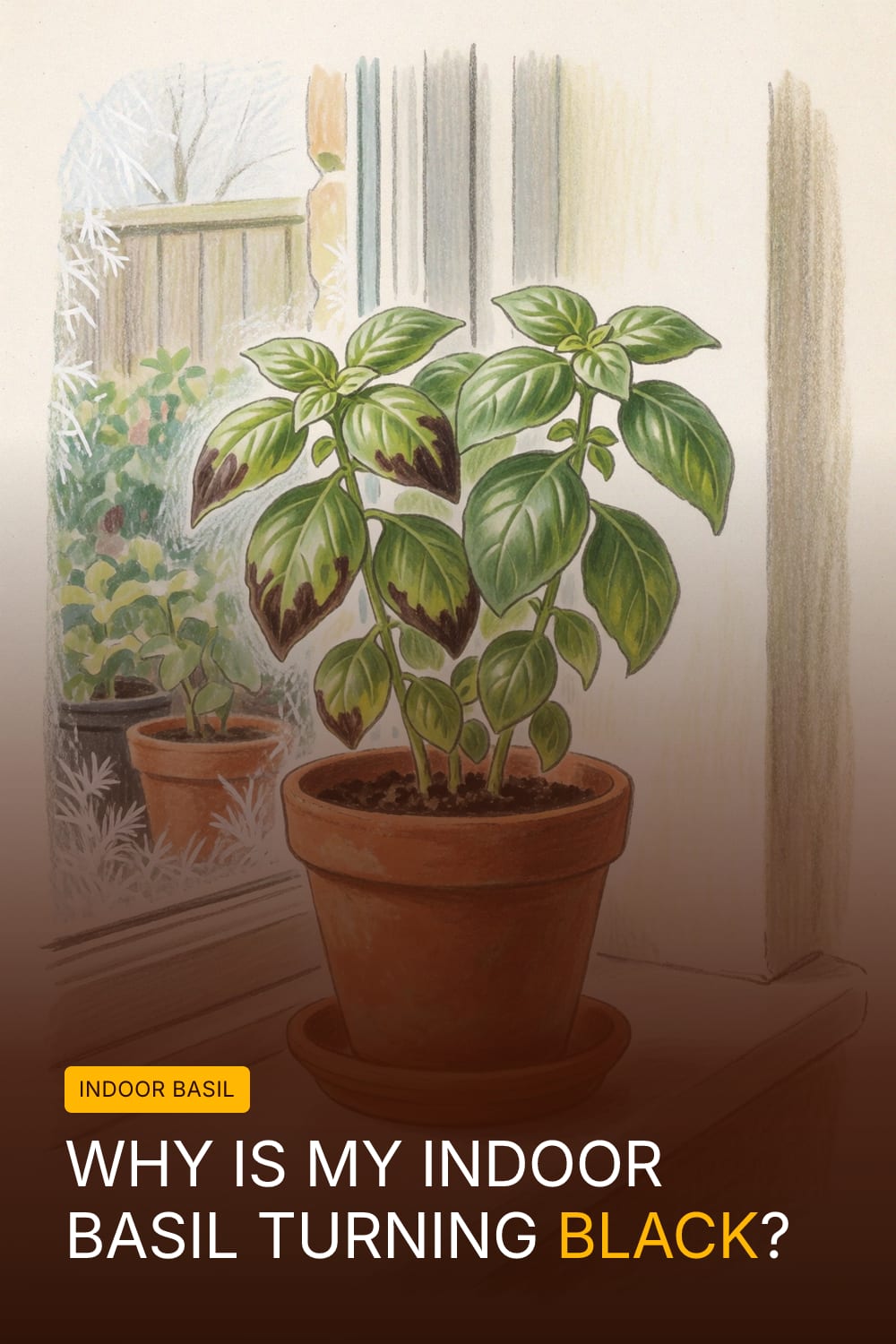
You brought the basil in before the first frost, or bought a pot at the supermarket, and it was doing fine on the kitchen windowsill. Then one morning there are black patches on the leaves. Some are just dark edges, some look as if the leaf has been bruised, and a couple have gone limp.
Indoor basil turns black for one of three reasons, and the most common by a long way at this time of year is cold. Basil is a hot-weather plant. It gets damaged at temperatures that wouldn’t trouble anything else on the sill, and a window glass on a November night is colder than the room around it. The other two are soggy roots and a leaf spot disease. You can usually tell which one you’ve got in a minute or two, from where the black is and how the stem and soil feel.
Cold damage: black on the side facing the glass
Basil starts to suffer below about 50°F (10°C). It doesn’t need a frost. Leaves that touch a cold pane, or sit in the draught from a leaky window frame, develop dark brown to black patches, often between the veins, and it tends to show up a day or so after a cold night. Put a bunch of basil in the fridge and you get the same thing, which is the quickest way to recognise it.
The giveaways are position and timing. The damage is on the side of the plant nearest the window, or on the top leaves if the sill is draughty, and it appeared suddenly rather than creeping. The stem is firm and green. The soil is whatever it normally is.
Move the plant back from the glass at night, even a hand’s width helps, or onto a table near the window after dark. Don’t trap it between a closed curtain and the pane, which is the coldest spot in the room. Damaged leaves won’t turn green again. Leave them for a few days until the plant settles, then pinch them off. If the growing tips are still green, new leaves will come through fine.
Too much water: black from the bottom up
This one starts low. The lower leaves go yellow first, then soft and dark, and the plant wilts even though the soil is wet. Look at the base of the stem. If it’s dark, soft or slimy where it meets the soil, the roots are rotting.
It’s very easy to do in winter. Basil on a dim November windowsill grows slowly and uses a fraction of the water it drank on the patio in July, and the watering habit tends to stay the same. Supermarket pots make it worse, because they’re dozens of seedlings crammed into a small pot of peat, often sitting in a sleeve or a pot with no real drainage.
Slide the plant out of its pot and look. White, firm roots mean you’ve caught it in time: let the pot drain, tip out any water in the saucer, and wait until the top inch of soil is dry before you water again. Brown roots that pull apart when you touch them mean the plant is unlikely to come back. Take a few cuttings from the healthy tops instead. Basil roots readily in a glass of water on a warm sill, and in a couple of weeks you’ll have new plants to pot up in fresh mix with a drainage hole.
Leaf spot: black spots scattered over the plant
If the black comes as distinct spots rather than edges or patches, and they’re dotted around the plant with no link to the window side, it’s probably disease.
Bacterial leaf spot shows as dark, water-soaked spots, often with angular edges where the leaf veins stop them, and it spreads fastest when the leaves stay wet. Misting, splashing water on the foliage and crowded pots all help it along. Pick off the spotted leaves, water the soil and not the plant, and give it more space and some air movement. The clean leaves are fine to eat.
Downy mildew is the one to know about, because it can come home on a supermarket pot. It starts as yellowing between the veins on the top of the leaf, and if you turn the leaf over there’s a soft grey to purplish fuzz underneath. Then the leaves brown and blacken. I haven’t had much luck saving basil with downy mildew. I pick what’s still clean, use it that day, and put the plant in the bin rather than the compost.
Which one have you got?
| Where the black is | Stem and soil | Most likely |
|---|---|---|
| On the window side, patches between veins, appeared overnight | Stem firm, soil normal | Cold damage |
| Lower leaves first, yellow then black, plant wilting | Base of stem dark or soft, soil wet | Overwatering and root rot |
| Separate spots anywhere on the plant | Stem fine | Bacterial leaf spot |
| Yellow on top, grey-purple fuzz underneath | Stem fine | Downy mildew |
You can have two at once. A cold windowsill and a wet pot go together nicely. If your pot is checking more than one row, fix the cold first, because it’s the quickest change and it stops new damage overnight.
If what you’re seeing doesn’t fit any of these, the pest guides in Garden Planner Pro cover the leaf spots and mildews herbs get, with what to do about each.
Keeping it going through the winter
I’ll be honest about indoor basil: it’s an annual, and a windowsill in December is a hard place for it. Even well looked after, it gets leggy and slow by midwinter. Plenty of people treat a pot of basil as a few weeks of pesto rather than a plant to keep until spring, and I’ve come round to that view myself. There’s more on which herbs are worth bringing in for the winter and why.
If you want to keep it as long as you can, give it the brightest spot you have that stays warm at night, water only when the top of the soil is dry, and keep picking from the top so it branches. Rosemary wants nearly the opposite, a cool bright room, which is why the two rarely do well on the same sill.
And check the glass tonight. Put your palm flat against it after dark, then against the wall beside it. If the glass feels noticeably colder, so do the leaves touching it.