Should You Cut Back Asparagus Ferns in the Fall?
Not yet, if they’re still green. And once they’ve gone completely yellow or brown, yes, cutting them down and clearing them off the bed is usually the better choice, though leaving them standing until late winter is a reasonable plan too. What you shouldn’t do is cut them while there’s still green in them because the bed looks untidy.
The green fern is what feeds the crown. All summer and into the fall it photosynthesises and sends sugars down into the roots, and that store is what pushes up next spring’s spears. Cut it early and you’ve taken the last weeks of that out of next year’s harvest. Once the fronds have turned straw-coloured right down to the base (in most gardens that means after a few hard frosts), the plant has finished with them, and the question becomes what’s best for the bed over winter.
Why cutting and clearing usually wins
The main argument for cutting is pests and disease, and it’s a good one.
Asparagus beetles spend the winter as adults, tucked into sheltered spots in and around the bed: old stalks, plant debris, loose mulch, anything with a crevice in it. In spring they come out right as the first spears do, and the spears they feed on and lay eggs on are the ones you’re about to eat. Taking the old ferns off the bed and away takes some of those winter hiding places with them. It won’t wipe the beetles out, because plenty overwinter in the edges of the garden too. But it’s one of the few things that cuts their numbers before the season starts.
Two fungal diseases make the same case. Asparagus rust and purple spot both survive the winter on the old fern stems, and their spores come off that debris in spring to infect the new growth. If you saw orange or rust-coloured powder on the ferns this summer, or small purple, sunken spots on the stems and spears, clearing the old growth matters more. Bag it or burn it where that’s allowed. Don’t put diseased ferns on the compost heap.
Then there are the berries. Female asparagus plants carry small red berries in the fall, and the seeds drop and sprout into a carpet of thin seedling asparagus that competes with the crowns you planted. Taking the ferns off before the berries fall cuts most of that down. If your bed is mostly male plants, which many modern varieties are bred to be, this won’t matter much.
The case for leaving them up
There are honest reasons to leave the dead ferns standing until late winter.
Standing stalks catch snow, and a blanket of snow is good insulation for the crowns. In a cold, windy garden where the snow otherwise blows off the bed, that can matter. The stalks also mark where the asparagus is. I put a fork into a dormant crown one March, in a bed I’d cleared so thoroughly I’d forgotten exactly where the row was, and I still feel bad about it.
And if this year’s ferns were clean, with no rust, no spotting and not many beetles over the summer, the disease argument is weaker. You’d be clearing debris that isn’t carrying much.
If you leave them, the one rule is to cut and clear them in late winter, before any new spears show. That still takes the old stems and whatever’s sheltering in them off the bed before the beetles and the spores get going. Leave it until the spears are up and you’ll be snapping them off as you work.
How I’d decide
If you had beetles or rust this year, cut and clear this fall, as soon as the ferns are brown. That’s the version I do most years, because asparagus beetles are the pest I see most on my own bed.
If the bed was healthy and your winters are cold with snow that tends to blow away, leaving the stalks up until late winter is fine, and you lose very little.
If your winters are mild, there’s not much reason to wait. Clean up in the fall.
Doing the cut
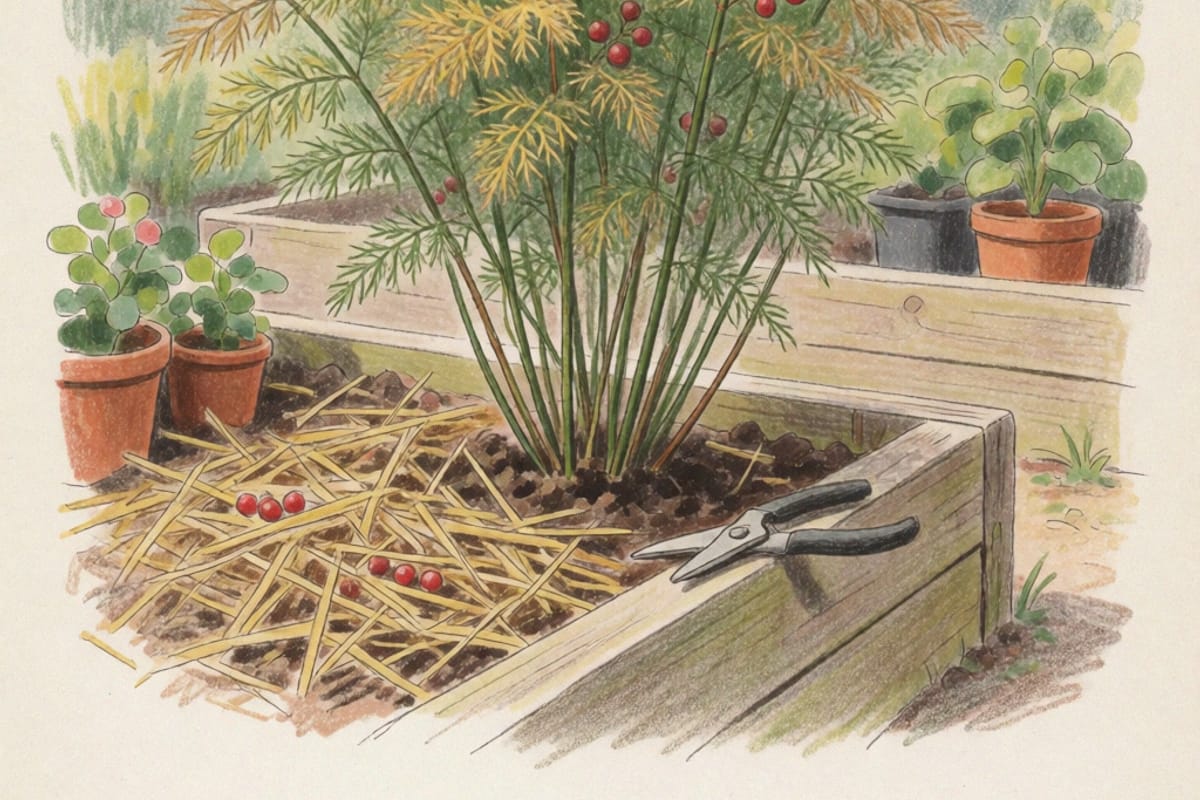
Cut the stems at ground level or an inch or two above it, with secateurs or a sharp knife. Don’t pull them, because you can tug at the crown. Rake up the fallen fronds and the berries too. The fine needles get everywhere, and leaving a mat of them on the bed undoes some of the point of clearing it.
Weed the bed while it’s bare, since this is the only time of year you can see the soil, and pull out any seedling asparagus while you’re at it. Then spread a couple of inches of compost or well-rotted manure over the row. In cold areas a looser layer of straw or shredded leaves on top gives the crowns some extra cover, which goes a little way toward what the standing stalks would have done with snow.
Fusarium crown rot is the one serious asparagus problem none of this helps with. It lives in the soil, not on the ferns, and a fall cleanup won’t touch it. If whole crowns are failing and the bed is thinning out year on year, that’s a different conversation, and it may be time to start a new bed somewhere else.
Keep a note of what you did this fall and how many beetles you find next May. A record like that, kept for a few years in something like the garden journal in Garden Planner Pro, tells you more about your own bed than any general advice can, including this.