7 Things to Do in the Garden Before the Ground Freezes
- Fall Garden
- Winter
- Planning
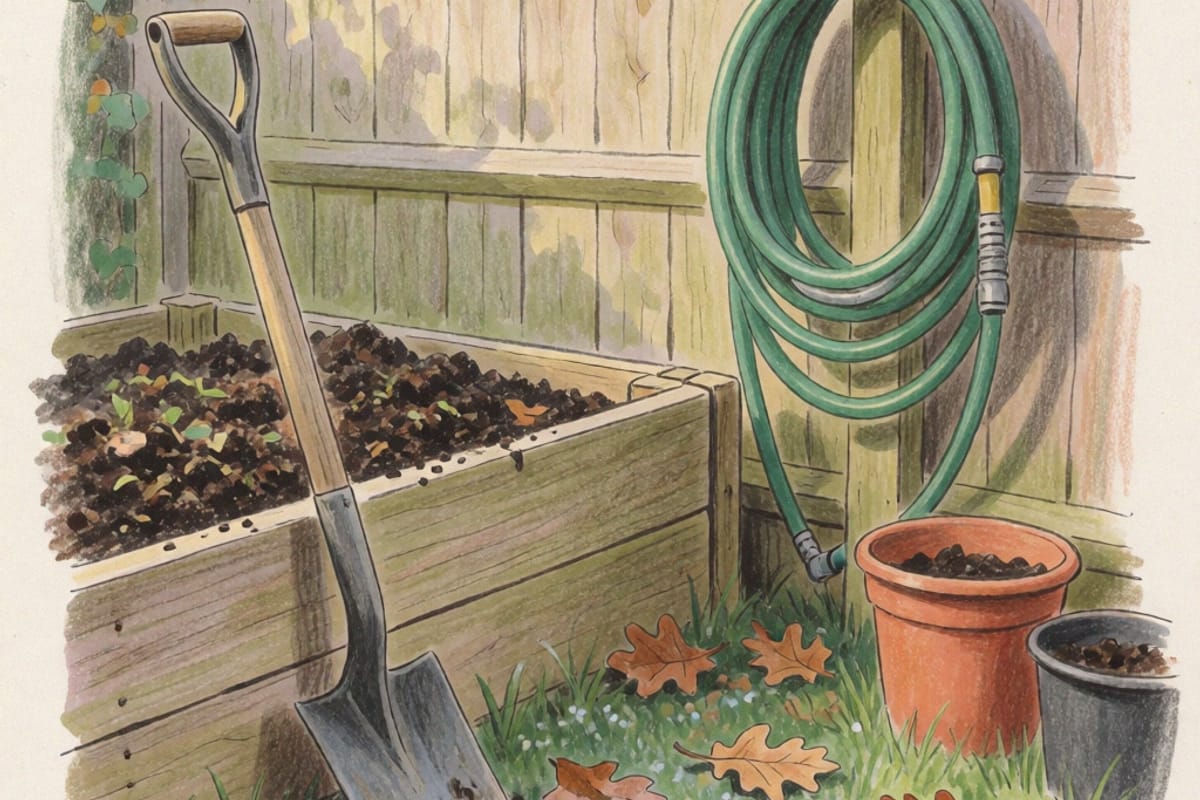
The tomatoes went black a couple of weeks ago, the beds look tired, and it’s tempting to call the season finished and go inside. Hold off for one more good Saturday. There’s a short stretch between the first frost and the day the ground freezes hard, and a handful of jobs are easy in that stretch and either impossible or expensive after it.
How long you’ve got depends on where you live. In cold regions the soil can lock up a few weeks after the first frost. In milder places, including most of the UK, the ground may only crust over for a few mornings all winter, and these jobs simply fit into the quiet weeks. If you’re not sure when your first frost usually lands, Garden Planner Pro builds its planting calendar around your local frost dates, and the last harvest dates on it are a fair warning. Either way, these are the seven I try to get through every November. None of them is about the fall leaves, which have their own list.
1. Drain the hoses and shut off the outside tap
This is the one that costs real money if you skip it. Water left in a hose freezes and splits it, and water left in an outdoor faucet can freeze back into the pipe. A burst pipe inside a wall is a much bigger bill than a new hose.
Turn off the indoor shut-off valve for the outside tap if you have one, then open the outside tap and let it run dry. Disconnect every hose, stretch each one out down a slope or lift it hand over hand to empty it, and coil it somewhere out of the weather. Even a frost-free tap needs the hose taken off, because a connected hose holds water in the valve.
If you have a rain barrel, empty it and leave the tap open, or tip it over. I lost a plastic one to ice a few winters back, and the crack ran right down the side where there was no patching it.
2. Test the soil, and lime now if it says to
Fall is a good time to send off a soil test. The labs are quieter than in spring, and the results come back while there’s still time to act on them.
The reason to hurry is lime. If the test says your soil is too acidic, lime works slowly, over months, so lime spread in November has the whole winter to start shifting the pH before you plant. Lime spread in April has barely begun. Only add it if the test asks for it, and at the rate it gives. Guessing at lime is how people end up with soil too alkaline for potatoes or blueberries.
3. Spread compost on the empty beds
Once a bed is cleared, put an inch or two of finished compost over the top. Over the winter the worms pull it down into the soil, and by spring the surface is darker and crumbly without you digging anything in.
If you cut this year’s plants off at the soil line, leave the roots where they are; they rot down in place under the compost. And if you’d like a proper winter cover on top as well, I’ve ranked the mulches elsewhere, so I won’t repeat that here.
4. Pull the weeds that are holding seed
Walk the beds and the paths and look for weeds with seed heads on them. Pull those now, before winter wind and rain spread the seed around the garden. Bag them or put them in the bin rather than on a cool compost heap, which won’t get hot enough to kill the seed.
While the soil is still soft, it’s also the easiest time of year to dig out the roots of perennial weeds like dandelion and dock. Get a fork under them and lift the whole root. In March the same root will be wedged into cold, wet soil, and half of it will snap off and regrow.
5. Water the perennials if it’s been a dry fall
This one surprises people. If autumn has been dry, give your perennial plants a deep soaking before the ground freezes: fruit bushes, strawberries, rhubarb, asparagus, anything planted this year, and evergreens especially.
Evergreens keep losing water through their leaves all winter. Once the ground is frozen the roots can’t replace it, and a plant that went into winter dry is the one you’ll find brown and scorched in March. Water on a mild day, in the morning, slowly enough that it soaks in. If it’s been a wet fall, skip this one.
6. Put guards round young fruit trees
Winter is when voles, mice and rabbits go after bark, and the thin bark of a young apple or pear tree is about the easiest meal in the garden. A tree that gets chewed all the way round the trunk usually dies, and you’ve lost the price of the tree plus the years it spent getting started.
Put a guard round each young trunk now: a plastic spiral guard, or a loose cylinder of fine wire mesh pushed an inch or two into the soil so voles can’t get underneath. Make it tall enough to stay above your usual snow, since rabbits stand on the snow to reach. Then pull any mulch back a few inches from the trunk, so voles don’t have a warm tunnel right up against the bark. Take spiral guards off in spring so they don’t trap damp against the trunk all summer.
7. Bring in the stakes, cages and tools
Pull out bamboo canes, tomato cages and plant supports, knock the soil off them, and store them dry. Canes left standing in wet ground rot at the base and snap the following summer at the worst moment. If anything held plants that had blight or another disease this year, give it a scrub before it goes away.
Then the tools. Wash the soil off, dry them, and give the metal a wipe of oil. I’ve written the longer version of that job, and it’s a pleasant hour on a cold afternoon. Bring in clay pots while you’re at it, and if you’re wondering what to do with the potting mix still in them, don’t dump it yet.
If you only get to one thing on this list before the hard freeze, make it the tap. Everything else can be done late, or a bit badly, or in the first warm week of March. A split pipe can’t.