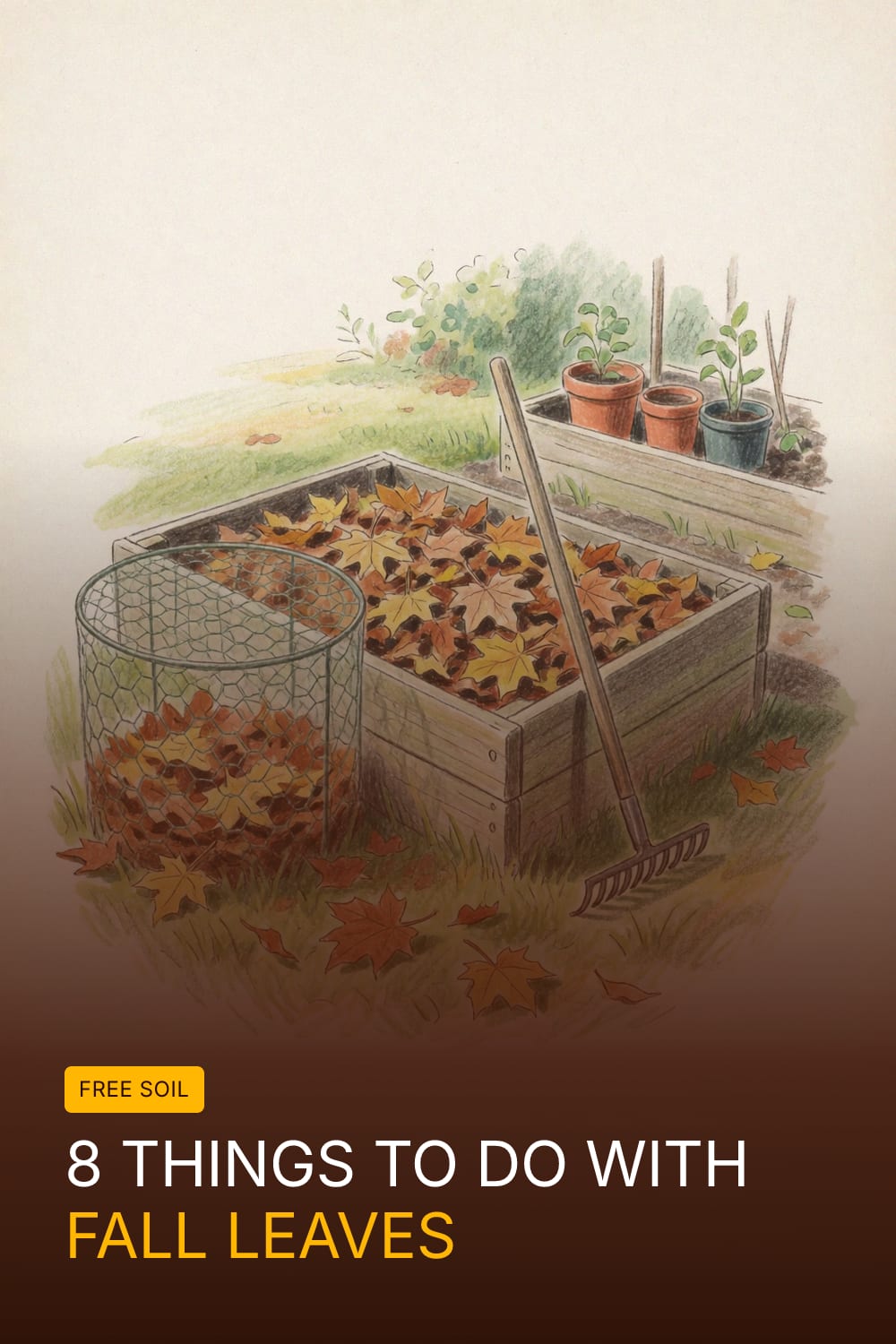
8 Things to Do With Fall Leaves Before You Bag a Single One
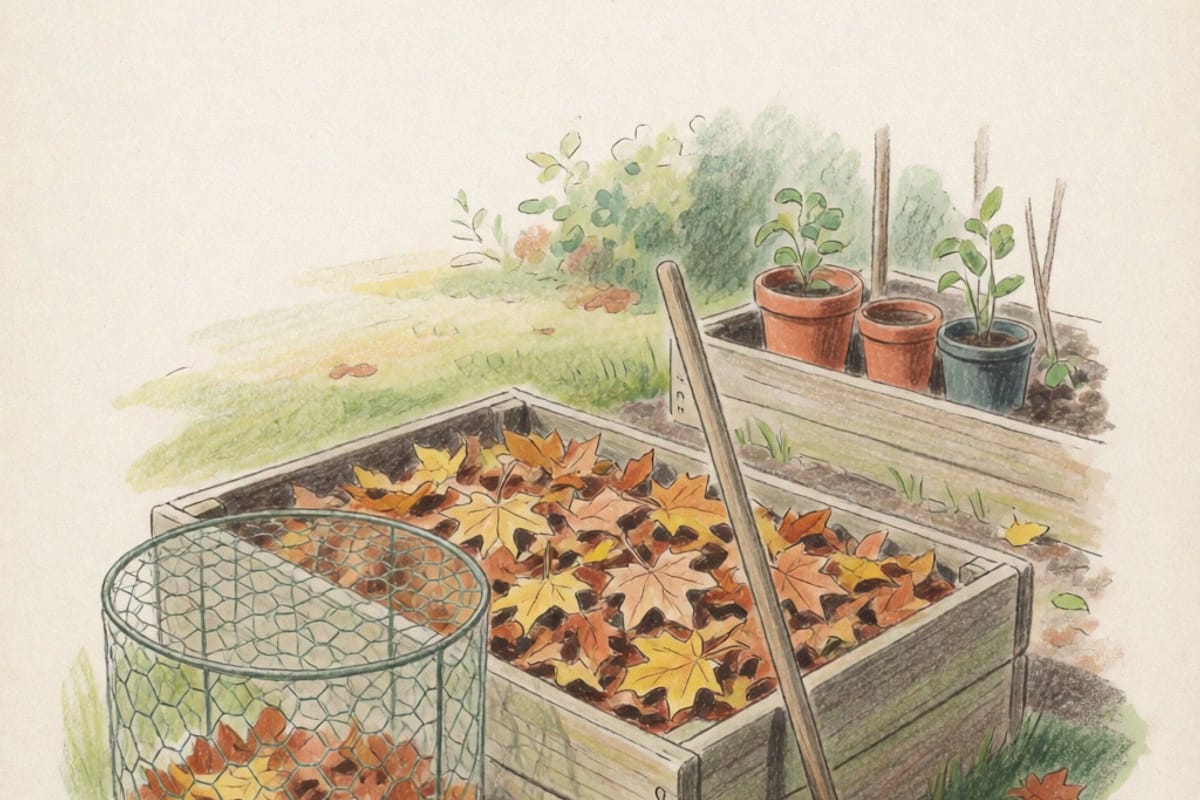
The maples are going this week. If you have a tree or two, you are about to have more organic matter lying on your lawn than you could buy in a season, and the default thing to do with it is rake it into paper sacks and leave it at the curb for someone to take away.
I did that for years. Then I priced a few bags of compost one spring, looked at the pile of sacks on the curb next door, and felt a bit stupid. Leaves are the cheapest soil improver most of us will ever be handed, and the season for collecting them is about three weeks long. These are the eight things I do with them now, roughly in the order the year asks for them.
1. Run the mower over them first
Nearly everything below works better with shredded leaves than whole ones. Whole leaves, especially big flat ones like maple and sycamore, lie on top of each other when they get wet and form a sheet that water runs off and air can’t get through. In spring you lift a mat like that and find cold, sour soil underneath and a lot of slugs.
You don’t need a shredder. Spread the leaves out on the lawn a few inches deep and go over them with a mower that has a bag on it, once or twice. They come out a quarter of the size, mixed with a bit of grass, and they break down far faster. If a leaf blower in your shed has a vacuum setting, that shreds too.
2. Cover the beds you’ve just cleared
Any bed you’ve pulled the summer crops out of and not planted with garlic or a cover crop is bare soil going into winter. Bare soil loses its structure in heavy rain and grows a crop of weeds in March. A few inches of shredded leaves stops both.
By spring the bottom layer will be half gone into the soil, and the worms do most of that work for you. Rake back what’s left when you want to sow, and it goes back on as mulch once the seedlings are up. If you’re anxious about leaves blowing away, a light sprinkle of compost or grass clippings on top weighs them down.
3. Start a leaf mould pile you’ll forget about
Leaf mould is what you get when leaves are left to rot slowly and on their own, without the greens a compost heap needs. It takes a year at the least and often two, and what comes out is dark, crumbly, smells like a wood floor, and holds water like a sponge. I use it in seed-sowing mixes and on top of the beds where I grow carrots.
A ring of chicken wire or a few pallets in a corner is enough. Fill it with leaves, wet them thoroughly if they went in dry, and walk away. Some people stuff damp leaves into black bin bags, poke a few holes in them and stack them behind the shed, which works too and takes up less room.
4. Keep a few bags dry for next summer
This is the one I wish someone had told me sooner. A compost heap needs browns as well as greens, and in July you have nothing brown. You have grass clippings, pulled weeds, bolted lettuce and the kitchen scraps, and the heap goes slimy and starts to smell.
So fill four or five sacks with dry leaves now and keep them somewhere the rain can’t get in. In summer, a few handfuls go on with every bucket of greens. It costs nothing and it’s the difference between a heap that rots sweetly and one the neighbours mention.
5. Tuck in the roots you’re leaving in the ground
If you’ve got carrots, parsnips or leeks you plan to dig through the winter, the problem is not the cold itself. It’s the ground freezing solid so that you can’t get a fork in. A deep blanket of leaves over the row, a foot deep or more and held down with something, keeps the soil underneath workable for a good while longer.
Mark the row before you cover it. I once spent a January afternoon digging three trial holes in the wrong place, in the dark, for one leek.
6. Mulch the garlic, but not today
Garlic that went in this month will want a mulch over the winter, mostly to stop the freezing and thawing pushing the cloves up out of the soil. Shredded leaves are good for it, a few inches deep.
The timing matters a bit. Wait until the soil has properly cooled and the first hard frosts have come, so you’re keeping the ground cold rather than keeping it warm for voles. Until then, keep the bagged leaves standing by.
7. Build next year’s bed on top of the lawn
If you want another bed next spring and don’t fancy lifting turf, you can make it now with leaves. Mow the grass short, lay cardboard over it with the edges overlapping well, soak it, then pile shredded leaves on top, as deep as you’ve got, with a few inches of compost or manure over the lot.
Over the winter the grass dies under the cardboard and the leaves start to break down. By spring you can plant into the compost layer, though I’d put in transplants and big seeds that first year rather than carrots, because the layer underneath will still be lumpy. This is the method I’d pick if I were starting a garden again on a lawn.
8. Pack them round the pots that stay outside
If you’ve got a hardy herb or a small fruit bush living in a container on a patio or a balcony, the roots are much more exposed in a pot than they would be in the ground. Push the pots together against a house wall and stuff bagged leaves into the gaps and around the outside. It’s a scruffy look for a few months, and it can be the difference between a pot that comes back in April and one that doesn’t.
The leaves I leave out
Most leaves are fine. The worry about oak leaves turning your soil acid is overblown in my experience; by the time they’ve broken down there’s not much in it. The one tree I don’t bring into the vegetable beds is black walnut. Its roots and hulls are the main worry, but the leaves carry some of the same compound, and I’d rather they rotted down somewhere else first.
And whichever beds get leaves this autumn, write down which ones. Next spring you’ll be wondering why one bed drains better and grows better than the others, and it helps to know. A line in the garden journal in Garden Planner Pro is still there next autumn, and the one after, which is longer than I can be trusted to remember a pile of leaves.