Every Way to Fill a Raised Bed, Ranked by How Soon You Can Plant in It
Filling a raised bed costs more than building it, and most people only find that out at the garden centre with a trolley full of bags. A standard 4x8 bed made from boards about 11 inches tall holds roughly 30 cubic feet of soil. In the common 1.5 cubic foot bags of raised-bed mix, that’s about 20 bags for one bed.
There are cheaper ways to fill it, and the catch with most of them is time. Below are the five main approaches, ranked from the one you can plant in the same afternoon to the one that needs months to settle. The reason I’m writing this in October is at the bottom, and it changes which one I’d pick.
| Rank | Method | Plantable | Cash cost to fill a 4x8 |
|---|---|---|---|
| 1 | Bagged raised-bed mix | Same day | Highest: about 20 bags |
| 2 | Bulk garden blend, delivered | Same day, once it arrives | Moderate: about 1.1 cubic yards |
| 3 | Your own soil mixed with compost | Same day | Low |
| 4 | Logs and branches underneath, soil on top | Top layer same day; settles for years | Low |
| 5 | Lasagna layers, compost on top | 4 to 6 months | Lowest |
1. Bagged raised-bed mix
This is the one that works the day you open it. It’s light, it drains, it’s usually free of weed seed, and you can plant straight into it. For a single small bed, or a balcony trough, it’s hard to argue with.
It’s also the most expensive way by a long way once you’re filling anything bigger than a couple of feet, and quality varies more than the bags suggest. Some are mostly composted bark and dry out fast in summer. If you go this way, buy one bag first, water it, and squeeze a handful before you buy the other nineteen.
2. Bulk garden blend, delivered
Most landscape yards sell a blend of screened topsoil and compost by the cubic yard, and one 4x8 bed needs a bit over one yard. Per cubic foot it’s far cheaper than bags. The costs are the delivery charge, which makes it poor value for one small bed and very good value for three, and a pile on the driveway that you have to move by wheelbarrow.
Ask what’s in it, and if you can, go and look at it. A good blend is dark and crumbly. What you don’t want is anything sold as fill dirt, which is subsoil and not meant for growing.
3. Your own soil mixed with compost
If the bed is going on ground you’re also turning into paths, or you’re digging out somewhere else, you already own most of the fill. Mix your own topsoil roughly half and half with compost and you have a perfectly good bed.
Heavy clay benefits from the compost more than anything; very sandy soil does too, for the opposite reason. What I’d avoid is filling the whole bed with straight compost. It’s too rich for some crops, and it keeps breaking down, so the bed sinks for a couple of years as it goes.
4. Logs and branches underneath, soil on top
This is borrowed from hugelkultur. You lay old logs, branches and woody prunings in the bottom third of the bed, then fill over them with soil. The wood takes up volume you’d otherwise pay for, and as it rots it holds moisture like a sponge.
You can plant in the top layer straight away, as long as there’s a good depth of soil over the wood (I’d want at least eight inches). The trade is that the bed sinks slowly for years as the wood breaks down, so you’ll be topping it up every spring. Stick to hardwoods if you can, and never use black walnut or anything treated.
5. Lasagna layers topped with compost
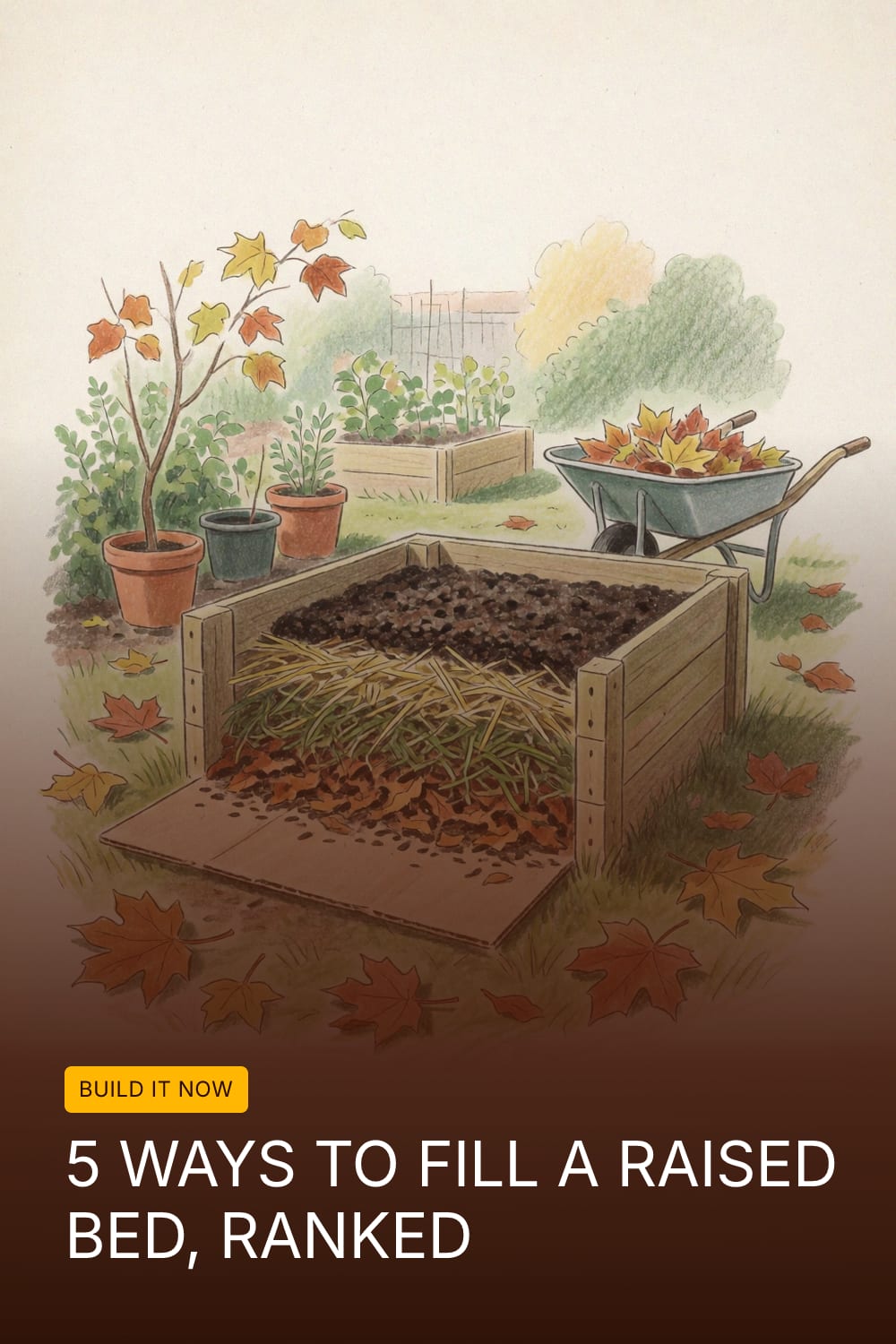
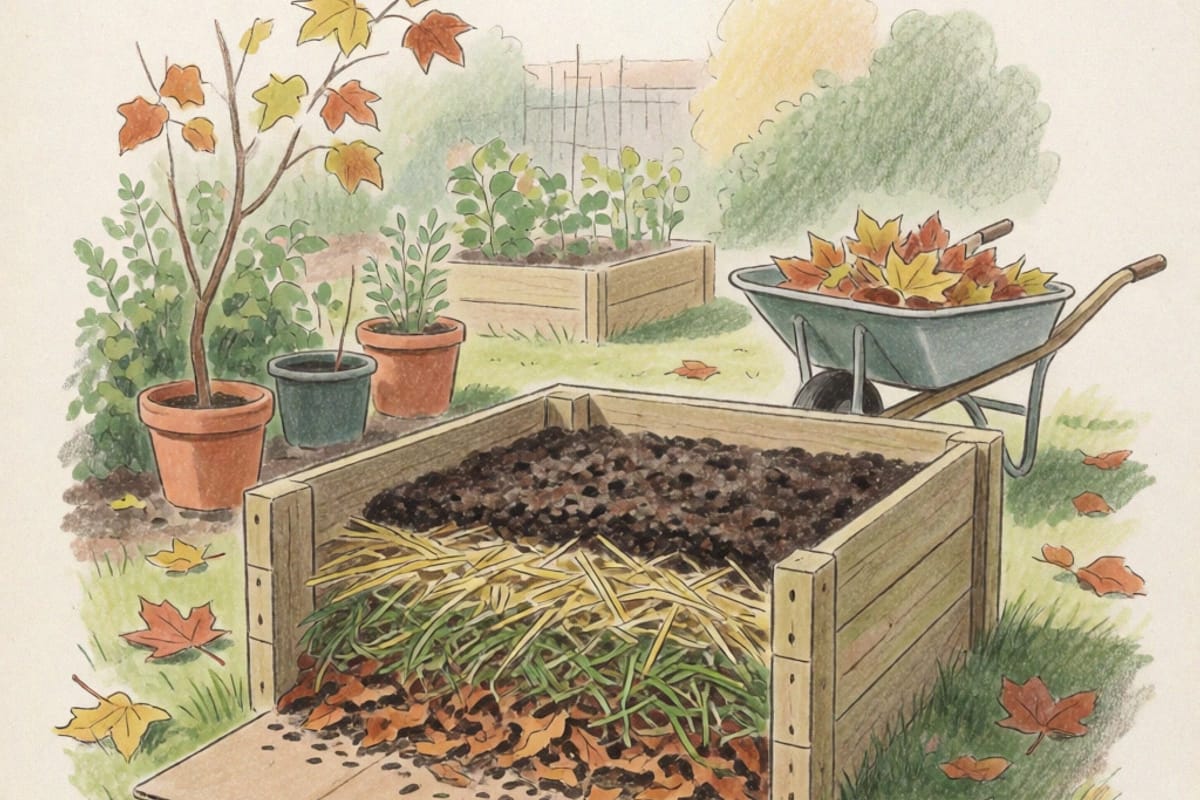
Also called sheet composting. Cardboard on the bottom to smother grass, then alternating layers of brown material (shredded leaves, straw) and green material (grass clippings, kitchen scraps, spent plants), built up well above the top of the frame, with a few inches of finished compost on top.
It costs almost nothing, especially in autumn when the leaves are free. But the layers need months to break down into something roots can grow through, and the whole thing sinks a long way as it does. Build it taller than the frame. It will not stay there.
Why October flips the ranking
Here is the thing about that last one. Four to six months from early October is roughly March or April, which is when you’d be planting most of that bed anyway. The slow method only costs you time you weren’t going to use.
So if you’re planning a new bed for next spring, build it now and fill it the cheap way. Get the cardboard down, pile on the leaves as they come off the trees, add the last of the spent plants and whatever grass clippings you have, and let the winter do the work. In March, top it off with a few inches of compost or a couple of bags of mix to plant into.
Before you start, it’s worth deciding what’s going in it. The square-foot bed grid in Garden Planner Pro lets you lay out next year’s plants in the new bed now, which also tells you whether you need one bed or two, and that decides whether bulk delivery makes sense.
The only time I’d pay for bags is a bed I need to plant this month. Garlic going in this October is the obvious one. For everything else, the leaves are already falling.