Should You Put Coffee Grounds in Your Garden?
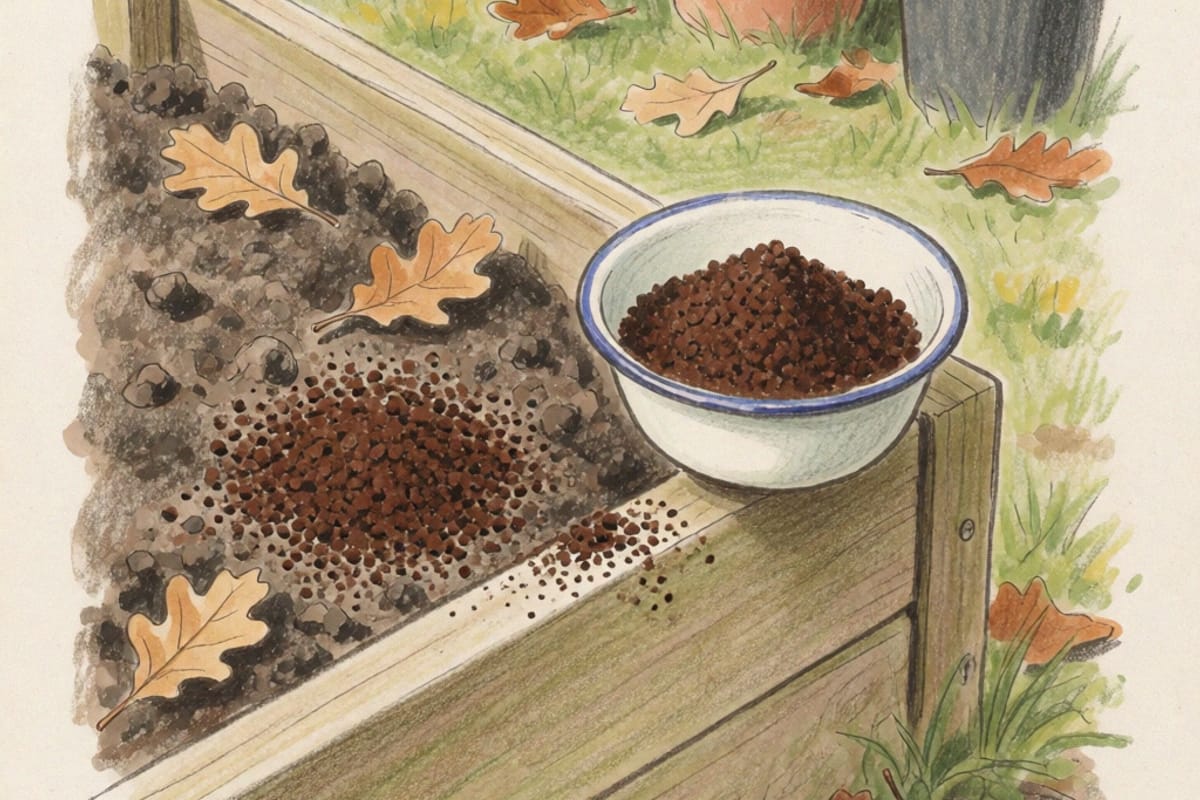
Yes, but probably not the way you’ve heard. Used coffee grounds are a good thing to put in the compost, and a thin scattering on a bed does no harm. They won’t make your soil acidic, they aren’t much of a fertilizer on their own, and they won’t keep slugs off your lettuce.
That’s less exciting than the internet version, where a morning cup of coffee feeds your roses, turns your hydrangeas blue and builds a slug fence around the garden. It’s still a perfectly good use for something you’d otherwise throw away.
The acid thing
This is the claim you hear most, usually in a sentence about blueberries. Coffee is acidic, so the grounds must be too, so they’ll lower your soil pH.
Fresh, unbrewed coffee is somewhat acidic. But most of that acidity is water-soluble, and it went into your cup. What comes out of the filter is close to neutral, usually a touch on the acid side and sometimes not even that. If you’ve got blueberries in soil that’s too alkaline for them, spent grounds won’t fix it. Sulfur and acidic organic matter like pine needles or peat do the job, slowly, and a soil test tells you how much you need.
I tipped coffee grounds around a sulking blueberry for most of one summer before I tested the soil. The blueberry went on sulking. The soil hadn’t moved.
Are they a fertilizer?
A little. Coffee grounds carry some nitrogen and small amounts of other nutrients, but not much of it is available to plants straight away. It’s tied up in the grounds and gets released as soil life breaks them down, which takes a while.
In the compost bin, this is exactly where they’re useful. Composters sort materials into greens (wet, nitrogen-rich, like kitchen scraps and grass clippings) and browns (dry, carbon-rich, like leaves and straw). Coffee grounds look brown but count as a green. And right now, in the middle of November, you probably have a mountain of the perfect partner for them on the lawn. A bucket of grounds mixed through a pile of fallen leaves gives the leaves something to get going on. Paper filters can go in too. Worms in a worm bin are fond of grounds as well, in moderation, mixed with plenty of bedding.
Coffee grounds on the bed aren’t a substitute for compost or for feeding a hungry crop. Think of them as one more kind of organic matter rather than plant food.
Why a thick layer goes wrong
The grounds are very fine, and fine particles pack down. Spread an inch of grounds on a bed and after a few rains and a dry spell it can set into a crust. Water starts running off it rather than soaking in, and in damp shade it can grow a fuzz of mould on top. Neither does the plants underneath any good.
There’s another reason to go easy on putting them straight into soil in bulk. Grounds still contain some caffeine and other compounds that can hold back plant growth. When researchers at the University of Melbourne grew vegetables in soil with spent grounds mixed straight in, about a decade ago, the plants grew worse rather than better. A sprinkle isn’t going to do that. It is a reason to compost the bulk of them first.
So if you want them on the bed rather than in the bin, keep the layer thin, well under an inch, and mix them with something coarser. Stir them into a mulch of shredded leaves, or rake them lightly into the top of the soil. Spread out like that, they break down and behave themselves.
And the slugs
The slug idea has a bit of real science behind it, which is probably why it won’t go away. Caffeine is toxic to slugs and snails, and a USDA team showed it by spraying them with caffeine solutions. But those solutions were much stronger than anything left in spent grounds, and a ring of grounds around a plant doesn’t reliably stop anything. Plenty of gardeners have watched slugs cross it.
If slugs are the reason you were reaching for the coffee, you’ll do better with the boring methods: going out after dark with a flashlight, traps, copper or a gritty barrier on a pot rim, and keeping the hiding places down near your most tempting plants. The pest guides in Garden Planner Pro go through slug control with treatment tips for each, which is a lot more use than a scattering of grounds in April.
What I actually do with mine
Most days, the grounds go in the compost caddy with the peelings, filter and all. In autumn I save a bit more of them and tip a bucket over the leaf pile whenever I turn it. Now and then a handful goes on the soil around something, raked in, because it’s raining and the bin is at the far end of the garden.
If you have a coffee shop nearby, some of them bag up their used grounds for gardeners, which is worth asking about if you’re trying to get a cold leaf pile going. Just treat a sackful the way you would a sackful of grass clippings. Mix it in with plenty of browns, and don’t pour it out on the beds in one go.