Why Didn't My Seeds Come Up?
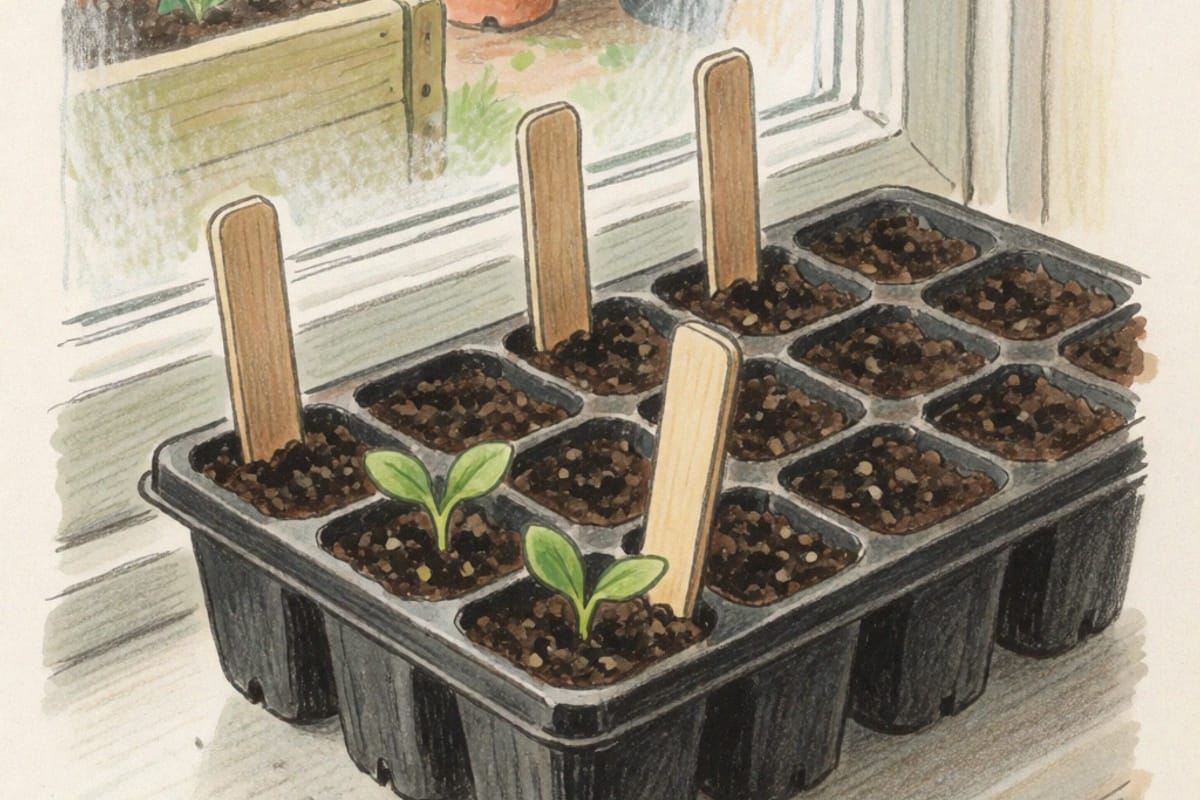
You sowed a tray, labelled it, checked it every morning, and two weeks on it’s still a tray of compost. Maybe a couple of cells came up and the rest didn’t. Maybe nothing did.
I’m writing this in November on purpose. The first indoor sowings of the year, onions and leeks and the slow peppers, go in around January for a lot of us, and that’s when this happens most. The house is cold, the windowsill is colder, and you’re sowing seed you bought last spring.
The good news is that seeds that didn’t come up usually leave evidence. Before you resow, take a teaspoon and dig up a few. What you find tells you most of what went wrong.
First, are you sure it’s been long enough?
Some seeds are just slow, and slower still in cool compost. Lettuce, radishes and brassicas often show in under a week. Tomatoes take about a week in a warm room. Peppers can take two weeks or more, especially if the compost is on the cool side, and parsley has a reputation for taking three weeks or longer. Onions are usually up in one to two.
If you’re inside that window, wait. If you’re well past it, dig.
What the seed tells you
| What you find | What it most likely means |
|---|---|
| Seed looks exactly as it went in, firm, not swollen | too cold, too old, or not long enough yet |
| Seed has swollen and split, with a pale shoot curled underground | sown too deep, or a crust on top it couldn’t break |
| Seed is soft, brown, mushy, maybe smells bad | rotted: too wet and too cool, or damping off |
| A tiny root came out, then went brown and shrivelled | dried out after it started |
| No seed at all, or empty husks, little holes | something ate it |
Too deep
The usual rule is to cover a seed to about two or three times its own thickness. That’s barely anything for small seeds. Lettuce, many flowers and some herbs want only a dusting of compost, or none, because they need some light to germinate. Big seeds like squash and beans can go an inch or so down.
If you dig and find a seed that has germinated with a pale, crooked shoot that never reached the surface, it ran out of energy before it got there. Also check the surface of the tray. Compost that has been watered from above and then dried can form a hard skin that small seedlings can’t push through.
Too cold, or too warm
Temperature is behind more January failures than anything else. Every crop has a range where it germinates quickly, and a lot of the summer crops want their compost warmer than most rooms are. Peppers and tomatoes do best in properly warm compost. On a cold windowsill they’ll sit for weeks, and some will rot before they move.
Remember it’s the compost temperature that counts, not the room’s. A windowsill can be several degrees colder than the middle of the room, especially at night behind the glass. A heat mat under the tray, or a spot on top of the fridge for the days before they come up, makes a big difference for peppers.
The opposite happens too. Lettuce and spinach germinate badly in warm compost and can simply refuse. If you’ve put them on the same heat mat as the peppers, that’s probably your answer.
Dried out, or too wet
A seed that has taken up water and started to grow can’t stop and wait. If the compost dries out at that stage, even once, it dies. That’s the shrivelled seed with a short dead root. Covering the tray with a lid or a sheet of plastic until the first shoots appear stops this, as long as you take the cover off once they do.
Too much water is the other way round. Compost that stays soggy and cold has no air in it, and seeds sitting in it rot. Fungi in the compost can kill a seedling before it ever reaches the surface, too. That’s damping off before emergence, the same family of problems that makes seedlings fall over at the soil line once they’re up. If you find soft, brown, rotted seeds, use fresh seed-starting mix and a clean tray for the resow, and water from below so the surface doesn’t stay wet.
Old seed
If the seed looks untouched after plenty of time at the right temperature, and the compost was moist but not wet, the seed may simply have been dead. Onion and parsnip seed are the quickest to lose their viability, and onion seed is often what people sow first in January. A lot of other seed keeps for years, so don’t bin the whole box on the strength of one failure. The ten-seed paper towel test tells you in a week whether a packet is still worth sowing.
Something ate them
Indoors, this is usually mice, especially if the trays are in a garage, a shed or a cold back room. They’ll dig up large seeds like peas, beans, squash and corn overnight and leave neat little holes and the odd husk. Outdoors, birds take seed from the surface and from shallow drills, and mice dig up the big ones.
Small animals tend to leave something behind. Little pits in the compost, scattered husks, or droppings near the tray all point the same way. Move the trays somewhere the mice can’t reach, or cover outdoor rows with fleece or netting until the seedlings are up.
Before you resow
Change one thing based on what you found, then sow again. Don’t change everything and don’t just repeat the same sowing in the same spot, hoping. Most seeds that failed did so for a reason the next tray will share.
Timing helps with a lot of this. Sowing too early in a cold house is how peppers end up sitting for three weeks. The planting calendar in Garden Planner Pro works out the start-indoors date for each crop from your own frost dates, so the onions go in when they should and the peppers wait until the house is a bit kinder to them.
And write the sowing date on the label, every time. The next time you’re staring at a bare tray, you’ll know exactly how long it’s been, which is the first thing you need to know.