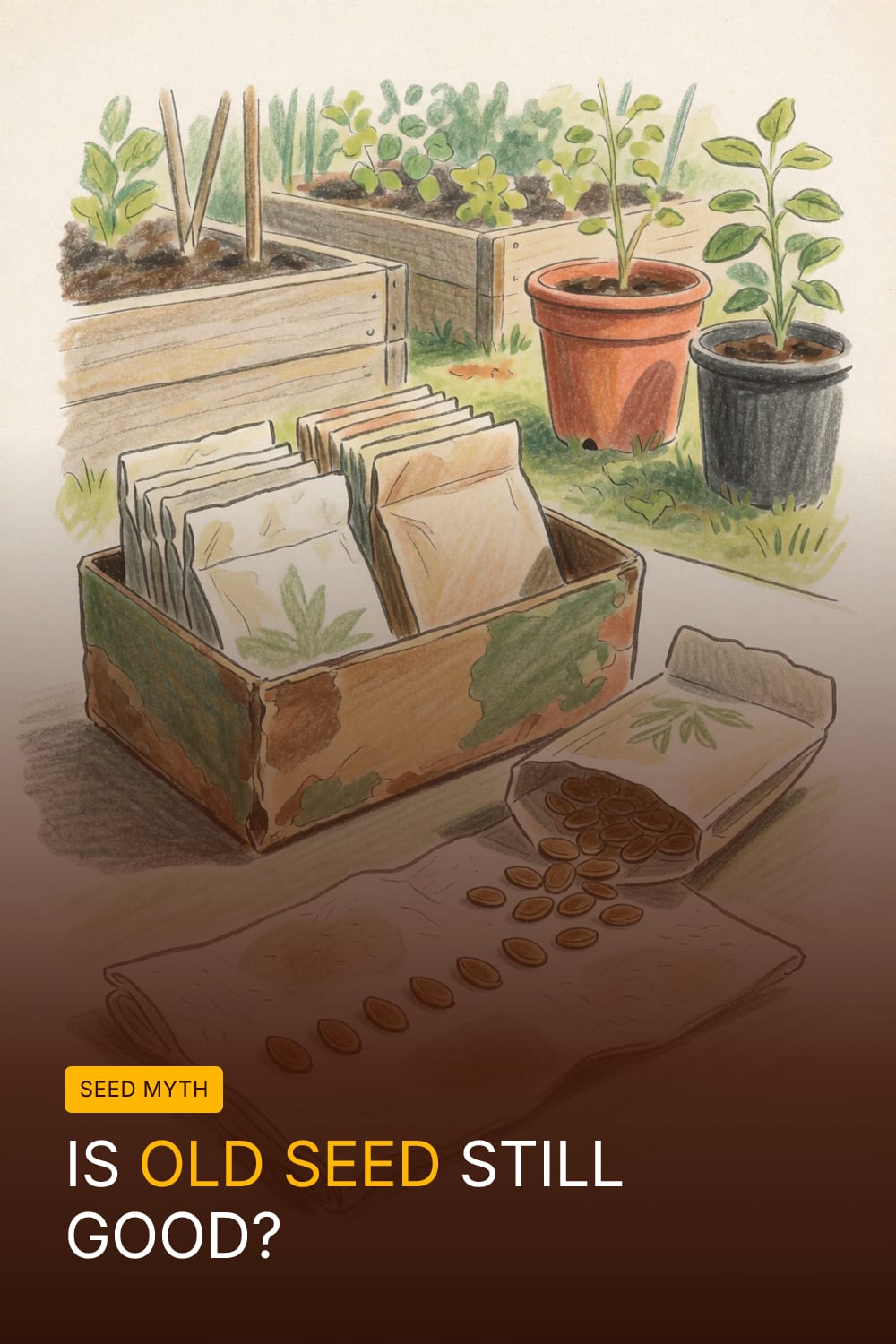
Everyone Tells You to Throw Out Old Seed. Most of It Is Still Fine.
Most of the seed in that shoebox is fine. The date printed on the packet is the season it was packed for, not the day the seed stops working, and for a lot of crops you can be three or four years past it and lose very little. Beans, peas, tomatoes, cucumbers, squash, brassicas, lettuce, beet, radish: those will usually come up for you long after the packet says they are finished.
There is a real exception, and it is a short list. Onion, leek and chive seed genuinely does fall off fast, often noticeably within a year. Parsnip is the worst of the lot and is the one crop I buy fresh every single year without thinking about it. Parsley, spinach and corn salad sit somewhere in the middle. If you are going to throw anything out, throw out those.
I am writing this at the end of October because of when it becomes useful. In January you will sit down with a catalogue and a mug of something and start filling a basket, and what you spend depends almost entirely on whether you know what you already own. Sorting the box now, while the garden still gives you a reason to be out of the house, means the January order is short and deliberate instead of a guess.
What actually kills seed, and it is usually not age
Seed is alive and slowly using itself up. Two things set the speed: warmth and moisture. A packet in a cool dry cupboard ages slowly. The same packet in a shed that swings from freezing to 90 degrees, or in a kitchen drawer above a dishwasher, ages fast.
The useful rule of thumb is that the temperature in Fahrenheit plus the relative humidity should add up to less than a hundred. A cool room at 60 degrees and 35 percent humidity is fine. A garage in August is not. This is why two gardeners can have wildly different experiences with four-year-old seed and both be telling the truth.
If you want one change that does more than anything else: put the whole box in a sealed container with a couple of those silica sachets that come in packaging, and keep it somewhere that never gets hot. Not the greenhouse. Not the shed.
Roughly how long each type lasts
These are working numbers, not guarantees, and storage moves them a lot in both directions.
| Crop | Reasonable life |
|---|---|
| Parsnip | 1 year |
| Onion, leek, chive | 1 to 2 years |
| Parsley, spinach, corn salad | 2 to 3 years |
| Carrot, pepper, sweet corn | 3 years |
| Pea, bean, beet, chard | 3 to 4 years |
| Lettuce, brassicas, radish, turnip | 4 to 5 years |
| Tomato, cucumber, squash, melon | 5 years and often much more |
I have had squash seed germinate at eight years old, kept in a cupboard, with no special care at all. I have also had two-year-old leek seed give me almost nothing after a summer in a shed. Both of those fit the table if you account for where they were living.
The ten-seed test settles every argument
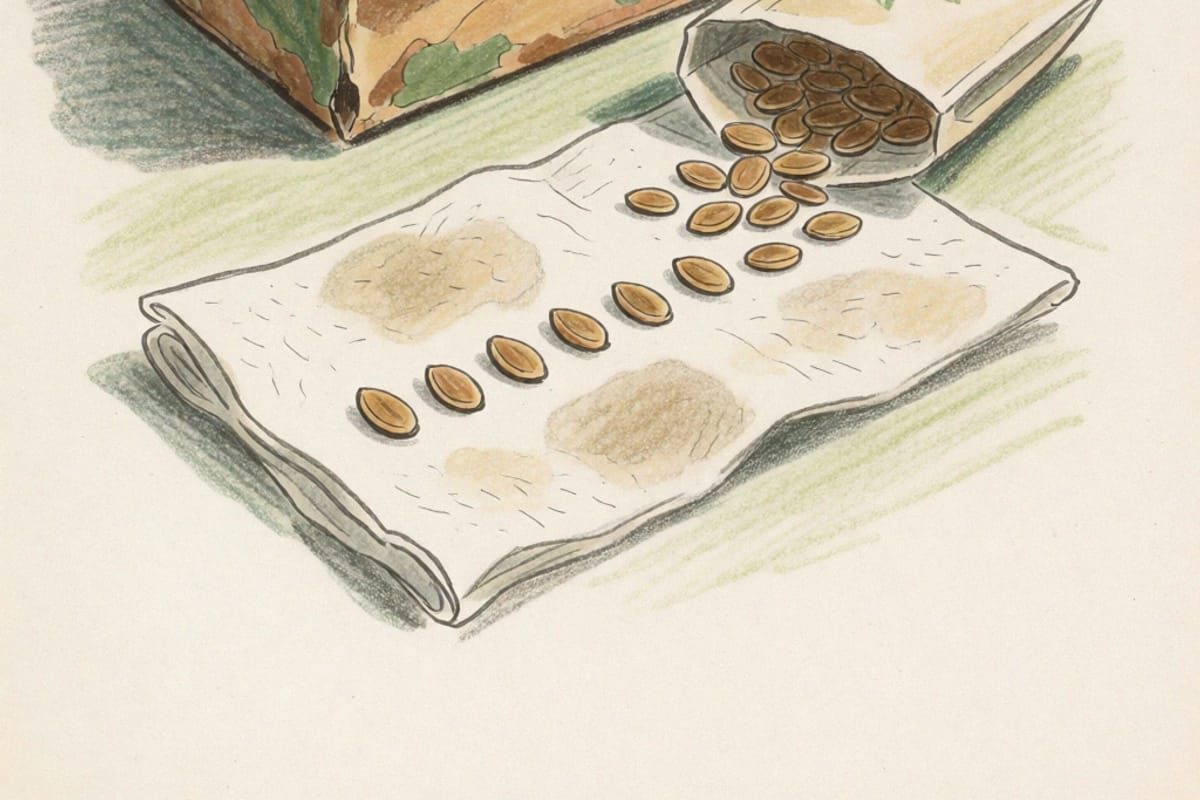
Stop guessing. Count out ten seeds, lay them on half a sheet of damp kitchen paper, fold it over, put it in a sandwich bag somewhere warm, and check it after whatever that crop’s normal germination time is. A week for most things, two for the slow ones like parsley and parsnip.
Then read it as simple arithmetic. Seven or more sprouted and you sow that packet exactly as normal. Four or five and the seed is still usable, you just sow it about twice as thick and thin out afterwards. One or two and you have your answer, and you have saved yourself a bed that comes up in patches in April, which is a much more expensive way to find out.
The test costs you ten seeds out of a packet that holds a few hundred. I used to skip it because it felt fussy, and then I lost three weeks of spring to a row of old carrot seed that never really showed up, and now I do it every winter for anything more than two years old.
The thing the test will not tell you
A germination test tells you whether the seed is alive. It says nothing about whether the variety is one you want, and this is where old seed quietly wastes your season in a different way.
If you saved seed from a hybrid, or you kept the tail end of a variety you did not much like, or you have a packet you cannot identify because you wrote “SQUASH” on it in marker in a hurry, none of that improves by being viable. Sorting the box is a good moment to be honest about that as well. Write the variety and the year on everything you keep, in full, and bin the mystery envelopes.
Go through it on a wet afternoon in the next few weeks. Sort into three piles: fresh enough to trust, old enough to test, and gone. The middle pile is where most of your seed really lives, and it is the pile most people throw away.