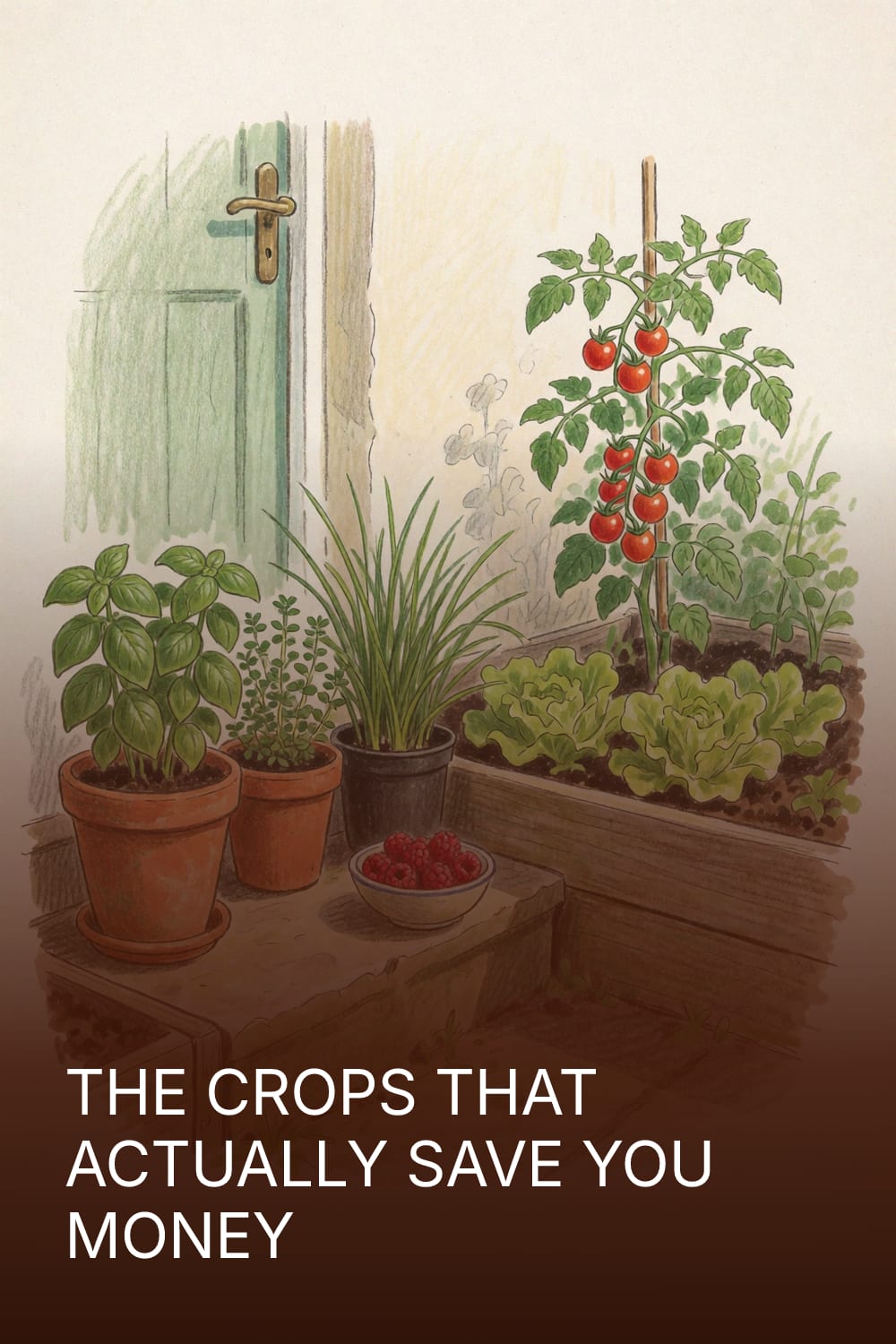
The Crops That Save You Money Are the Ones Sold in Little Plastic Boxes
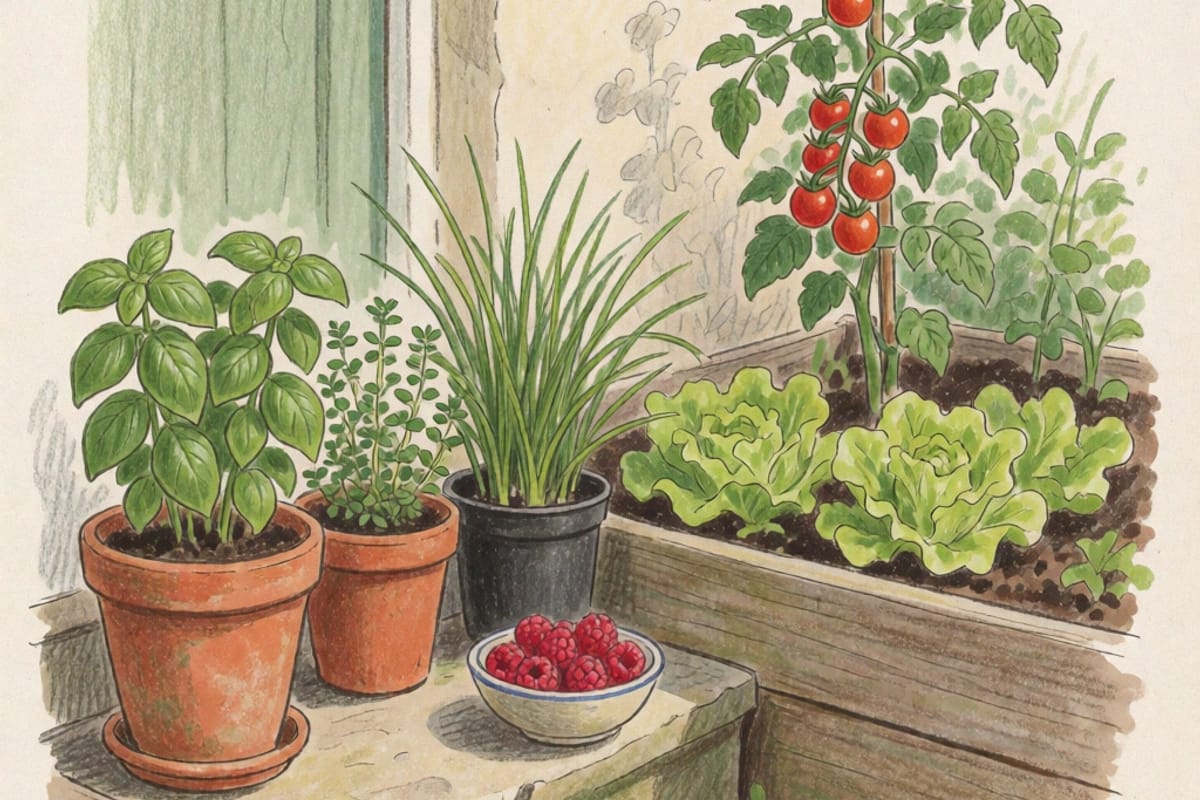
Walk down the produce aisle and look at what’s sold loose and what’s sold in a little plastic box. Potatoes, onions, carrots and cabbages sit in big bins or heavy bags, and they’re some of the cheapest food in the building by weight. Basil, salad leaves, cherry tomatoes, raspberries and snap peas come in small clamshells, and they’re some of the most expensive.
If one of the reasons you grow food is to spend less on it, that aisle is the whole plan. Grow the things that come in the boxes.
The staples are cheap for a reason
Potatoes, onions and storage carrots are cheap in the shop because they are easy to grow at huge scale, easy to harvest by machine, and they keep for months in a warehouse. None of that is true of your back garden. A bed of maincrop potatoes is taken up from spring until late summer, and at the end of it you’ve grown a crop that was never expensive to buy.
I grew a big bed of storage onions for several years running because it felt like proper self-sufficiency. It was a lot of weeding for something I could have bought in a sack for less than the sets cost me, once I counted the ones that rotted. I don’t regret learning to grow them. I just stopped expecting them to pay for anything.
That isn’t an argument against growing them at all. New potatoes dug an hour before dinner are a different food from the ones in the bag, and if you love them, grow them. The point is narrower. If the garden is meant to take money off the grocery bill, the staples aren’t where that money comes from.
What’s in the little boxes
The expensive produce has the opposite story. It’s fragile, it’s picked by hand, and it spoils fast, so the shop pays for the labour and the waste and passes it on to you. In a garden, fragile and short-lived don’t cost anything extra. You pick it and eat it the same afternoon.
Fresh herbs are the clearest case. A small pack of basil or coriander at the shop costs about what a whole packet of seed does, and it wilts in the fridge within a week. Thyme, chives, oregano, mint and sage are perennial, so a few plants in a pot keep going for years for the price of buying them once. Parsley is a biennial, and one spring sowing keeps you in parsley into the following spring.
Salad leaves are the next one. A bed of loose-leaf lettuce and other greens cut a few leaves at a time keeps regrowing for weeks, which is exactly how the expensive bags of baby leaves are sold and exactly how they go slimy in your fridge before you finish them.
Then the soft fruit and the tender vegetables: cherry tomatoes, raspberries, strawberries, snap and snow peas, green beans picked young, and small sweet peppers. All of them are hand-picked, bruise easily, and are priced like it. Raspberries in particular are perennial and, once established, produce for years.
None of this needs a big garden, which is the other half of the argument. A balcony can’t grow a year of potatoes, but it can grow most of a summer’s herbs and a lot of salad.
Plan next year from the grocery receipt
When the seed catalogues arrive in January, the pictures are of giant pumpkins and rows of perfect cabbages, because those photograph well. Before you open it, look at a couple of grocery receipts instead and underline what you buy every week that comes in a small box or a small bunch. That underlined list is the heart of next year’s garden. Plant enough of each to cover what you actually use, and then fill the space left with whatever you grow for love.
The planting is the easy half. The half nobody does is checking whether it worked. If you log your harvests, Garden Planner Pro adds up what each crop gave you against what it would have cost to buy, which settles the argument for your own garden rather than mine. You may find, as I did, that the humble row of cut-and-come-again lettuce outearned something you were far prouder of.
The one exception I’d make
Big slicing tomatoes break the rule. They are not especially expensive to buy, but the ones in the shop are picked early to survive the journey, and they taste of very little. You grow those for flavour, and that’s a completely good reason to grow anything.
So if you want one change to make to next year’s plan, move a bed from the cheap staples to salad and herbs, and put a pot of perennial herbs by the back door where you’ll use them. That’s where the saving is.