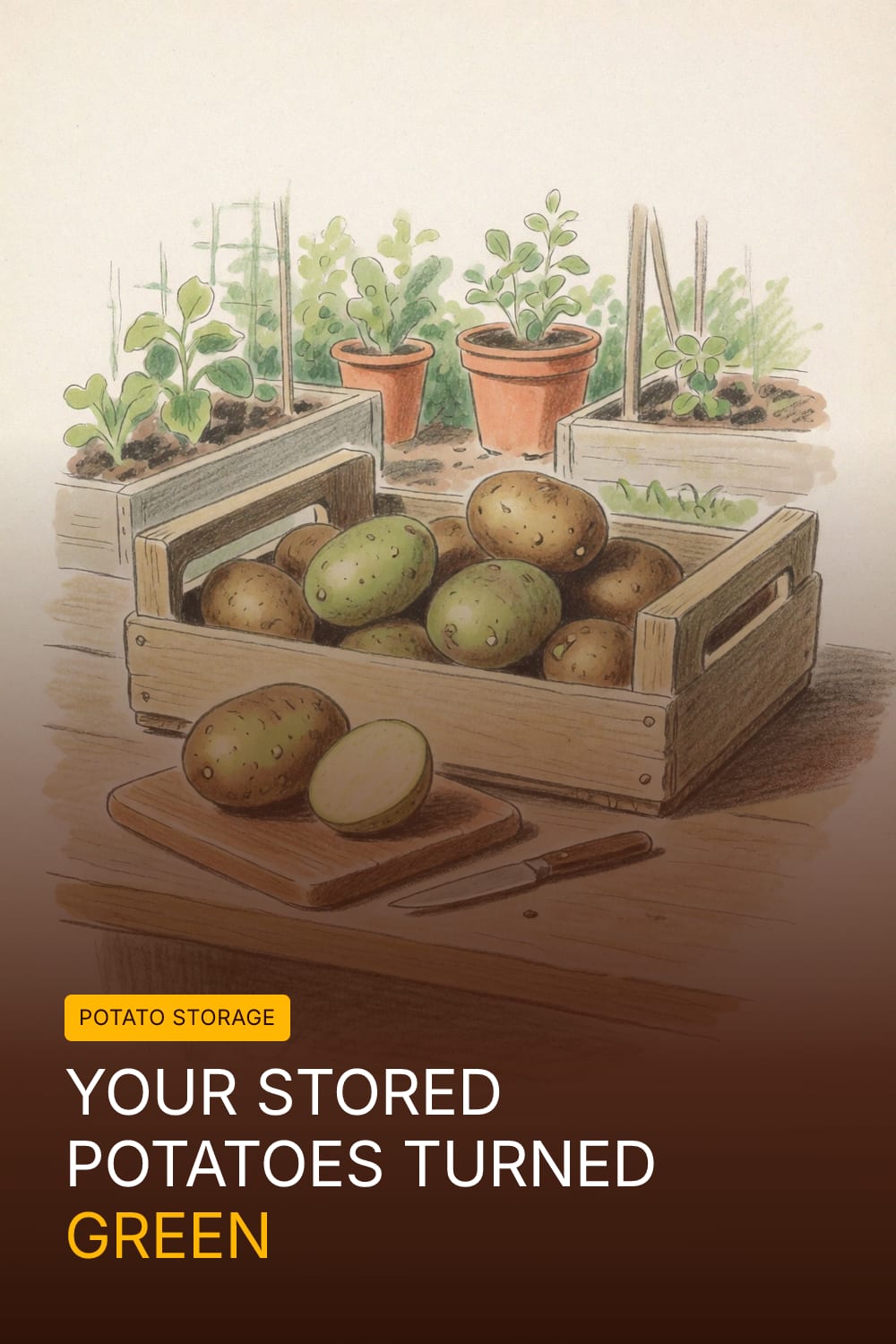
Your Stored Potatoes Turned Green. Can You Still Eat Them?
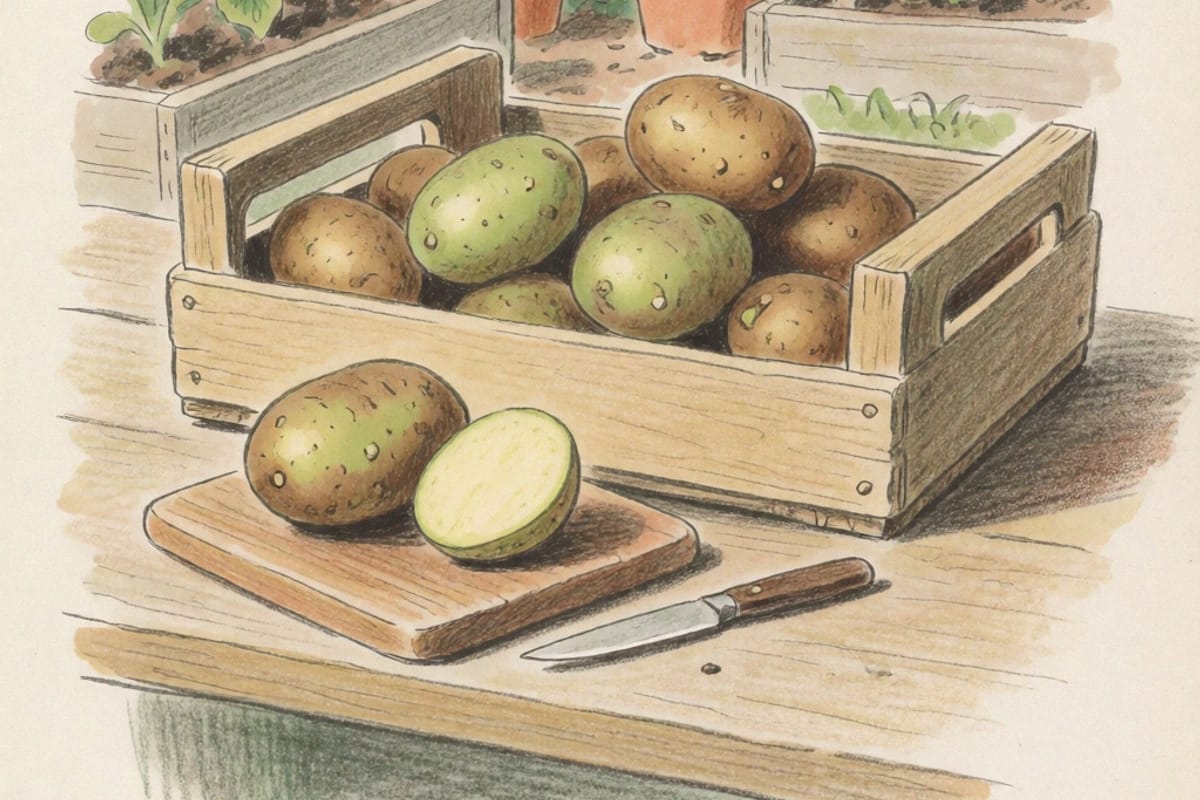
You went down for a few potatoes for dinner and the top layer of the crate has gone green. Not all over, maybe. A greenish blush on one side, a patch the size of a thumbprint, and when you scrape the skin with a fingernail the flesh underneath is the colour of a lime rind.
Most of the time you can still eat them. Peel the green away, and a good margin of flesh with it, cut out any sprouts and eyes, and cook the rest as normal. A potato that is green right through, or that tastes bitter once it’s cooked, goes on the compost.
What the green is telling you
The green itself is chlorophyll. Potatoes make it when they sit in light, the same way the leaves above ground do, and on its own it’s harmless. You’d eat more of it in a spoonful of spinach.
The trouble is what comes along with it. Potatoes naturally carry compounds called glycoalkaloids (solanine is the one people have heard of), mostly in and just under the skin, in the eyes, and in the sprouts. Light, damage and sprouting all push those levels up, and they don’t track the green exactly. But the green is the visible sign that the potato has been sitting in conditions that raise them, so it’s the flag you go by.
Two things about glycoalkaloids are worth knowing. Ordinary cooking doesn’t get rid of them, so boiling or frying a green potato doesn’t make it safe. And in quantity they taste bitter, sometimes with a burning or prickly feel on the tongue. That bitterness is your second warning, and it’s a reliable one. If a bite of cooked potato tastes wrong, stop eating it.
Three potatoes, three answers
Sort the crate into roughly three piles.
A potato with a small green patch or a faint green tinge on one side: peel it thickly, then cut out the green part plus some clean flesh around it. Cut out any eyes that have started to sprout. What’s left is fine to eat. I peel these more generously than feels thrifty, and I’ve stopped feeling bad about it.
A potato that’s firm but has short sprouts and no green: snap or cut the sprouts off, dig out the eyes with the tip of the peeler, and use it soon. Sprouting means it’s waking up, and it won’t keep much longer.
A potato that’s green over most of its surface, green deep into the flesh, or soft and wrinkled with long sprouts: throw it out. You’d be cutting away most of it anyway, and what’s left isn’t worth the risk. This is the pile I’d also put anything in that tastes bitter after cooking.
Be a bit more careful with what goes on a small child’s plate, since a small body handles less of everything. And if you’re feeding a lot of people from one batch of mash, sort before you peel rather than after.
Is it green, or is it something else?
A few things get mistaken for greening.
Red and purple varieties can look odd under a dim bulb, and some yellow-fleshed potatoes have a greenish cast near the skin that isn’t chlorophyll at all. The test is the scrape. Real greening sits in a layer right under the skin and is a clear, leafy green.
Grey, black or brown patches inside a potato are a different problem. That’s usually bruising, or rot getting in from a wound, or a potato that got too cold or too warm in storage. Cut those parts out, and if the potato smells bad or is wet inside, bin it.
And potatoes that taste oddly sweet have been kept too cold, which turns some of their starch to sugar. That’s a texture and flavour problem rather than a safety one.
Did it go green in the crate or in the ground?
This matters for what you change, and it’s easy to tell.
If the potatoes came out of the ground with green shoulders, they were growing too close to the surface. Tubers that poke out of the soil, or sit under a thin layer that the rain washed away, green in the sun before you ever dig them. The fix is next summer’s job: hill the plants up as they grow, or mulch them heavily with straw, so the tubers stay buried in the dark.
If they were clean when you dug them and green now, the light is getting to them in storage. It doesn’t take much, and it doesn’t take long. A few days near a window will do it. So will a crate on a garage shelf where somebody leaves the light on, or a clear plastic bag, or a basket on the kitchen counter.
Keeping the rest of the crate from greening
Potatoes want three things in storage: dark, cool, and damp air. Most of us manage the cool part and forget about the dark.
Cover the crate. A sheet of cardboard, an old burlap sack, or a folded towel over the top keeps light off without trapping moisture the way a plastic lid would. Paper sacks work well for smaller amounts. Keep them away from the fridge, which is too cold for them, and away from onions, which hurry them into sprouting. If you’re still working out where in the house that might be, the whole puzzle of finding the right room for each crop has its own post.
While you’re down there, go through the crate every week or two. Pull out anything soft, sprouting or starting to green and use those first. One rotten potato in the middle of a crate takes its neighbours with it, and you won’t smell it until it has.
How much did the potato bed really give you?
If half the crate is greening by Christmas, that’s worth writing down for next year. It might mean you need a darker corner. It might also mean you grew more potatoes than your household eats before they turn. The yield tracking in Garden Planner Pro keeps the harvest weights and seasonal savings for each crop, so in spring you can see what the bed produced and decide whether to plant the same again or give some of that space to something you’d use up.
One more thing, if you save your own seed potatoes. Greening doesn’t hurt a potato you’re planning to plant. Seed potatoes are often set out in the light on purpose before planting, to wake them up and toughen the sprouts. So a few green ones from a crop you were happy with can go in a separate box marked for spring, and stop being a problem at all.