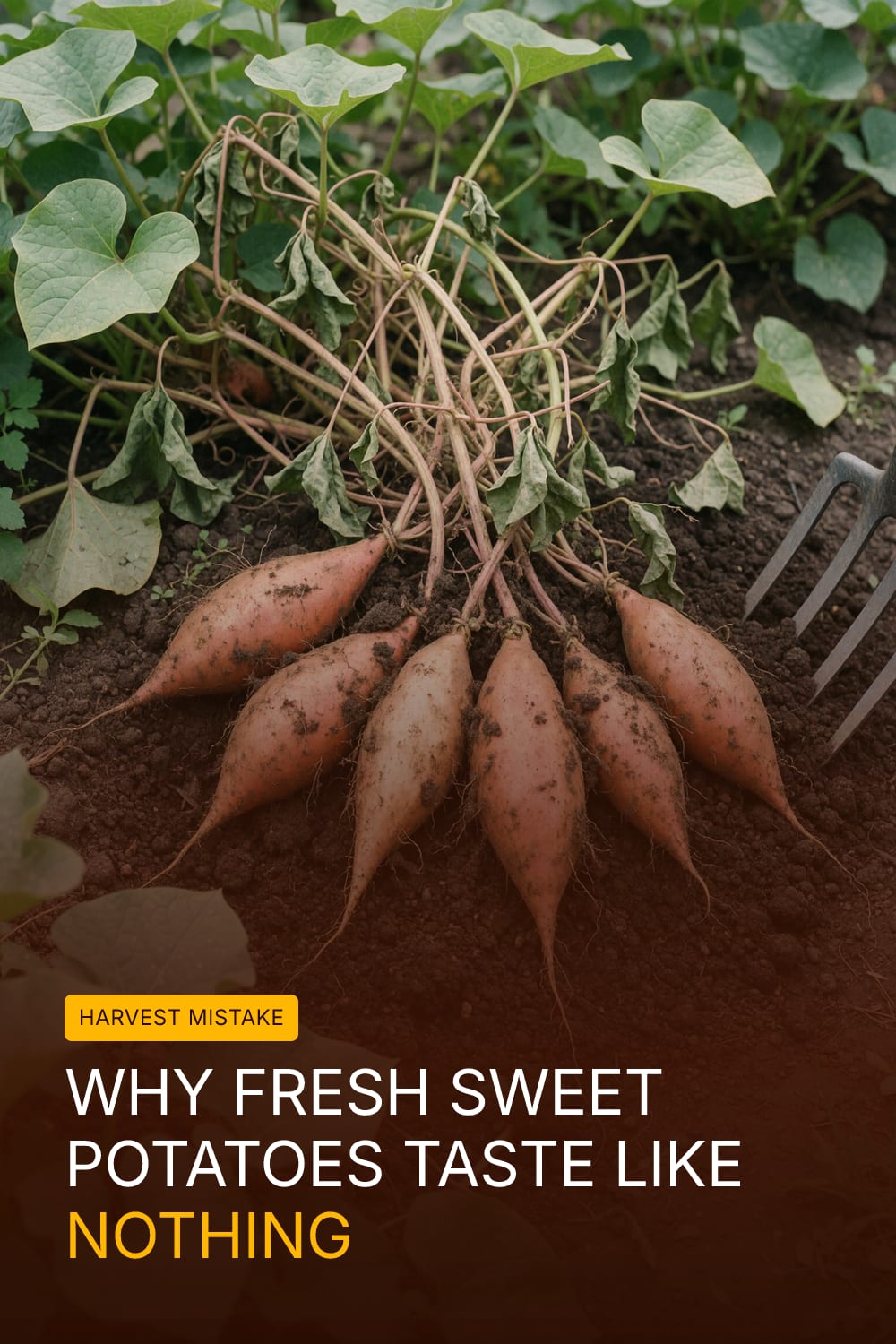
Freshly Dug Sweet Potatoes Taste Like Cardboard. The Week After Is What Fixes That.
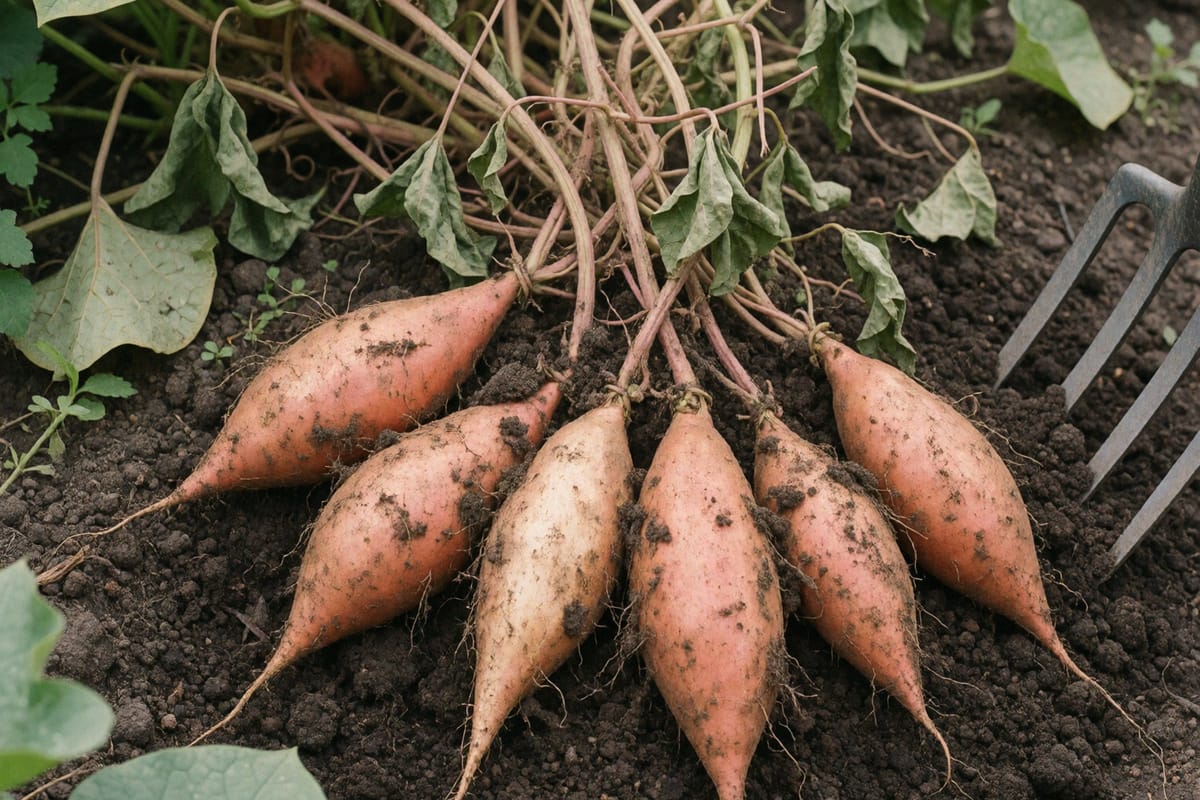
The first time I grew sweet potatoes I dug them on a Saturday, scrubbed the nicest one that evening, baked it for an hour, and sat down to something that tasted like a damp parsnip. No sweetness at all. Dense, a little watery, faintly starchy in the way a raw potato is starchy. I assumed I had grown the wrong variety, or grown it badly, and I nearly gave up on the whole crop.
What I had grown was fine. I just ate it about ten days too early.
The sugar isn’t in the ground
A sweet potato coming out of the soil is mostly starch. The sweetness people expect from it develops afterward, as enzymes inside the root convert some of that starch into sugar, and those enzymes need warmth and time to do the work. That is what curing is. It is not a food-safety step or an old-fashioned bit of fuss. It is the step that makes the vegetable taste like its own name.
Curing does a second thing at the same time. The skin on a fresh sweet potato is thin enough to scrape off with a fingernail, and every scrape is a doorway for rot. Held warm and humid for a week, the root heals those scuffs over and thickens its skin. A cured sweet potato keeps for months. An uncured one starts going soft on you in a few weeks, and it never gets sweet, because you stored it too cool for the conversion to happen.
When to get them out of the ground
Sweet potatoes are usually ready somewhere around 90 to 120 days from planting, depending on the variety, which for most of us means now through early October. The vines are the clock everyone watches, but they lie a bit. Yellowing vines can mean the crop is finishing, or just that it has been dry, or that something chewed the roots.
The real deadline is frost. Frost kills the vines, and once the vines are dead the roots underneath start to go, sometimes within a couple of days, and the damage does not show until they rot in storage. If a frost catches you out, cut the dead vines off at the soil line and dig the roots as soon as the ground is workable. Do not leave them in the bed to “finish.”
Cold soil is the quieter risk. Sweet potatoes are a tropical crop and they sulk below about 50°F, so a stretch of chilly nights in late September can start the injury even before a true frost lands. If your first frost date is closing in, dig. You can always cure a slightly small root. You cannot fix a chilled one.
To find out where you actually sit, Garden Planner Pro will give you your local first frost date and count the crop backward from it, which is the number that matters far more than the seed packet’s day count.
Digging without wrecking them
Start a good foot out from the crown and lift with a fork rather than pushing straight down through the middle of the plant. The roots spread further than seems reasonable, and I stab at least one every year in the crown by digging tight. Lift the whole clump, then pull the roots off by hand.
Then leave them dirty. Do not wash them, not now and honestly not until the day you cook them. Washing wets the skin, drives soil into the scrapes, and undoes the drying you are about to do. Brush the loose dirt off with your hand once they have dried a few hours and let the rest stay.
Handle them like eggs, because they bruise like eggs. Every dent shows up two months later as a soft brown patch.
The warm week
Sweet potatoes cure at roughly 80 to 85°F with high humidity, around 85 to 90 percent, for about four to ten days. Those are warmer and wetter conditions than winter squash want, which is where a lot of confusion comes from. A squash cures fine on a sunny porch. A sweet potato does not.
Most of us do not have a purpose-built room, so the trick is finding a small space you can make warm and hold. A closet with a space heater set low. The top of a refrigerator, boxed in. A greenhouse in early September is often close to right during the day and too cold at night. I use a plastic tote with a towel over the top instead of the lid, sitting near a heat source, and check it daily so it does not turn into a sauna and cook them. Some airflow matters. Sealed plastic gives you mold instead of cured roots.
You can see when it has worked. The skins go from thin and tender to something that resists a thumbnail, the scrapes have sealed over, and the color deepens.
After that, keep them out of the cold
Once cured, move them somewhere around 55 to 60°F with decent air movement, spread out in a basket or a crate rather than piled in a bag. A cool spare bedroom, a stair cupboard, an unheated back hall.
The refrigerator is the mistake worth naming. Below about 50°F sweet potatoes take chilling injury, which gives you hard patches that never soften in cooking and a dull, off flavor no amount of butter rescues. Half the people who tell me they do not like sweet potatoes have only ever eaten refrigerated ones.
And they keep improving for a while. The ones I dig in September are noticeably better in November than they were in October, sweeter and denser, which is a strange thing to say about a vegetable and one of the reasons the crop is worth the bed space. If you can leave them alone until Thanksgiving, do.