The Weekend Box That Keeps Your Garden Growing After Frost Takes Everyone Else's
- Fall Garden
- Season Extension
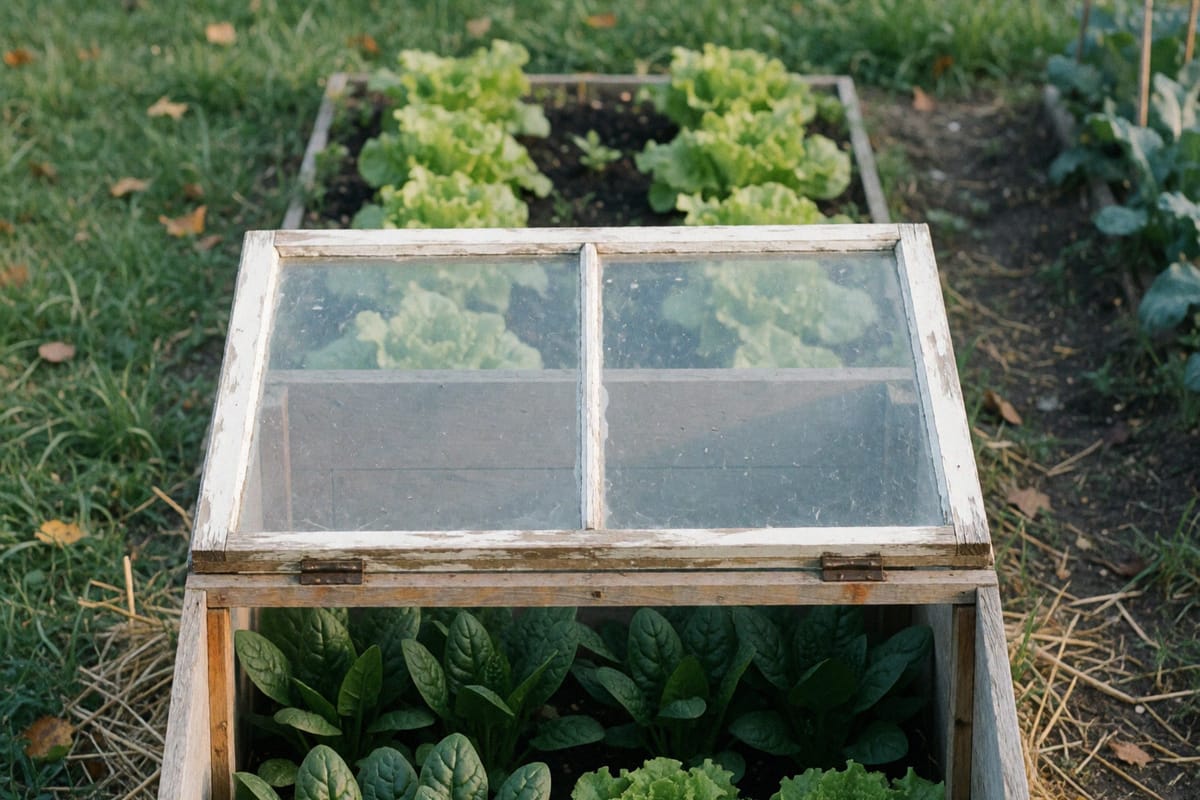
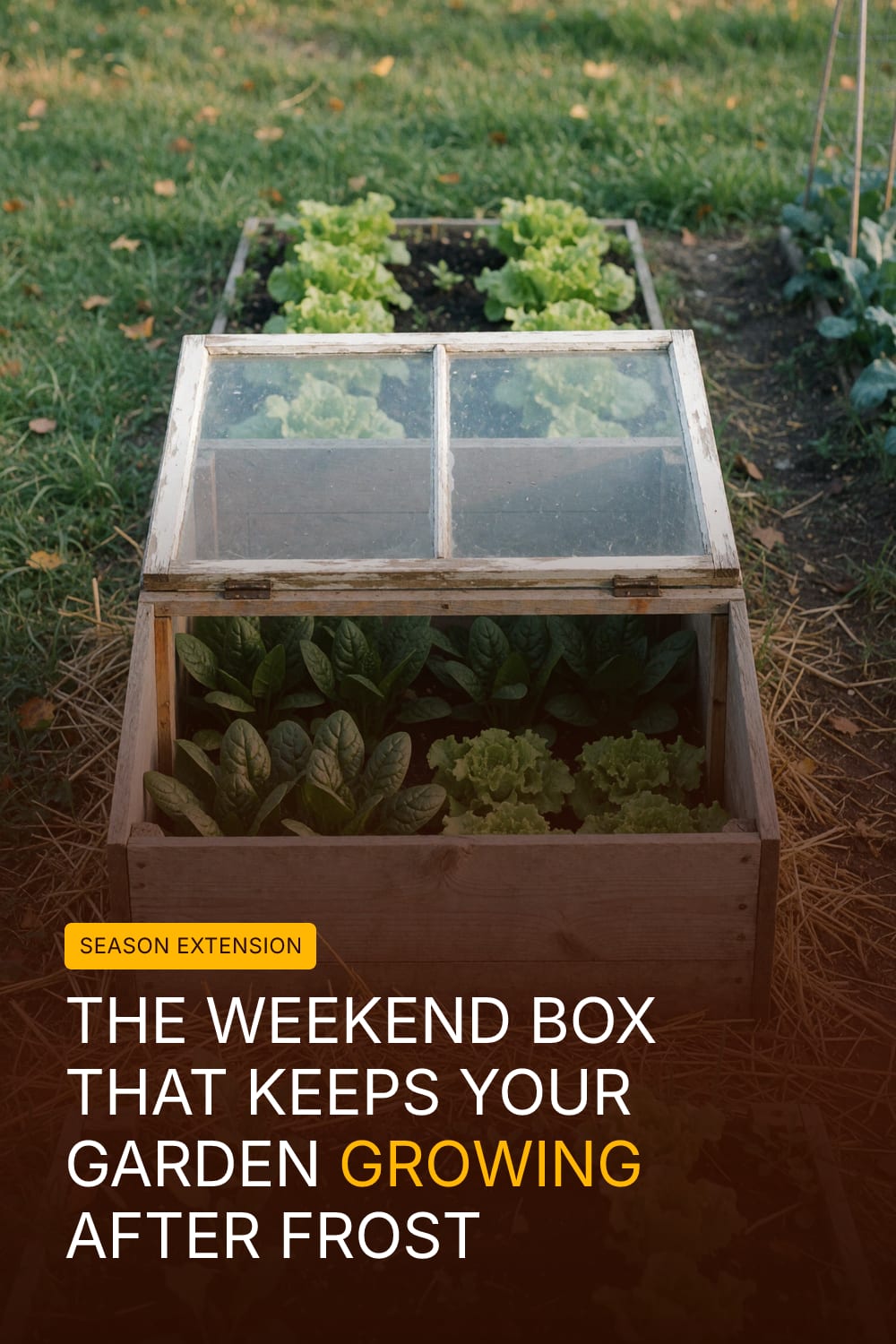
I have a neighbor two doors down who was still cutting spinach in December two winters back, in a yard that gets exactly the same weather mine does. I asked what she was doing differently and she pointed at a box. Not a greenhouse, not some kit ordered off a gardening catalog - an old wooden frame with a salvaged window laid on top of it, sitting over a bed of spinach like a lid on a pot.
That is a cold frame, and it is embarrassingly simple for what it does. A bottomless box, a clear top, set over soil that is already growing something. No power, no heat source, nothing to plug in. It works because glass and old storm windows do the same job a greenhouse roof does at any scale you want to build it - they let light in and trap the warmth that light creates, and a box that size holds heat far better than an open bed ever could.
Why this isn’t the frost cloth post again
If you already have row cover for the nights a hard freeze sneaks up on you, good - keep it, it does its own job. A cold frame is a different tool for a different problem. Row cover buys you a few degrees on one bad night. A cold frame changes what is possible over the whole back half of fall, because the greens inside it are sitting in warmer soil and warmer air every single day, not just the nights you remembered to cover them.
Building one this weekend
You do not need lumber and a saw, though that works fine too. The fastest version is straw bales stacked two high in a rectangle with an old window balanced on top, tilted slightly so rain runs off instead of pooling. I have also seen them built from cinder blocks, from scrap plywood screwed into a box, even from a salvaged sliding glass door propped on a frame of two-by-fours. The lid is the only part that has to be clear. Everything holding it up can be whatever is sitting around.
Size it to what you are covering - most home versions run somewhere around three feet by six, tall enough in back that the lid sheds water and short enough in front that you are not losing half your light to the angle. Face that low front edge south if you can. That single decision does more for how much heat the box collects than anything else you will do building it.
What actually goes in one
Cold frames are for the tough stuff, not the tender stuff. Spinach, kale, mache, arugula, most lettuces, and the hardier Asian greens all take to it well - crops that were already going to survive a light frost outdoors, just slower and scragglier than you want. A cold frame does not turn it into a greenhouse for tomatoes. Warm-season crops still end when the frost that ends them arrives, box or no box.
Plant or transplant into the frame before the cold really sets in, while the soil underneath is still workable and the plants have a few weeks to get their roots down. A cold frame extends a head start. It is a poor place to start seeds from scratch once the ground has gone cold and hard.
The mistake that kills more cold frame crops than frost does
Cooking them. On a sunny 40-degree day, the inside of a closed frame can climb past 80 within an hour, and greens that spent all fall toughening up for cold will wilt and bolt in that kind of heat just as fast as anything else would. Prop the lid open a few inches whenever the sun is out, even in January, and close it back down before dusk. I check mine most mornings the way I’d check the thermostat, which sounds like more work than it is - it takes about as long as it takes to get the coffee going.
Snow is not the enemy here either. A few inches sitting on the glass acts as extra insulation, and the greens underneath are usually fine when you brush it off. What gets them is a frame left sealed shut on the one bright, still day in the middle of a cold snap - exactly the kind of day you’d guess needs the most protection, and needs the least.
Garden Planner Pro’s frost-date calendar is what tells me when my own first hard freeze is likely to land, which is the number that decides whether I still have time to get a frame’s worth of spinach established before the ground stops cooperating. Past that date, the box is buying time on crops already in the soil, not starting new ones.
A cold frame left up through a mild winter can outlast the season it was built for. Mine is currently on its fourth fall, held together at one corner with a hinge that has been “temporary” since the week I built it.