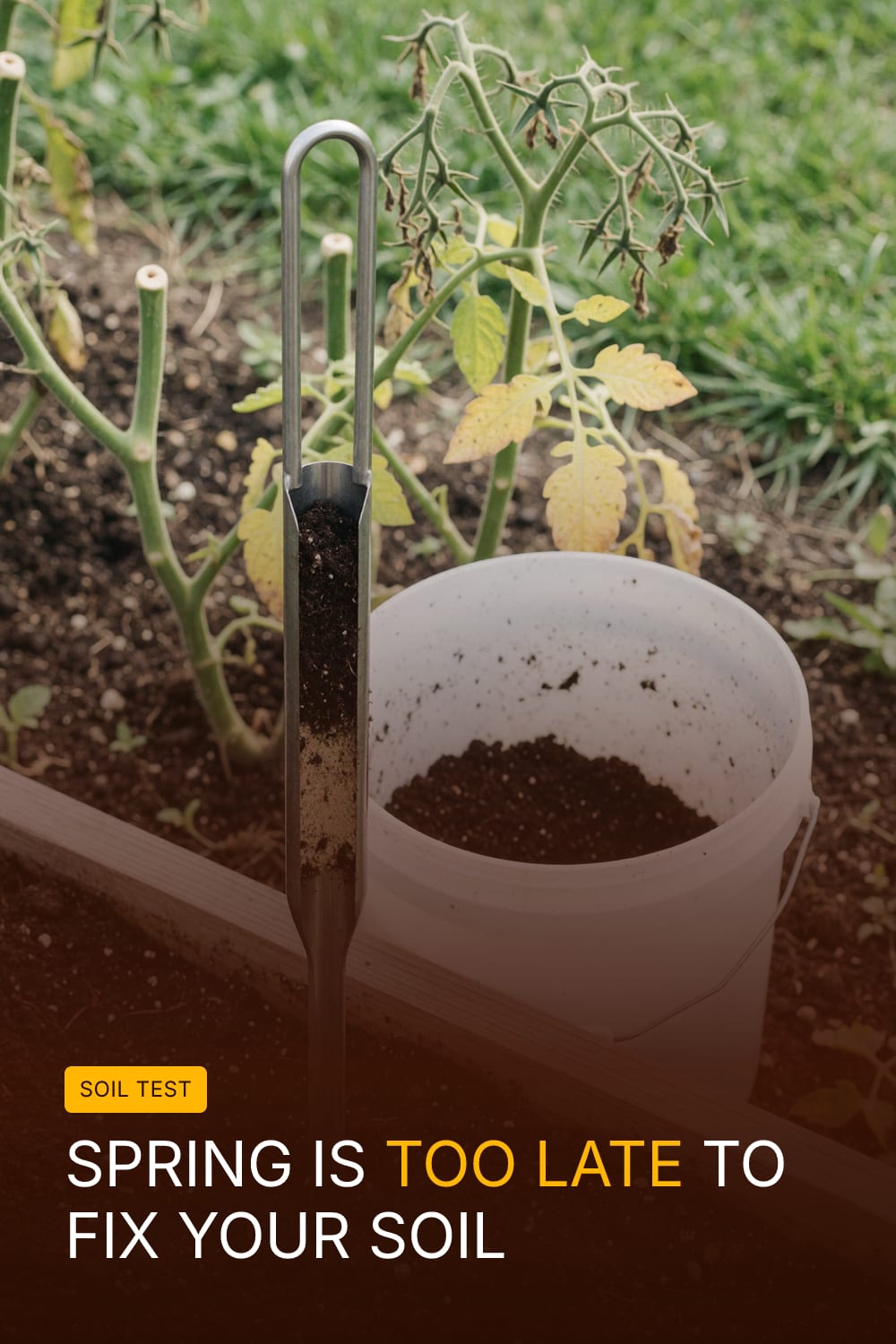
Everyone Amends Their Soil in Spring. That's Months Too Late.
For about ten years I bought a bag of something every April. Sometimes lime, sometimes a balanced fertilizer with three numbers on the front, usually whatever was stacked nearest the register. I spread it, I raked it in, I planted tomatoes two weeks later, and I told myself I had amended the soil.
I had not amended anything. I had spent eleven dollars.
The problem is timing, and it is a chemistry problem rather than a gardening one. Lime does not dissolve on contact. It sits there as ground rock and slowly reacts with soil moisture and soil acids, particle by particle, and the finer the grind the faster it goes, but none of it is fast. Spread it in April and it is still mostly sitting there being rock in June, while the plant that needed a different pH has already grown its root system in the soil you actually had. Spread it in October and it has autumn rain, a winter of freezing and thawing, and a spring thaw to work through before anything goes in the ground.
So the useful window is now. My beds start emptying out around the end of August. The bush beans are finished, the cucumbers have gone yellow and crisp at the base, and there is bare ground for the first time since May. That bare ground is the easiest sampling I will get all year, and the labs are quieter in September than they are in the spring rush.
What the test tells you, and what it doesn’t
Send a sample to your state’s Cooperative Extension soil lab and you get back pH, phosphorus, potassium, calcium, magnesium, usually organic matter, and a recommendation in pounds per unit of area for whatever needs correcting. Cost varies by state and it is not much. The recommendation is the part people skip past, and it is the part you paid for.
What you will not get back is a useful nitrogen number. Nitrogen moves and transforms too quickly for a snapshot to mean anything by the time you read it, so most routine tests either leave it out or hedge it heavily. Nitrogen is managed with compost, cover crops, and what you grew there last year, not with a lab result.
Skip the little probe meters with the metal spike. I owned one. It cheerfully reported the same reading in a peat pot and in a driveway.
The numbers worth aiming at
Most vegetables want to sit somewhere between 6.0 and 6.8, which is where the nutrients already in your soil stay available to roots. Below that, phosphorus in particular gets locked up, and adding more fertilizer does very little because the problem was never the amount.
| What you’re growing | Target pH | Worth knowing |
|---|---|---|
| Most vegetables | 6.0 - 6.8 | The default. Aim here unless a bed is dedicated. |
| Brassicas (cabbage, kale, broccoli) | 6.5 - 7.0 | The higher end also discourages clubroot. |
| Potatoes | 5.0 - 6.0 | Sweetening the bed with lime encourages scab. |
| Blueberries | 4.5 - 5.5 | A different world. Needs its own bed and its own plan. |
That potato line is why a single number for the whole garden is not enough. If you lime the entire plot to please the broccoli and then plant potatoes in that bed next year, you get scabby potatoes and no idea why.
Taking a sample that means something
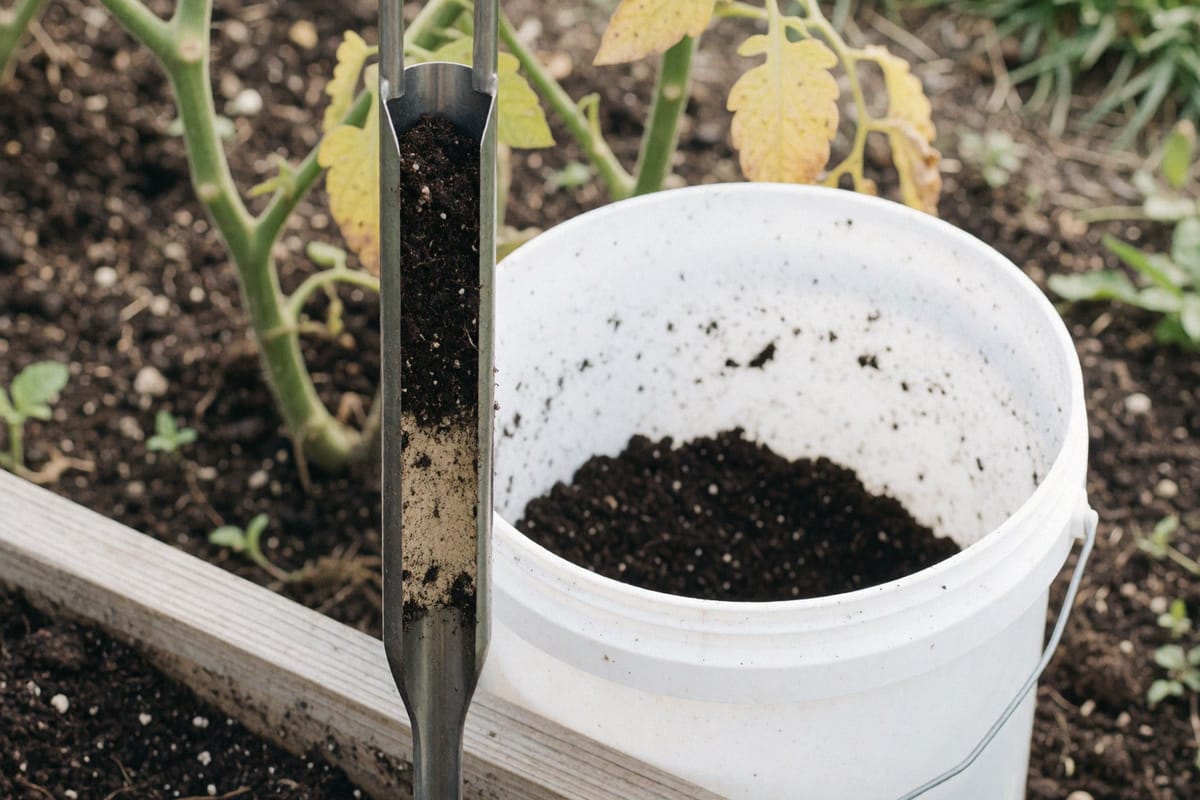
One trowel of dirt from the middle of the bed is close to worthless. Soil varies enormously over three feet. Take eight or ten small cores from around a single bed, each going down about six inches, drop them all into a clean plastic bucket, break up the clods, mix it thoroughly, and send a cup or two of that blend. Plastic matters if you want micronutrients read correctly, because galvanized buckets and tools can shed zinc into the sample.
Keep beds separate if you manage them separately. The bed that has had four years of compost is not the bed you built in June, and averaging them gives you a recommendation that is wrong for both. Two or three composite samples covers most home gardens.
Then let it air dry on newspaper before it goes in the envelope. Wet soil in a paper bag arrives at the lab as something unpleasant.
Doing something with the answer
If pH came back low, lime goes on now and gets raked into the top few inches, because it barely moves downward on its own. If it came back high and you need to bring it down, elemental sulfur is the tool, and there is a wrinkle worth knowing: sulfur only works after soil bacteria oxidize it, and those bacteria slow right down in cold soil. Sulfur wants to go on while the ground is still warm, so early September beats late October for that particular job.
And if phosphorus and potassium came back high, which happens constantly in beds that have been composted for years, then stop buying the bag with three numbers on it. Excess phosphorus does not help the plant and does run off into water.
This is also the moment to decide what goes where next spring, while the results are in front of you and the beds are visible rather than theoretical. I keep next year’s layout in Garden Planner Pro and let its planting calendar work backward from my frost dates, so the potato bed and the brassica bed stay separate on paper in September instead of getting sorted out in a hurry in May.
One thing will undo all of this: sampling a bed you amended a few weeks ago. Fresh lime, fresh fertilizer, or a heavy layer of compost turned in will give you a reading that describes the bag rather than the bed. If you have just topped a bed off, leave it and test that one next year.