Every Winter Mulch, Ranked by How Much Work It Saves You in April
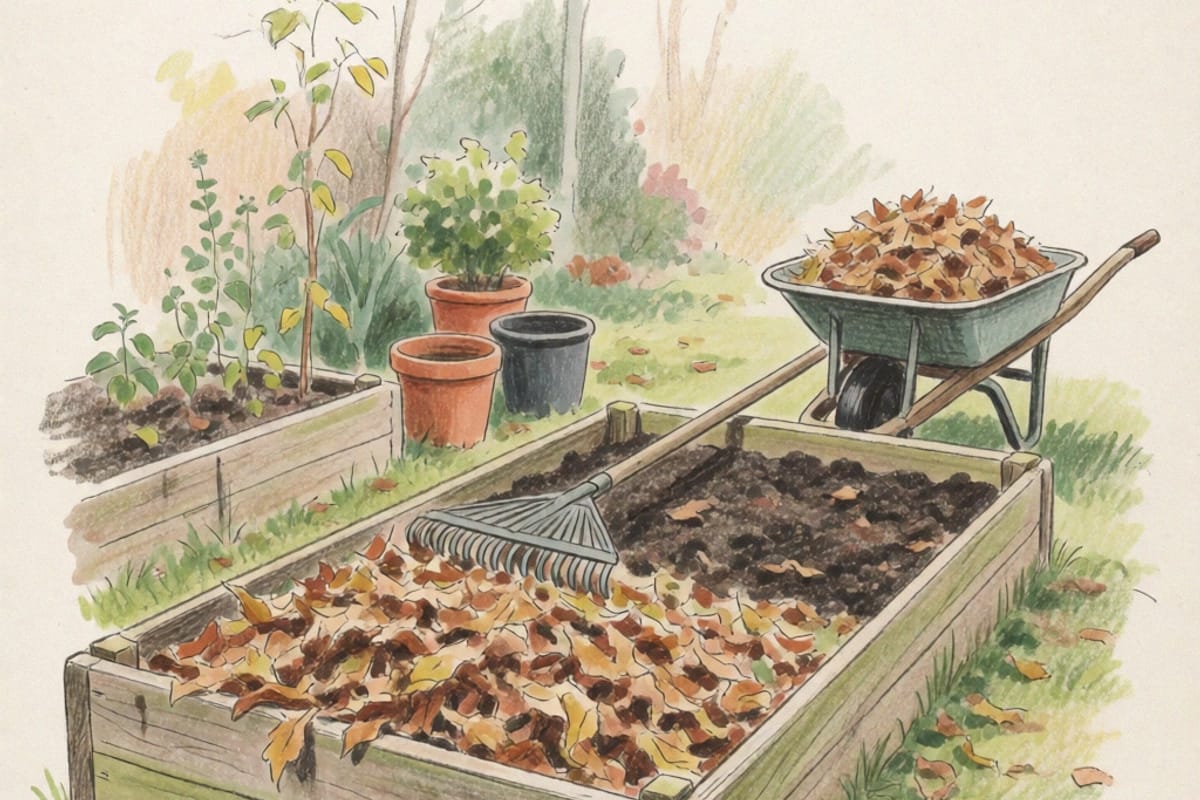
Mulching a bed in October is a bet about April. You are spending an afternoon now to buy yourself an easier one later, and the material you pick decides whether that bet pays.
The two things that separate a good winter mulch from a bad one are whether it breaks down enough to plant through by spring, and whether it shelters something you would rather not shelter. Almost everything else is preference. Here they are in the order I would actually reach for them.
| Mulch | Depth | Where it leaves you in April |
|---|---|---|
| Shredded leaves | 3 to 4 in | Mostly gone, soil dark and crumbly, plant straight through |
| Finished compost | 2 in | Gone, and you have fed the bed as well |
| Straw | 4 to 6 in | Rake back a little, plant, put it back around the plants |
| Pine needles | 3 in | Still there, light, easy to pull aside |
| Grass clippings | 1 in per layer | Gone, but only if you never laid it thick |
| Wood chips | 2 to 3 in | Still there. Fine on paths, a nuisance on an annual bed |
| Whole leaves | 6 in | A wet mat you have to lift off and carry away |
| Cardboard | 1 layer | Half rotted, and whatever moved in underneath is still there |
Shredded leaves, and it is not close
If you have a mower and a pile of leaves you have the best winter mulch there is, for nothing. Run the mower over them on the lawn a couple of times, rake up what is left, and put three or four inches on every empty bed. By April most of it has gone into the soil and what remains crumbles when you push a trowel through it.
The shredding is the whole point, so do not skip it. It is the difference between a mulch and a mat, and it takes about ten minutes.
Compost, if you can spare it
Two inches of finished compost over a bed does everything the leaves do and feeds the soil at the same time, and it is the tidiest option by a distance. The reason it is second rather than first is simply that most of us do not have enough, and buying it by the bag to cover beds is expensive in a way that shredded leaves are not.
If you have a limited amount, put it on the beds that are going to grow the hungry things next year, and put leaves on the rest.
Straw, with one caution
Straw is light, easy to spread, and very good at keeping soil from washing and crusting through a wet winter. It does not break down enough to plant through, so in April you rake it off the row, sow, and pull it back around the plants when they are up, which is a couple of extra minutes rather than a chore.
The caution is real and worth knowing about. Some broadleaf herbicides used on pasture and cereal crops persist through the animal, through the compost heap, and into the straw or manure you buy, and they will deform tomatoes, beans and potatoes the following year. Ask where it came from. If you cannot find out, put a handful in a pot with a bean seed and grow it on a windowsill for three weeks before you spread six inches of it on your garden.
Grass clippings, thinly or not at all
Clippings break down fast and feed the soil nicely, and they are free every week all summer. The failure is always the same. Lay them more than an inch thick, fresh and green, and they mat into a grey anaerobic layer that smells bad and sheds water instead of letting it through.
Let them dry for a day and put them on in thin layers, or mix them into the leaves. Do not tip a full mower bag onto a bed and spread it out.
Wood chips, which are for paths
Wood chips are a genuinely good mulch in the wrong place for this job. On paths, around fruit trees, over perennial beds, they are excellent and they last for years. On an annual vegetable bed they are still sitting there in April when you want to sow carrots, and you end up raking them into a pile at the end of the bed every spring.
The nitrogen worry is overstated as long as they stay on the surface. The practical objection is just that they do not go away and your vegetable beds need to be workable.
Whole leaves and cardboard, at the bottom for the same reason
Both of these are things people reach for because they are free and to hand, and both create a sealed layer that stays wet all winter.
A six-inch drift of unshredded oak or maple leaves mats down into something like wet felt. Water runs off it, air does not get through it, and in April you are lifting sodden slabs off the bed and carrying them to the heap. Cardboard does the same job more deliberately, which is fine if you are smothering a weedy area you will not plant until June, and much less fine over a bed you want in March. Both of them are also a perfect winter hotel for slugs, and a bed that spent five months as a slug refuge will show you in the first week of seedlings.
The bit that is more important than which one you choose
Cover the soil with something. Bare ground through a winter of rain loses structure, crusts on the surface, and comes into spring compacted and cold. Any of the eight above beats nothing, including the two at the bottom of the list.
One thing to leave alone: if you have a patch that is holding late flowers or seed heads, or a tidy corner of stems, consider leaving that unmulched and standing. Plenty of the insects that will eat your aphids next June are spending the winter in exactly that sort of mess. Mulch the beds you want to plant and let the awkward corner stay awkward.