Stop Pulling Out Your Spent Plants. Cut Them at the Soil Line Instead.
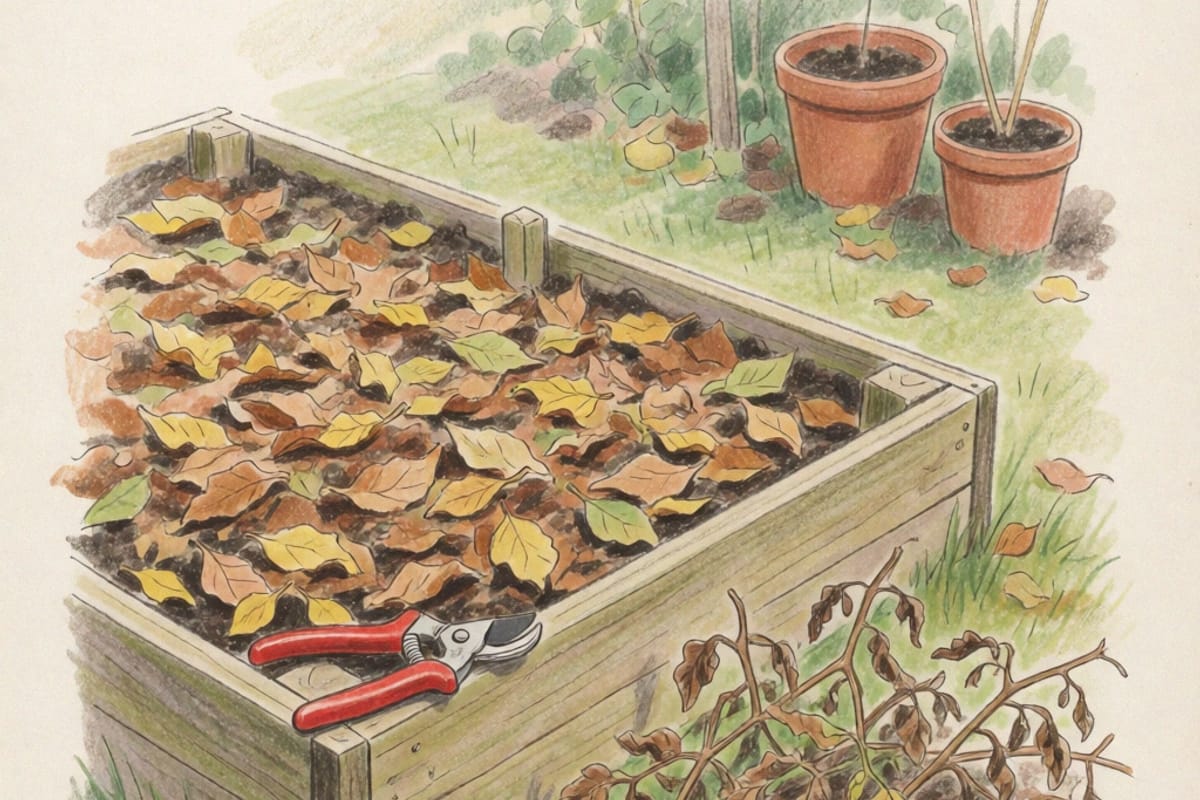
It’s a late-October weekend and the beds look like a party nobody stayed to clean up after. Tomato vines gone black from the first frost, bean plants reduced to brown string, a row of peppers that quit the night the temperature dropped. The reflex, and I had it for years, is to grab each plant at the base and pull. The root ball comes up with a satisfying rip and a fistful of soil, you knock it against your boot, and it goes in the barrow.
Don’t pull them. Take a pair of pruners, cut each stem off where it meets the soil, carry the top away, and leave the roots in the bed until spring.
What actually comes up in your hand
The thing you pull out of the ground in October is the thick middle of a root system. The fine roots that spread down and sideways through the bed all summer snap off and stay where they are. So pulling doesn’t even clear the bed. It tears the centre out of each plant’s roots, leaves the rest behind, and churns up a circle of soil around every plant while it’s at it.
That churning is what you want to avoid. A bed that has grown something all summer is full of structure you can’t see: channels left by roots and worms, crumbs of soil held together by fungal threads and by the sticky stuff roots and microbes give off. Yank a plant and you break a patch of that apart, and you bring a layer of buried weed seed up into the light at the same time. Do it to thirty plants and you’ve more or less dug the bed over.
Cut the plants instead and the roots rot where they grew. Worms and fungi work through them all winter. By spring, the fine roots of a bean or a lettuce are mostly gone, and what they leave is a channel running down into the bed, lined with a bit of organic matter, more or less the path a new root would choose anyway. Water follows those channels down rather than sitting on the surface.
There’s a smaller reason too, and it matters most in a raised bed. Every root ball you bang against the barrow sends a little soil off to the compost heap with it. One plant’s worth is nothing. It isn’t the main reason beds sink a couple of inches every year (that’s organic matter breaking down), but it is soil you bought by the bag, walking out of the bed one tomato at a time.
About the beans
You’ll hear that bean and pea roots should stay in the ground because the small round nodules on them are full of nitrogen. A little, yes. But by the time a bean plant has finished cropping, most of the nitrogen it fixed has gone up into the pods, and you ate those in August. I leave bean roots in for all the reasons above and count any nitrogen as a small bonus. I used to tell people it was a free feed for next year’s brassicas. It isn’t much of one.
How I clear a bed now
Bypass pruners do almost everything. Loppers handle the thick stuff: corn stalks, sunflowers, the woody stumps of kale and Brussels sprouts. Cut flush with the soil. For anything that might sprout again from what’s left, like chard or a kale stump with buds still on it, cut a little below the surface so there’s nothing left to leaf out.
Before the bed goes bare, it’s worth writing down what grew where, because by March the stubs will have softened into the soil and you’ll be guessing. I draw it on the square-foot bed grid in Garden Planner Pro, so next spring the tomatoes go into squares that didn’t have tomato roots rotting in them all winter.
The tops go on the compost heap if they were healthy, chopped into short lengths so they break down before next summer. Then the bed gets a blanket of shredded leaves or compost over the top, stubs and all. Nobody sees the stubs under that, and on mild days the worms come up to the mulch and pull it down into the root channels you left them.
In spring, plant between the old stems. Most annual roots will have gone soft and crumbly, and you can push a trowel straight through them. The woody ones, corn and brassica stumps especially, can still be firm in April. Plant beside them, or give them a twist; after a winter of rotting they usually come out easily and bring very little soil with them.
The plants that come out, roots and all
This is the part people skip, and it’s the part that undoes the rest if you get it wrong. A few things go out of the bed whole and into the bin, not the compost heap.
Clubroot is the clearest case. If your cabbages, kale or Brussels sprouts struggled and wilted on warm days, pull one up and look. Swollen, knotted, distorted roots mean clubroot, and the spores in those roots stay alive in the soil for many years. Leaving them to rot in the bed is putting the disease back in the ground. Pull every brassica in that bed, bag the roots and bin them.
Root-knot nematodes leave the same sort of evidence: lumpy, beaded swellings along tomato, carrot or bean roots that don’t rub off. Those roots come out too.
Tomatoes that had early blight or septoria, the brown spots that started on the bottom leaves and climbed, also come out whole. To be honest, the roots aren’t really the problem with those diseases; the stems and the fallen leaves are, because that debris is where next year’s spots start. I pull those plants anyway, because it’s the cleanest way to get every scrap of stem off the soil, and I rake up the leaves and bag the lot. There’s more on which garden waste is worth worrying about in the tomato cleanup post.
Plants that died of fusarium or verticillium wilt can come out too, but don’t expect it to fix anything. Those fungi live in the soil on their own for years, roots or no roots.
And perennial weeds. Bindweed, dock, couch grass, anything that came back from a root. Cutting those at the soil line is how you get more of them, so dig them out properly while the soil is soft.
Everything else, which in most beds is nearly everything, gets cut. It’ll look a bit unfinished for a week, a bed full of little brown stumps. Then the leaves go on and it looks like any other bed in November, except the soil underneath is still the soil you spent all summer building.