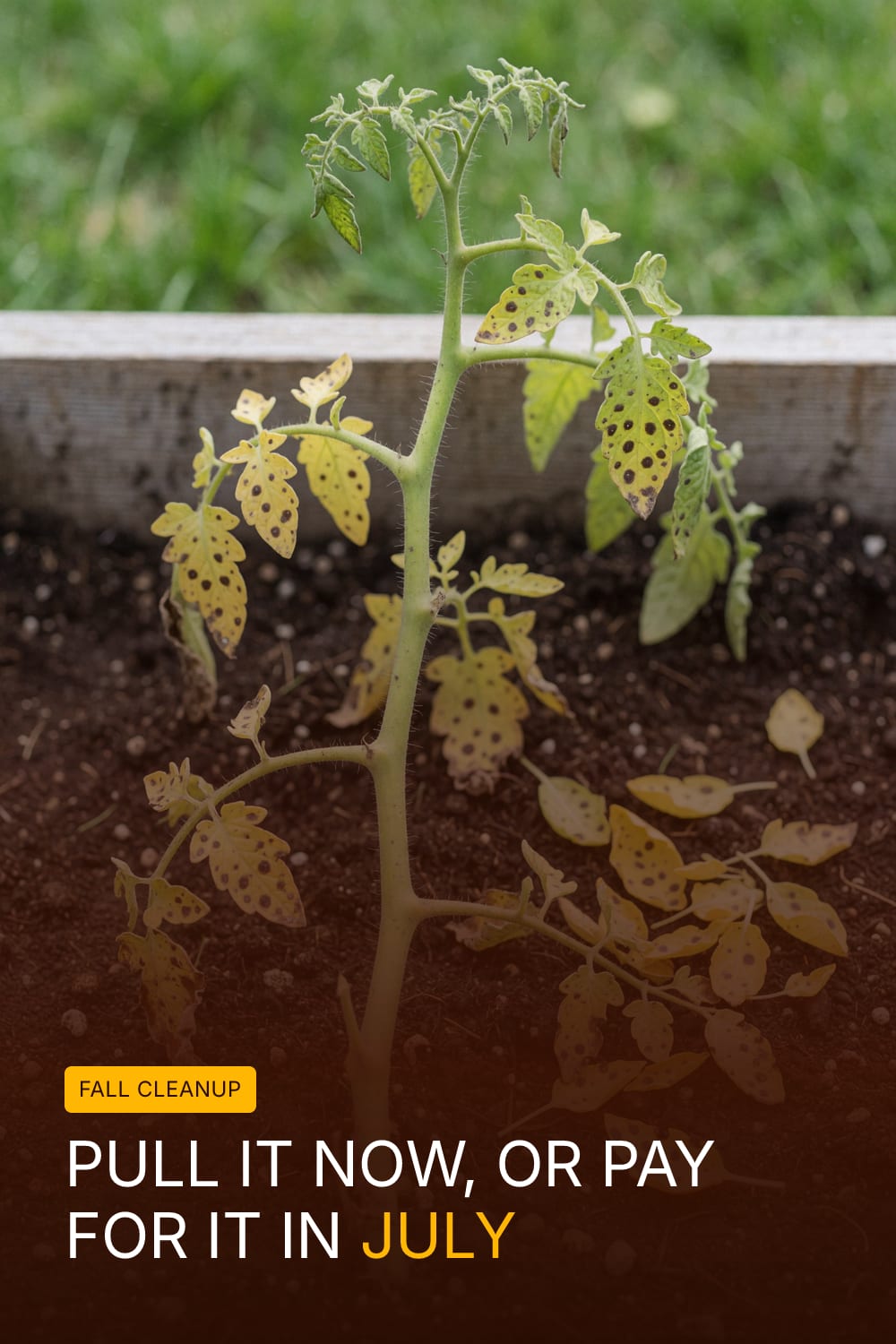
The Tomato Plants You Pull This Week Decide How Next July Goes
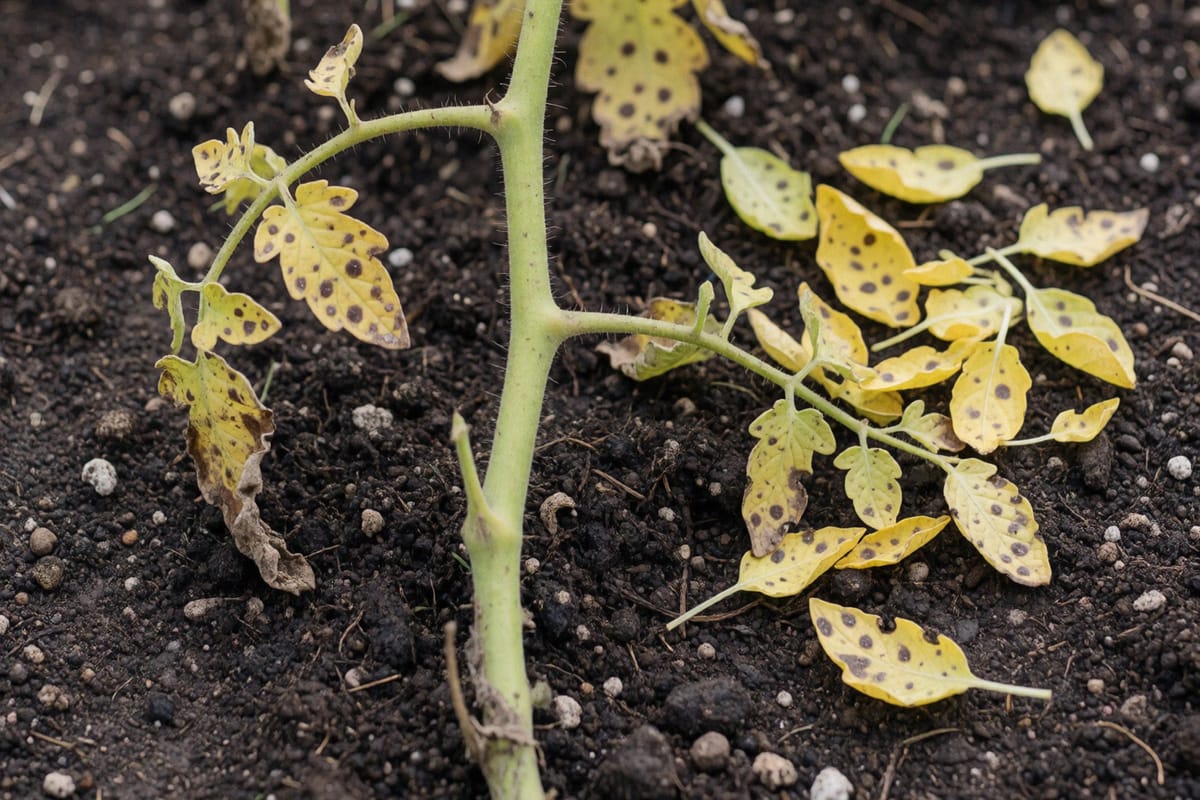
My tomato row looks like something that lost an argument. The bottom three feet of every plant is bare stem, what leaves are left have gone yellow and spotted, and there is a scatter of split fruit on the ground that the wasps found before I did. Every year around now I stand there with a pair of loppers wondering how much of this I am allowed to put on the compost heap.
The advice you hear is that anything diseased goes in the bin, full stop. That is a fine rule if you want one rule. It is also wrong often enough to cost you a lot of good compost, because a fair amount of what comes out of the garden in September is either harmless or carries a problem that cleanup was never going to solve.
What is genuinely worth getting out of the bed
The two tomato diseases most of us end up with are septoria leaf spot and early blight, and both of them spend the winter on the plant material you leave behind. Septoria in particular lives on old tomato debris and on weeds in the same family, then splashes back up onto the lower leaves of next year’s plants with the first hard rain. That is why the spots always start at the bottom of the plant and climb. You are watering last year’s crop residue onto this year’s seedlings.
So the stripped, spotted foliage is worth carrying out. Not because it will infect the compost heap in some abstract way, but because leaving it lying in the bed puts the spores three inches from where you will plant tomatoes again. Get it out, and rake up the fallen leaves too. That is the part everyone skips.
Squash is the other one worth being fussy about. Squash bug adults overwinter under whatever cover they can find, which means a pile of dead vines, a loose sheet of mulch, or the board you left at the end of the bed in June. Vine borers overwinter differently, as larvae or pupae in a cocoon an inch or two down in the soil right at the base of the plant they killed. If a squash plant collapsed on you this summer, the vine is worth removing and the soil around that crown is worth disturbing.
The one people have backwards
Late blight does not overwinter on your dead tomato vines. It cannot. The organism needs living tissue to survive the winter, and a frosted, blackened tomato stalk is not living tissue.
What it does survive in is potatoes. Cull piles, tubers you missed when you dug, volunteers that come up in the same bed next May. That is the reservoir that matters in a home garden, along with weather that carries spores up from somewhere warmer. If you had late blight this year, the useful hour is not spent bagging tomato vines. It is spent going back over the potato bed with a fork and finding the ones you left behind.
Powdery mildew is the same kind of story in reverse. The white film on squash leaves is fairly host-specific and, where winters actually freeze, it does not persist on dead leaves in the garden. It blows in every summer whether you cleaned up or not. Mildewed squash leaves can go on the heap.
And a lot of what looks like disease is not. Blossom end rot is a calcium delivery problem inside the fruit. Sunscald is sunburn. Cracked and split tomatoes are a watering story. Hornworm-chewed leaves carry nothing at all. All of it composts fine.
Wilt is a different problem and cleanup does not fix it
If a tomato plant yellowed from one side, wilted in the afternoon, and never recovered, you may have had fusarium or verticillium wilt. Those live in the soil for years on their own, with or without the plant. Pulling the plant is sensible housekeeping, but do not tell yourself it fixed anything. What helps there is rotation and buying varieties bred to resist it, which is a decision you make in February with a seed catalog open.
Which is the real argument for naming what you had while the evidence is still standing in front of you. Garden Planner Pro has pest and disease guides with treatment notes for exactly this, and ten minutes with them now is worth more than trying to remember in spring whether the spots had yellow halos.
About your compost heap
The honest constraint is heat. A heap has to hold it, right through the middle, for days, to reliably kill pathogens and weed seed. Turned piles that you actively manage can get there. The slow heap in the corner that you add kitchen scraps to does not, and even a hot pile has cool outer edges where nothing gets cooked unless you turn the outside in.
So my working rule is that anything I would be upset to see again goes to municipal green waste, where the piles are managed at a scale mine is not. Everything else goes on the heap, and I have stopped feeling precious about it.
One last thing, and it is the mistake that undoes all of the above. Do not pull everything out of the beds and stack it in a heap at the edge of the garden with the intention of dealing with it later. That pile is warm, dry cover sitting ten feet from next year’s squash, and it is exactly what a squash bug is looking for in October. Either it leaves the property this week or it goes on a heap you will genuinely turn.