The Pests That Wrecked Your Summer Are Asleep in Your Garden Right Now
Every summer I watch people fight the same pest for three months and then stop fighting it in September because the plants are finished. That is roughly like mopping up water for a season and never looking at the pipe.
The insects that took your squash apart in July did not migrate anywhere. Most of them are within a few feet of where they were feeding, tucked into plant debris or a couple of inches down in the soil, shut down for the winter and waiting. Which means that an hour in the garden in October has more effect on next July than anything you could have sprayed in July itself.
Where they actually are
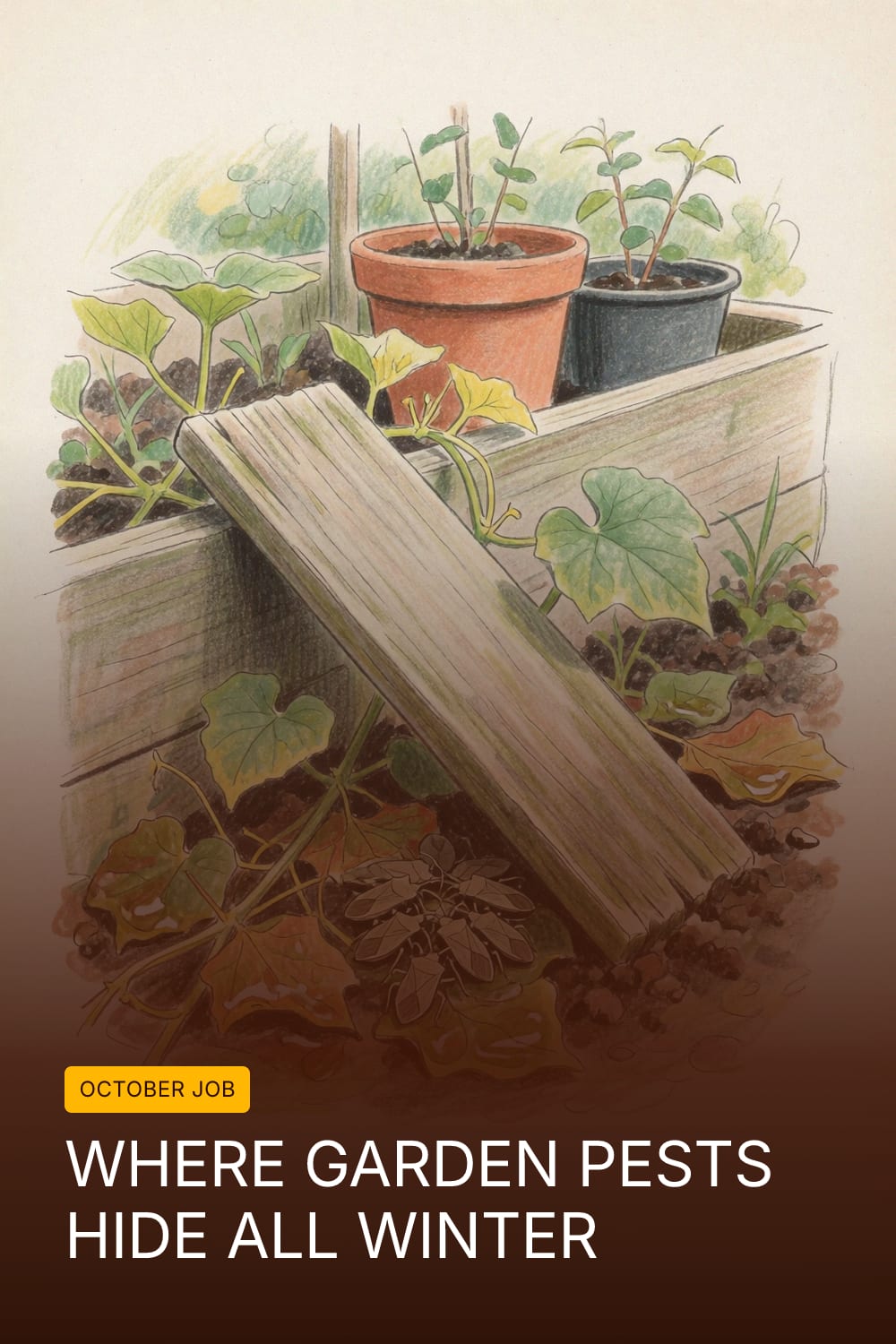
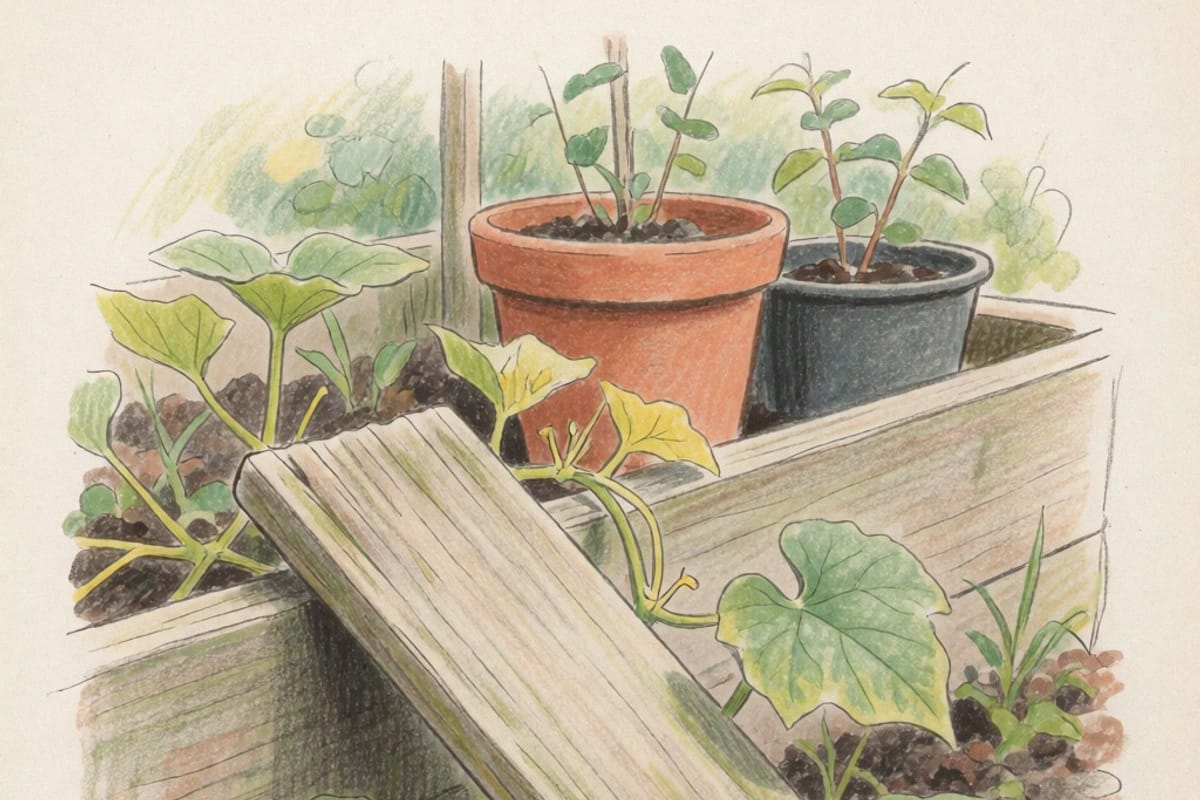
Squash bugs are the easiest to find and the most satisfying. The adults survive the winter, and they do it under cover: dead vines left lying on the bed, a board propped against the fence, the loose litter of leaves in the corner where the beds meet. Lift a plank anywhere near where squash grew and you will often find a cluster of flat grey-brown adults pressed together underneath. That is next June’s entire population, and you are looking at it.
Squash vine borer is down in the soil. When the larva has finished hollowing out your zucchini stem it drops off and burrows an inch or two into the ground right under the plant, spins a tough cocoon, and stays there until early summer. It does not travel. The borer that killed a plant is overwintering in that bed.
Cabbage whites pupate above ground, as a hard chrysalis stuck to a stem, a fence post, the underside of a raised bed frame. Slugs are laying clusters of small pearly eggs in the top inch of soil right now, under anything damp and flat. Colorado potato beetles and Mexican bean beetles dig in at the edges of the beds and under leaf litter. Aphids mostly overwinter as eggs on woody plants at the boundary rather than in the vegetable garden itself, which is why aphids are the one on this list that cleanup barely touches.
The winter is doing less of this for you than it used to
There is a comfortable assumption that cold sorts it out. Sometimes it does. A long spell of genuinely hard frost, especially with no snow cover to insulate the soil, kills a real proportion of the adults and pupae sitting in the top couple of inches.
The trouble is that a mild winter kills very few of them, and a run of mild winters is how a garden ends up with a pest problem that gets worse every year for no obvious reason. If your squash bug numbers have been climbing season over season while you have done nothing differently, the winters are the likely reason. That is not something you can control, and it is a decent argument for doing the part you can.
What an October afternoon looks like
Start with the cucurbit beds, because that is where the return is highest. Pull the dead vines and get them out of the garden rather than onto a heap at the end of the bed, which is a shelter. Lift every board, pot, and tray that has been lying on soil since August. The squash bugs will be under them, sluggish and easy to deal with, and this is the one moment in the whole year when they are not faster than you are.
Then, on any bed that grew squash, cucumbers or pumpkins, disturb the top few inches of soil. Not a deep dig. A shallow turn with a fork, enough to break open the borer cocoons and bring what is down there up onto the surface where the cold and the birds get it. Do it on a dry day and leave it rough for a week before you mulch.
Run your hand along the underside of the raised bed frames and the fence palings while you are there, and scrape off the chrysalises. There are usually more than you expect on the south-facing side.
What to leave alone, because this can be overdone
The version of this advice that goes too far tells you to strip the garden to bare soil, and that costs you something real. A lot of what eats your pests overwinters in the same kind of mess: ground beetles under leaf litter, lacewings and ladybirds in hollow stems and rough corners, solitary bees in dry stalks. Clear the whole thing and you have removed both sides of the fight, and the pests rebuild faster than the predators do.
So be specific rather than thorough. Take out the debris that was the diseased or infested crop, in the beds where you had the problem. Leave the standing seed heads, the rough corner behind the shed, the log pile, the perennial stems. The difference between a garden cleanup that helps and one that backfires is almost entirely whether you targeted it or just tidied.
If you only do one thing this month, lift the boards. It takes ten minutes, you will know immediately whether you have a squash bug problem waiting for you, and unlike almost everything else in the garden you get to see the result the same afternoon.