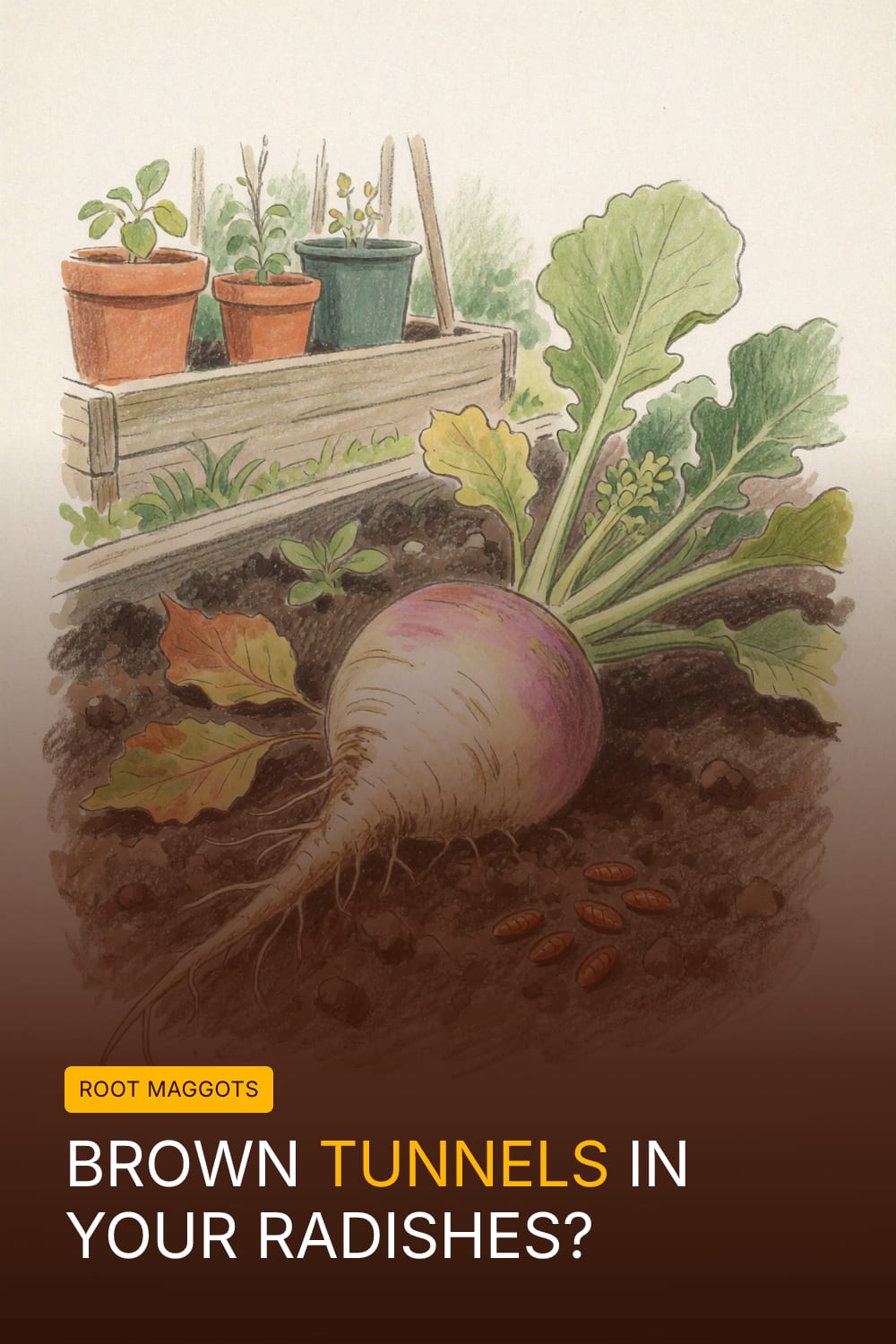
Brown Tunnels in Your Fall Radishes? A Maggot Did That, and It's Probably Already Gone
You pulled a row of radishes that looked perfect from above, full green tops, no holes in the leaves, and half of them have brown grooves winding over the skin and a tunnel or two going into the flesh. The turnips next to them might be worse. Some of the tunnels are slimy and some are dry and scarred over.
That is almost certainly cabbage root maggot. It is the larva of a small grey fly that looks like an undersized housefly, and it feeds on the roots of the whole cabbage family: radishes, turnips, rutabagas, and the roots of young broccoli and cabbage plants. In the fall garden it is the most common reason a radish comes out of the ground ruined.
The frustrating part is the timing. By the time you see the damage, a lot of the maggots have often finished feeding and moved out into the soil to pupate. So you are usually looking at a crime scene rather than a crime in progress.
Making sure it’s maggots
Cut one of the worst radishes open lengthwise. If there is anything still in there, a root maggot is white, legless, and no bigger than a grain of rice, blunt at the back end and tapering to a point at the head. Sometimes you’ll find two or three in one turnip.
If the tunnels are empty, look at their shape. Maggot damage is a mix of surface grooves that wander over the skin and brown, often slimy channels that go in, and it tends to be worst near the bottom half of the root, where the feeding started.
Two other things make holes in roots, and neither looks quite like that.
Wireworms make small, round, clean holes, like somebody pushed a knitting needle in and out. The culprit is tough, shiny and yellow-brown, with a jointed body and a few tiny legs at the front, and it’s very common in beds that were lawn a year or two ago.
Slugs eat from above. Their damage is a shallow scooped-out gouge at the shoulder of the root, right at soil level, with a silvery trail on the leaves nearby if you go out after dark. They don’t tunnel down into the lower root.
A radish that has simply split down one side, with no brown tissue, is a watering problem rather than a pest. And a radish that is spongy or hollow in the middle without any entry hole is just over-mature.
What to do with the ones you’ve got
Eat what you can. Root maggot damage is ugly and not dangerous, and a turnip with one groove on it is a turnip once you’ve peeled that side off. The badly tunnelled ones will rot in storage, so use those first or throw them away.
Don’t leave the damaged roots lying in the bed and don’t bury them there. Any larvae still inside will finish up and pupate right where you dropped them. Bag them or put them in a hot compost if yours actually gets hot. I used to chuck the reject turnips on the path for the birds, which in hindsight was a way of redistributing the problem across the whole garden.
The part that matters is under your feet
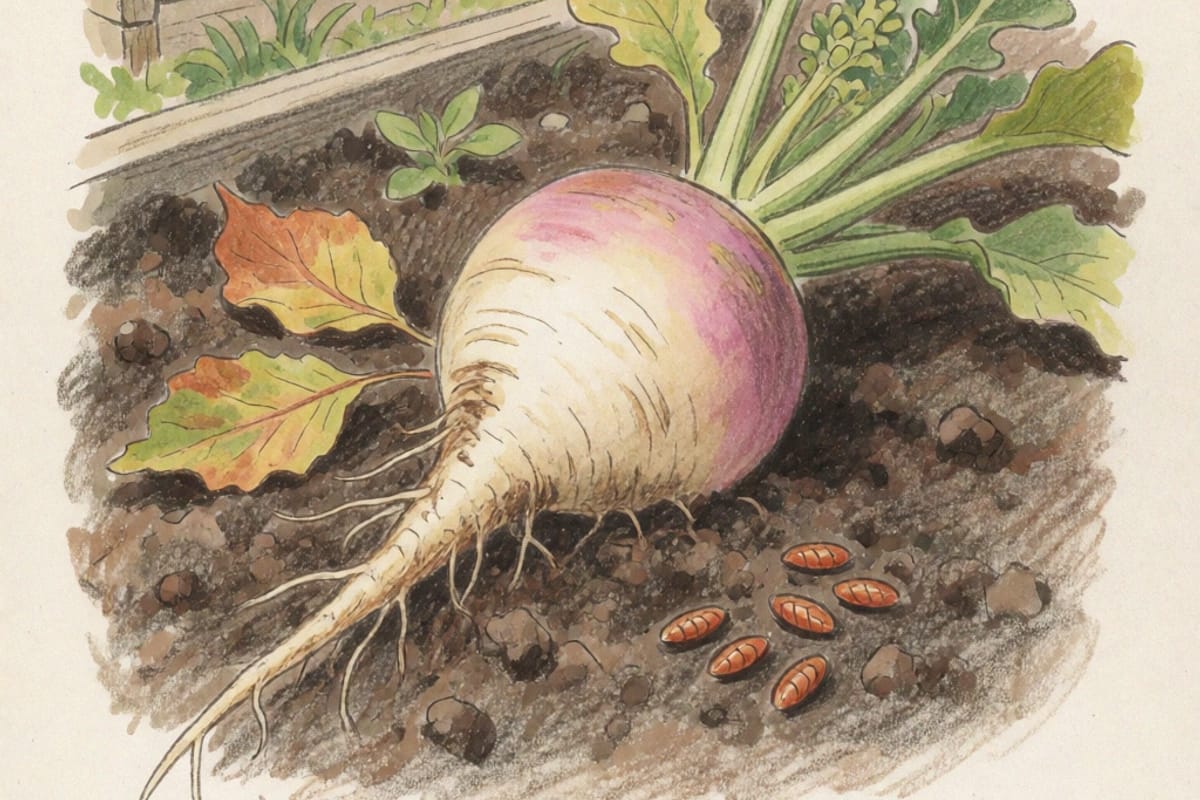
Root maggots spend the winter in the soil as pupae: small brown capsules about the size and colour of a grain of wheat, a couple of inches down near where the plants grew. They sit there until spring, the flies emerge, and the first thing they go looking for is your April radishes and your newly planted broccoli.
So once the bed is cleared, lightly turn over the top few inches of soil where the brassicas were. You’ll probably find some of the pupae. Anything you expose goes to the birds, the frost or the ground beetles, and the rest you’ve at least disturbed. Pull any wild mustard or shepherd’s purse growing around the edges too, because those are the same family and keep the flies going between crops.
If you’ve seen the maggot at one stage and want to recognise it at the others, the pest guide in Garden Planner Pro has the egg, larva and pupa side by side, which helps when you’re kneeling in a bed trying to decide whether a brown speck is a pupa or a bit of bark.
Stopping it next spring
Most of what works is physical.
A floating row cover, laid over the bed on the day you sow and weighed down properly along every edge, keeps the flies from laying their eggs at the base of the plants in the first place. It is the one method I trust. But it only works on a bed where no brassicas grew the year before, because otherwise the pupae are already underneath the cover and you’ve built them a private greenhouse.
That’s the real reason to move radishes and turnips around the garden every year. Rotation doesn’t need to be clever. It just needs this spring’s radishes somewhere other than this fall’s radishes.
For broccoli and cabbage transplants, a collar of card or felt pressed flat around the stem at soil level stops the fly laying right against the stem, which is where it prefers. Radishes are too thick on the ground for collars, so for them it’s the cover or nothing.
And sow a few radishes later than you think. The fly is less active in the heat of midsummer, and some growers time their sowings around that gap. I haven’t been disciplined enough about it to say how well it works where you are, so treat that as something to try in a corner rather than a plan.
Next time you pull a radish with brown grooves, cut it open, check what’s inside, and then go and turn over that patch of soil. That’s the part that protects April.