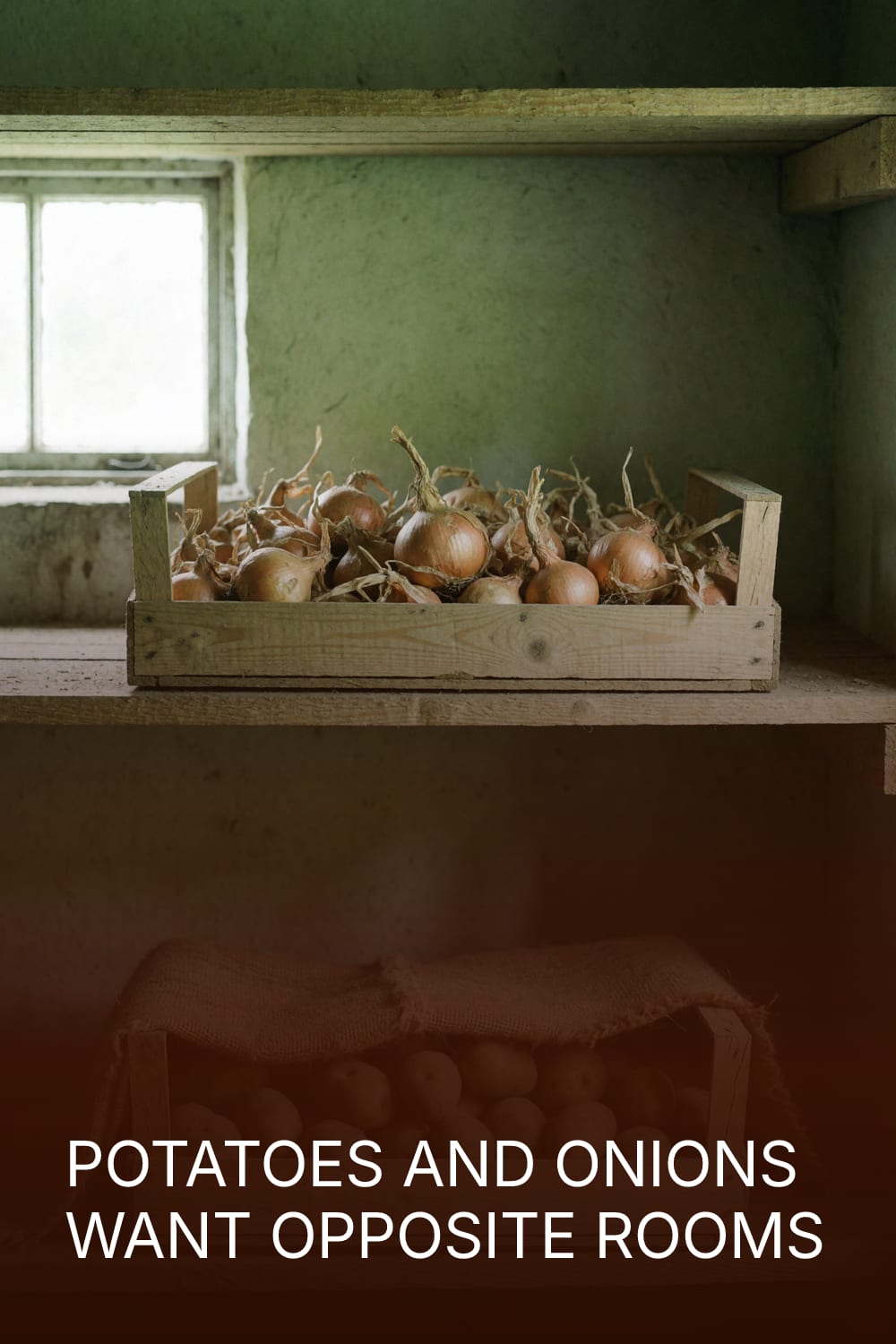
No Root Cellar? Your Potatoes and Onions Want Opposite Rooms
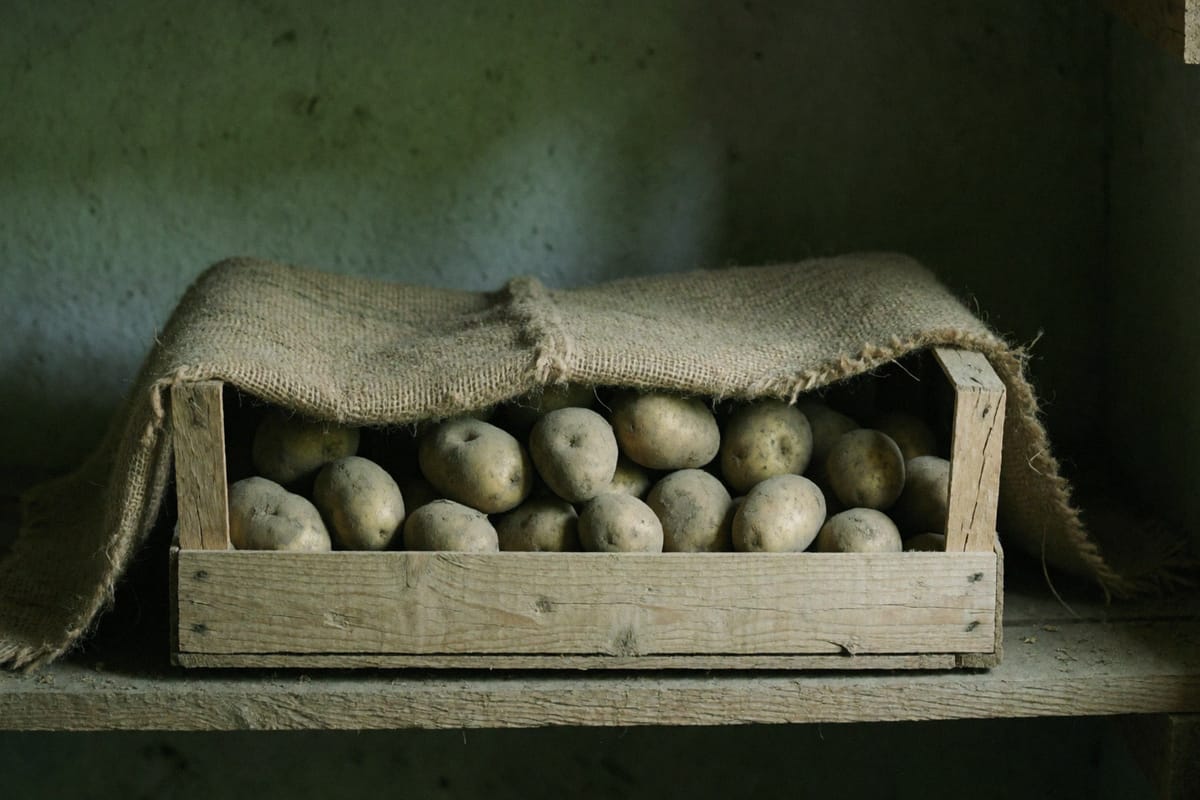
Sometime around New Year you reach into the crate for a potato and the whole top layer has put out pale sprouts as long as your finger. Or the onions have gone soft at the neck. Or you cut into a butternut you had been saving and the stem end collapses into something wet and orange.
The crop was almost certainly fine when it went in. What got it was the room.
There are three storage climates, and most houses only have one
The phrase “cool dark place” has done a lot of damage. It suggests there is one correct spot and everything goes in it, which is how a bushel of onions ends up sitting next to a bag of potatoes, both of them slowly ruining the other.
What your harvest sorts into is three groups, and the thing that separates them is humidity more than temperature.
| Crop | Wants | Roughly |
|---|---|---|
| Carrots, beets, parsnips, turnips, cabbage | Cold and very damp | 32–40°F, 95% humidity |
| Potatoes | Cold and damp, total dark | 38–40°F, 90% humidity |
| Onions, garlic, shallots | Cold and dry, or warm and dry | 32–40°F or above 60°F, 60–70% |
| Winter squash, pumpkins | Warm and dry | 50–55°F, moderate |
| Sweet potatoes | Warm, never cold | 55–60°F |
Read down the humidity column and the potato-and-onion problem explains itself. Potatoes need moist air or they shrivel and sprout. Onions need dry air or the neck softens and the rot works its way in. Put them together and one of them loses, usually both. Onions also give off enough moisture and gas in a closed container to wake potatoes up early, which is where those January sprouts come from.
Apples do the same thing, worse. A box of apples stored beside potatoes will sprout them, and stored beside carrots will turn the carrots bitter. If you have a fruit tree and a vegetable garden, the apples get their own corner.
The middle temperature is the trap
Onions and garlic have a strange requirement that catches people out: the range they like least is the one an unheated back room usually sits at. Somewhere around 45 to 55°F is prime sprouting weather for them. Colder than that and they stay dormant. Warmer and drier, like a kitchen shelf, and they stay dormant too, though they will not last as long. It is the comfortable in-between that gets them going.
So a garage that hovers just above freezing all winter is good for onions. A garage that sits at 50°F is the worst place in the house for them, and the best place for your squash.
Finding three rooms in a house that has none
You are looking for corners with different characters, not a purpose-built cellar.
For the cold and damp group, the easiest honest answer is the refrigerator. Cut the tops off carrots and beets the moment they come out of the ground, since the leaves keep pulling water out of the root, then bag them perforated with a damp cloth. If you have more than the fridge holds, pack roots in slightly damp sand or wood shavings in a lidded bin and put that somewhere that stays cold without freezing. An attached garage against a heated house wall often does this well. Potatoes go in the same climate but never in the fridge itself, and never in the light: below about 40°F their starch starts converting to sugar, which makes them oddly sweet and makes them go dark and bitter when you fry them.
For the cool and dry group, think about air movement rather than temperature. Onions and garlic in a mesh bag hanging in a basement stairwell, or braided and hung in a closet on an exterior wall, will outlast the same onions in a solid bucket every time.
For the warm and dry group, look inside the heated part of the house. Winter squash and sweet potatoes want conditions close to a spare bedroom that nobody warms much: a shelf, a single layer, fruits not touching each other so a soft spot on one cannot spread. Under a guest bed is a genuinely good squash cellar. I keep meaning to build something better and never do, because the bed works.
Most of this is decided before the crate
Storage conditions only preserve what curing has already sealed. Winter squash and pumpkins want about ten days somewhere warm and dry around 80°F to harden the skin, with acorn squash the exception that does not want it and keeps worse for having had it. Sweet potatoes need roughly a week warm and humid before they taste of anything at all. Onions and garlic want two or three weeks with air moving past their necks. Potatoes want one to two weeks at 45 to 60°F in the dark and the damp so that the skins toughen and the nicks from the fork heal over.
Skip those weeks and no room in the house saves the crop.
Then go through the crates every couple of weeks with a light. You are looking for the first soft one, because it is never the last, and a single rotting squash in a stacked box takes three of its neighbors with it before you next look. That fortnightly sort does more for your winter eating than any amount of worrying about degrees.