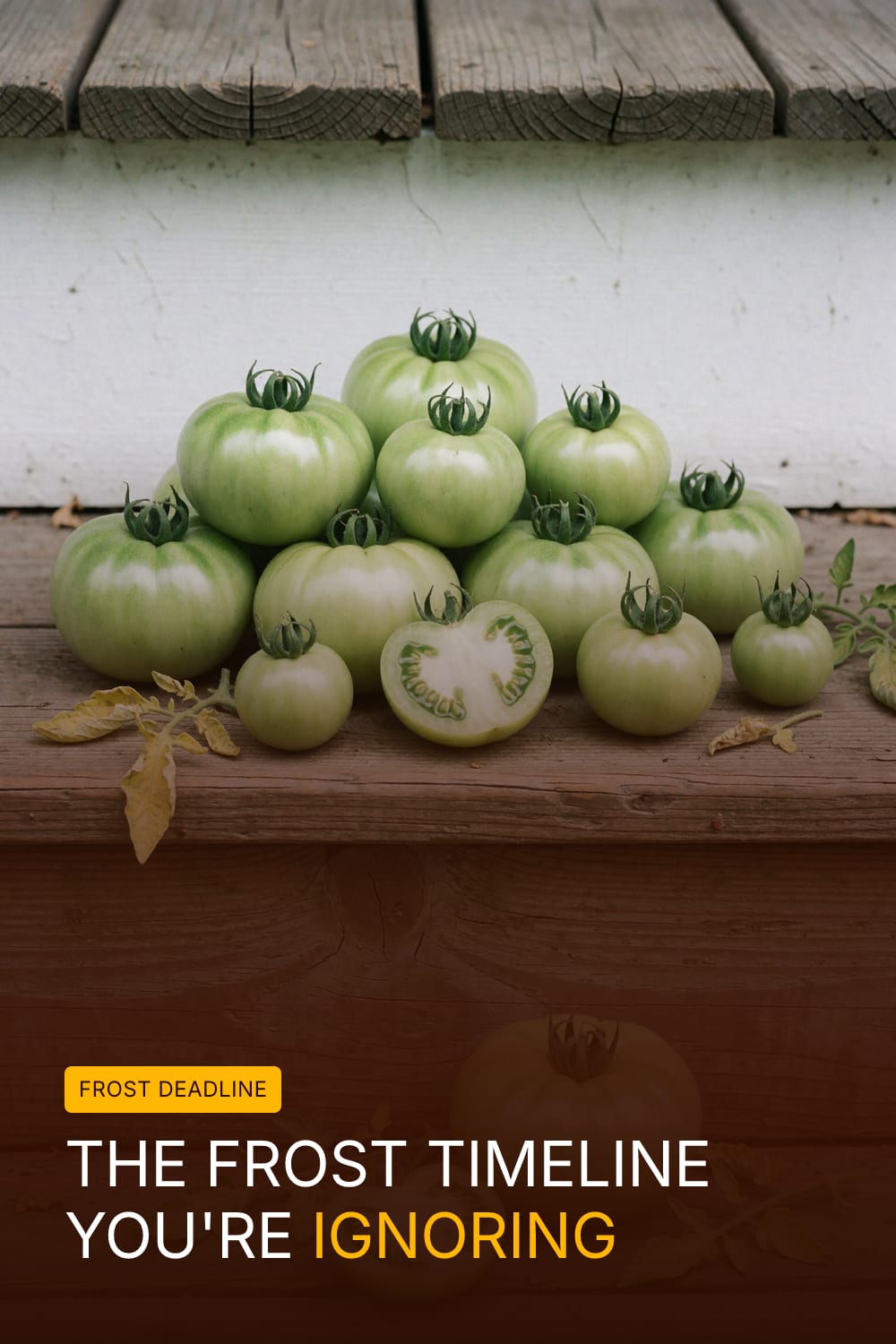
Green Tomatoes on the Vine? The Frost Timeline You're Ignoring
A few years back I checked the forecast on a Tuesday, saw nothing alarming, and went out Wednesday morning to vines that looked steamed. Every tomato still on them was green, and I’d been watching those plants all week thinking I had time. I didn’t lose the crop to the frost that killed the vines. I lost it two weeks earlier, without noticing, when the nights started running cold and the fruit simply stopped doing anything.
That’s the part almost nobody tells you: your tomatoes are done ripening on the vine well before the date you’re circling on the calendar. Ripening is a chemical process, and it needs warmth to run. Once nighttime temperatures settle in below the low 50s, the enzymes that turn a tomato from green to red slow down and eventually stop, frost or no frost. You can have three more weeks before your first freeze and a plant that has already quietly clocked out.
What’s worth saving
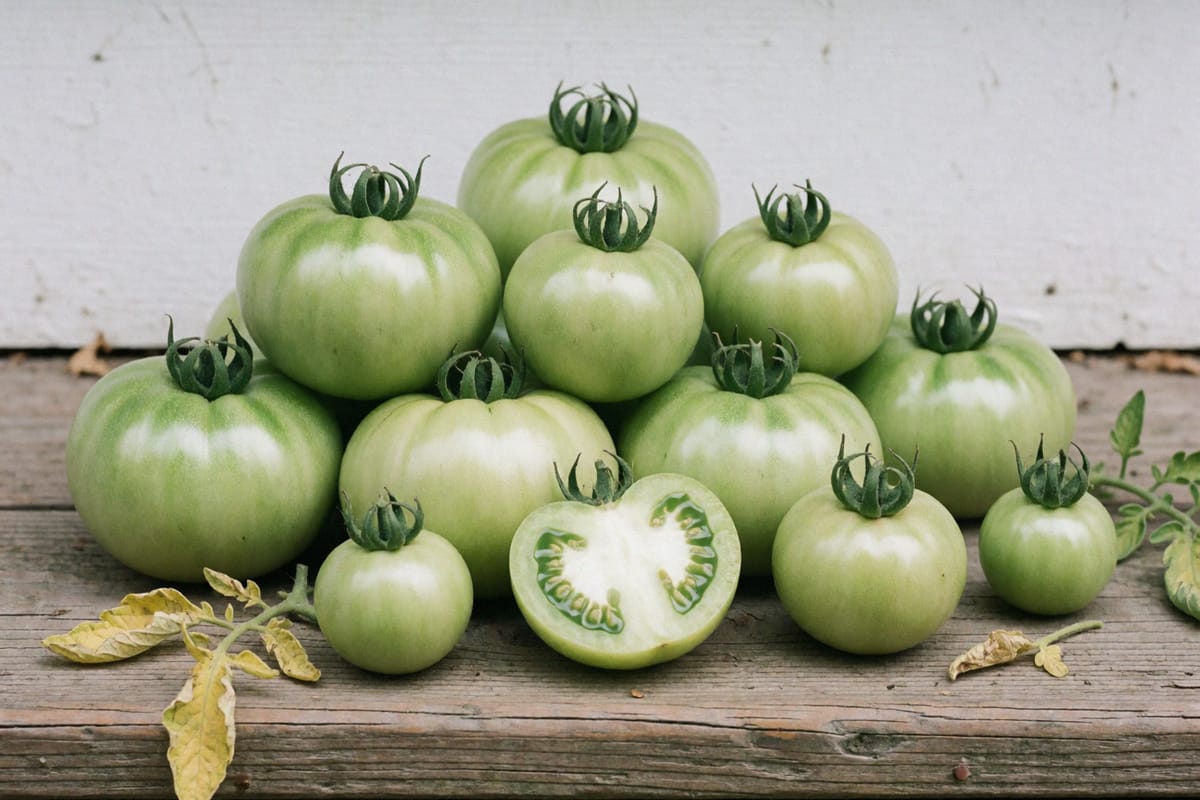
Not every green tomato is worth bringing inside. A truly immature one, small and rock hard with a dull matte skin, isn’t going to do anything for you no matter how long it sits in a box. What you want is the mature green stage: the fruit has reached full size for its variety, the skin has gone glossy and pale, almost whitish-green, and there’s often a faint blush starting at the blossom end. Cut one open and you’ll see the seed gel has filled in around the seeds instead of looking watery and thin. That fruit has finished growing and is just waiting on warmth to finish coloring. It ripens fine off the vine. The rock-hard ones mostly just rot.
Pick with a bit of stem attached if you can, and only fruit that’s unblemished. A single soft spot or crack in a box of tomatoes will take down its neighbors within days.
How to ripen them
Skip the sunny windowsill. I did this for years, convinced light was doing something, and it isn’t — sunlight can cook the fruit and make the skin tough while the inside stays underripe. What ripens a tomato indoors is warmth, darkness, and a little help from ethylene gas, which is why the classic trick of tucking a banana or an apple into the box works. Lay the tomatoes in a single layer in a cardboard box or paper bag, not stacked deep, somewhere around 55–70°F with decent air movement. A cool basement or an unheated back room works better than a warm kitchen counter, which speeds things up but also speeds up the rot.
Check the box every couple of days and pull anything that’s turned. In my experience it runs anywhere from a week to three, depending on how mature the fruit was going in — the palest ones take the longest, and a few of them simply won’t get there before they go soft, which is normal and not something you did wrong.
If you’d rather not gamble on your actual frost date, Garden Planner Pro’s frost-date calendar backs the harvest window in from your local dates automatically, so you’re not relying on a forecast you checked once and forgot about.
The ones that won’t ripen
Whatever’s left rock-hard at the end of the season isn’t a loss, just a different ingredient. Green tomatoes fried in cornmeal, sliced thin and quick-pickled, or cooked down into a chow-chow relish are all traditions built entirely around fruit that was never going to turn red. I’ve come around to thinking a garden that ends with a bowl of hard green tomatoes on the counter isn’t a failure of timing. It’s just the last dish of the season, and it happens to be a good one.
What I’ve changed about how I garden, after that Wednesday morning: once the forecast starts showing nights in the low 50s, I walk the tomato bed every couple of days and start pulling the mature green fruit, frost or not. The vine isn’t doing anything else useful with it at that point.