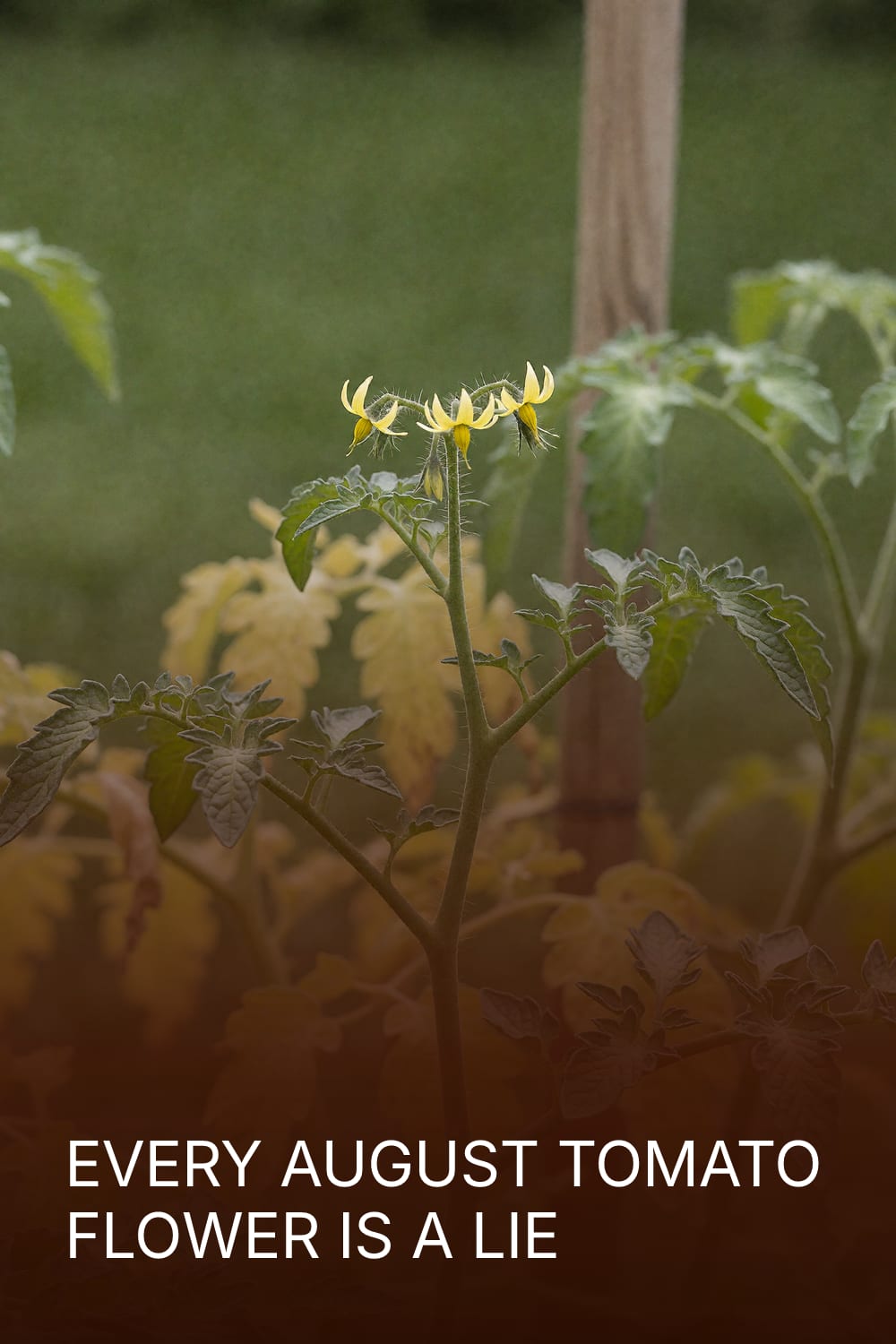
Your Tomato Plant Is Still Setting Flowers, and Every One Is a Lie
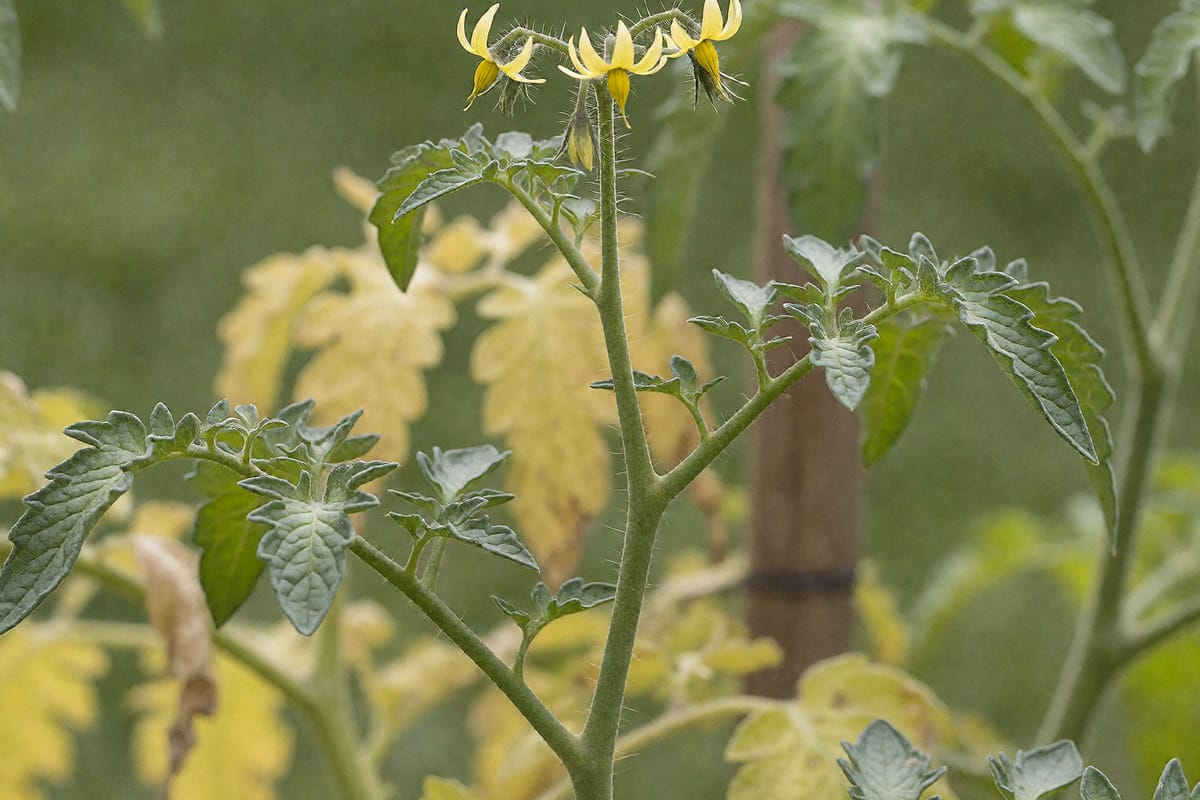
Go out and look at the top of your tallest tomato plant. Six feet up, past all the fruit, there is almost certainly a fresh little truss of yellow flowers opening in the sun, and the plant looks like it is having a wonderful time.
It is not. Those flowers are the plant doing the one thing it knows how to do on a warm day, with no idea what October is. And every one of them is quietly taking sugar away from the green fruit lower down that still has a chance.
The math, which is not complicated
Count from an open flower to a ripe tomato and you are looking at somewhere in the range of six to eight weeks for most varieties. Small cherries run faster, big slicers and paste types run slower, and cool nights stretch all of it out.
Now count forward from today. If your first frost lands in early October, a flower opening this week has about six weeks, and it needs every one of them to go well. If your frost comes in late September, that flower has no chance at all and never did.
So the honest way to think about it is a cutoff date, not a guess. Take your average first frost, count back roughly eight weeks, and any flower opening after that date is decoration. Anything already set and sized up is the real crop. If you are not sure what your frost date is, that number is the single most useful thing to know about your garden right now, and it is the one thing every fall decision hangs on. It is what Garden Planner Pro builds its planting calendar around, and it is worth pinning down whether you get it from an app or a neighbor who has been growing here for thirty years.
Why the plant will not sort this out on its own
A tomato is a perennial that we grow as an annual. In its actual native range nothing tells it to stop, so it keeps building new stem, new leaves and new flowers off the growing tip for as long as it has warmth and water. There is no internal calendar. It will happily be putting out blossoms the morning a frost kills it.
That would be harmless if it were free, but it is not. Everything the plant is spending on new growth at the top comes out of the same account as the fruit already hanging on it. Late-season plants are also usually running short on root capacity, on nitrogen, and on the sound lower leaves that do most of the photosynthesis, especially if septoria or early blight has been working its way up from the bottom all month. The tip is the plant’s favorite child. Left alone it gets fed first.
Topping, and how to do it without regretting it
Cutting off the growing tips of an indeterminate tomato in late summer is called topping, and it is one of the few pieces of garden advice where you see the result within about two weeks.
Find each main growing tip and cut the stem back to just above the highest truss of fruit you actually believe in. Not the highest flowers. The highest fruit that has real size to it and is not going to be a marble in October. Take off the new blossom clusters above that while you are there, and any of the little suckers that have started a whole new leader in the last few weeks.
It feels awful. You will be cutting off a foot or more of perfectly green healthy plant and it goes against everything the summer taught you. Do it anyway. What happens next is that the fruit already on the vine sizes up faster and starts to break color earlier, because the sugars have nowhere else to go.
Two things worth knowing before you get carried away. Leave the leaves that are shading your fruit, because sun-scalded shoulders on exposed tomatoes are a real risk in a hot September, and a bare stem full of fruit facing west will get burned. And skip all of this on determinate varieties, the bush types like Roma and Celebrity that set their whole crop in one flush and then stop. They already topped themselves. Cutting them back just takes fruit off.
The part nobody enjoys, which is deciding what to pull
Late August is when a bed stops being about this year’s crop and starts being about next.
The tomato that has been fighting blight since the middle of July, with maybe four green fruit on it and bare stems from the ground to your knee, is done. It is not going to ripen those four before frost, it is a spore factory sitting next to the plants that are still healthy, and it is standing in ground you want free. Pull it, take the green fruit indoors, and get the bed cleared. Anything that has reached full size and turned from hard shiny green to a duller pale green will ripen fine on a counter out of direct sun. The small hard dark green ones will not, and that is what relish is for.
That bed, cleared this week, is where your garlic goes in October, or a last row of spinach that overwinters under cover. Ground that stays occupied by a half-dead tomato until the first hard freeze is ground you have written off for eight months without meaning to.
The two or three plants that are genuinely still producing get to stay, topped, watered evenly, and picked hard. Even those, keep an eye on. There comes a night in September where you look at the forecast and pick every last thing on the vine, and having already thinned the plants down to the ones that were worth it makes that night take twenty minutes instead of two hours.
If you do only one thing after reading this, do the cut tomorrow morning while it is cool and the plants are turgid. It takes about five minutes a plant and it is the difference between a handful of ripe tomatoes in late September and a bucket of green ones you have to make something out of.