Your Tomato Leaves Have Greasy Gray Patches. Pull the Plant Today.
Most tomato trouble in August can wait until the weekend. The yellowing bottom leaves, the little tan spots, the split shoulders after a storm. You look, you sigh, you go inside.
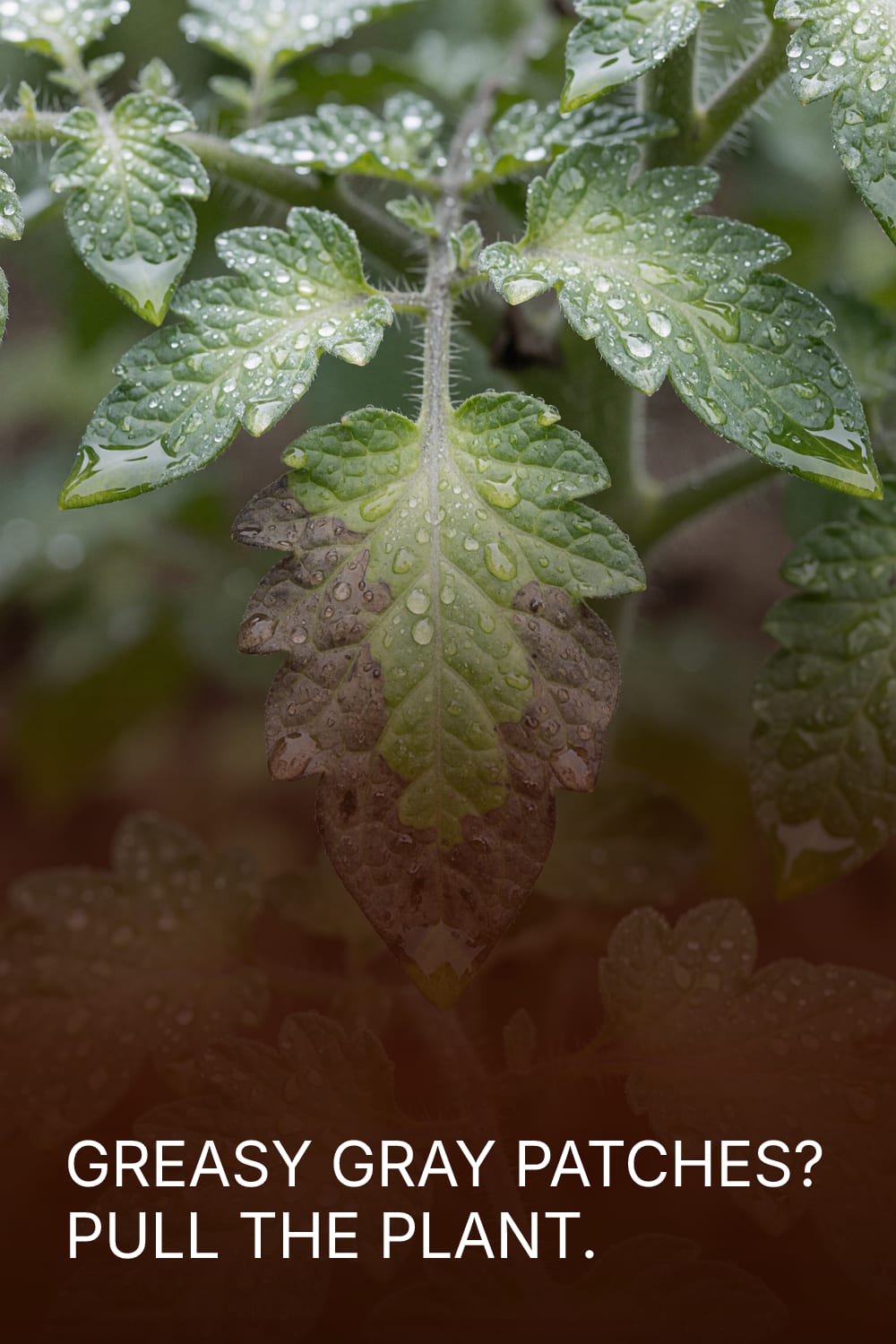
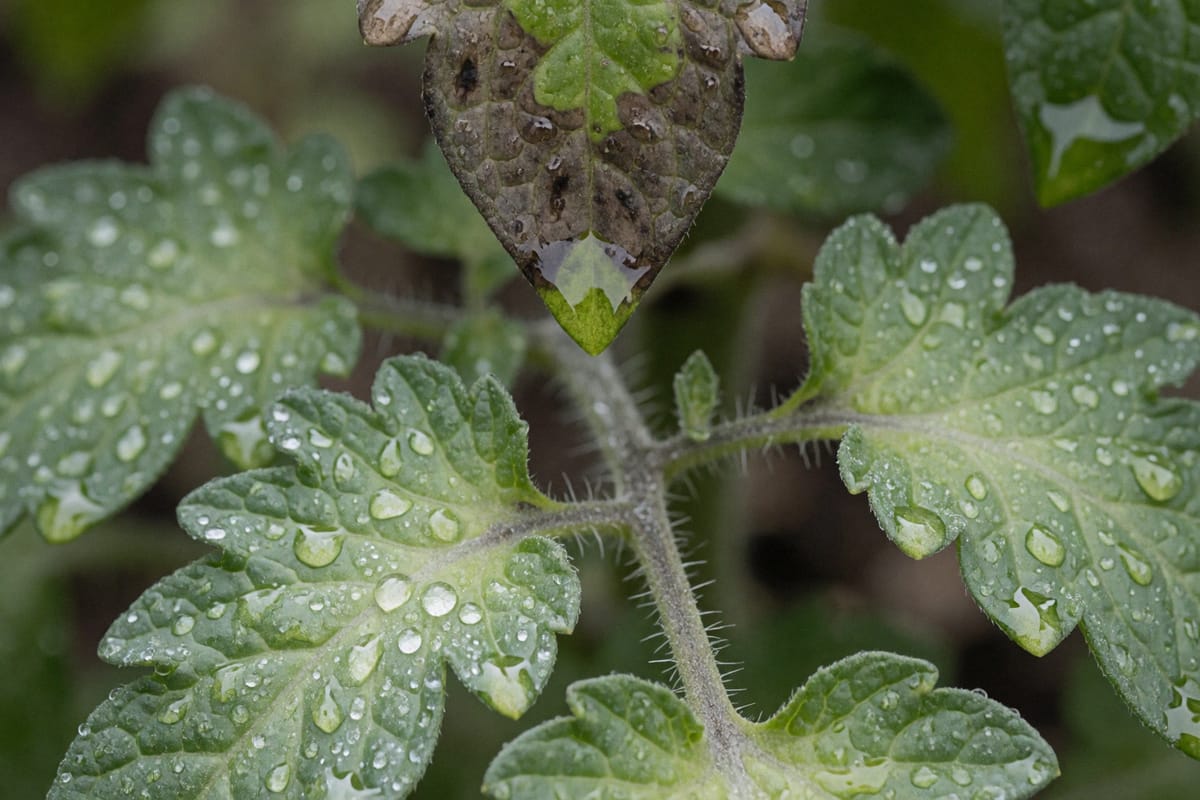
This one cannot wait. If you walk out after a run of muggy nights and find patches on the leaves that look wet even though it has not rained, greasy and gray-green and shading to almost black at the edges, and if they are up in the top of the plant rather than down at the bottom, put the coffee down.
The thing that separates it from everything else
Late blight looks wet. That is the whole tell, and it is worth more than any photo comparison, because every other tomato disease you are likely to meet makes something dry and defined.
It also breaks the rule you have learned about tomato disease climbing from the ground up. Early blight and septoria start on the oldest, lowest leaves, because they splash up out of the soil. Late blight arrives on the wind and lands wherever it lands, including the growing tip. Fresh green top growth going gray-black over two days is not something anything else on this list does.
If you catch a leaf early on a humid morning, turn it over. Where the healthy green meets the dead patch there is sometimes a faint white fuzz, like a dusting of powdered sugar right along the border. That is the thing sporulating. By midday, once the humidity drops, it usually is not visible.
| What you see | Which one it is |
|---|---|
| Brown spots with concentric rings, yellow halo, starting low and climbing slowly over weeks | Early blight |
| Many small tan spots with dark rims and pinprick black dots, lowest leaves first | Septoria leaf spot |
| Wet-looking gray-green patches, no rings, anywhere on the plant, spreading in days; dark greasy patches on green fruit shoulders; brown-black lesions on stems | Late blight |
The fruit symptom gets missed for longest, because it does not rot soft the way you expect. Late blight on a green tomato is firm and leathery and brownish, usually on the shoulder, and it feels like a bruise on an apple. Blossom end rot is at the blossom end, sunken and flat and black. Not the same thing at all.
Why the urgency is real
Late blight is not a fungus, technically, but a water mold, and it behaves like one: it needs leaf wetness and it moves through it. Give it cool nights, heavy dew that keeps the foliage wet into the morning, and mild damp days, and it goes through a tomato faster than anything else in the garden. A plant worth photographing on Saturday can be a black skeleton by Wednesday. It turns up somewhere in the eastern US most Augusts, and reaches home gardens a week or two after the first reports.
The other half of it is that the spores travel. Not a few feet by splash, the way early blight does. On the wind, for a long way, into gardens that have nothing to do with yours. This is the one tomato disease where leaving a sick plant standing to squeeze out a few more fruit is a genuinely antisocial act. Your neighbors’ plants and any potato patch within miles are downwind of it.
What to actually do today
Pull the infected plants. Whole plants, roots and all, because by the time you see leaf lesions it is already through tissue that still looks fine. Bag them for the trash, or seal them in black plastic in full sun for a week until everything inside has cooked to slime. Do not compost them, and do not leave the pulled vines in a pile at the end of the bed. As far as the spores are concerned, that is the same as leaving them standing.
If you have potatoes, cut the tops off at the soil line and remove them, then wait about two weeks before digging so spores on the soil surface die off and the tubers firm their skins. Digging up through infected foliage is how you get a bag of fine-looking potatoes that turn to brown mush in the pantry in October.
Fruit already picked and clean is fine to eat. Firm, unmarked green tomatoes off an infected plant can come in to ripen, but check them daily, because some develop lesions on the counter over the following week. Anything with a brown patch goes in the trash rather than the canner. Diseased fruit is not safe for water bath canning, and that is not worth arguing about over a few tomatoes.
Spraying is the part people want to hear about, and the honest answer is that copper is a protectant. It puts a barrier on tissue that is still healthy. It will not cure a plant that already has it. If late blight has been found in your county and your plants are still clean, copper on those clean plants can buy time. That is the whole of what it does.
If you are not sure which of the three you are looking at, the pest guides in Garden Planner Pro lay the symptoms out side by side with treatment notes, which is easier than squinting at search results with a leaf in your hand.
Next year, and the bit that surprises people
The good news is better than you would guess: it does not overwinter in your soil the way early blight does. Through most of the country the winter kills it outright, and it has to blow back in from somewhere warmer or survive in living tissue. That bed is not ruined. You can plant tomatoes there again next spring.
Living tissue is the loophole, and in a home garden that means leftover potatoes. A few tubers you missed at harvest, sprouting in the bed in May, are how it gets a head start on a new season. So when you dig potatoes this fall, dig like you mean it, and pull every volunteer that comes up next spring instead of letting it grow because you feel bad about it.