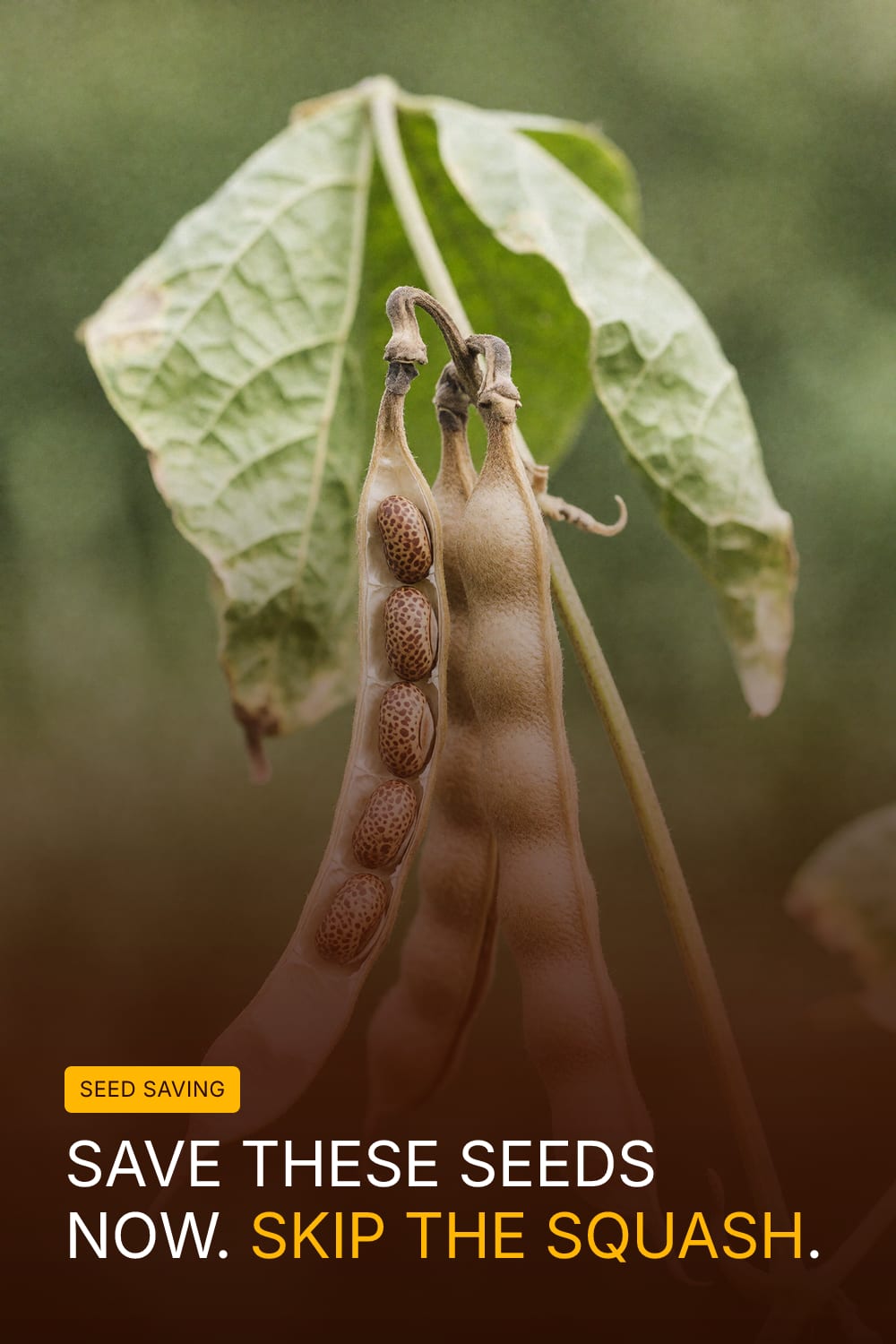
Save These Seeds This Week - And Whatever You Do, Skip the Squash
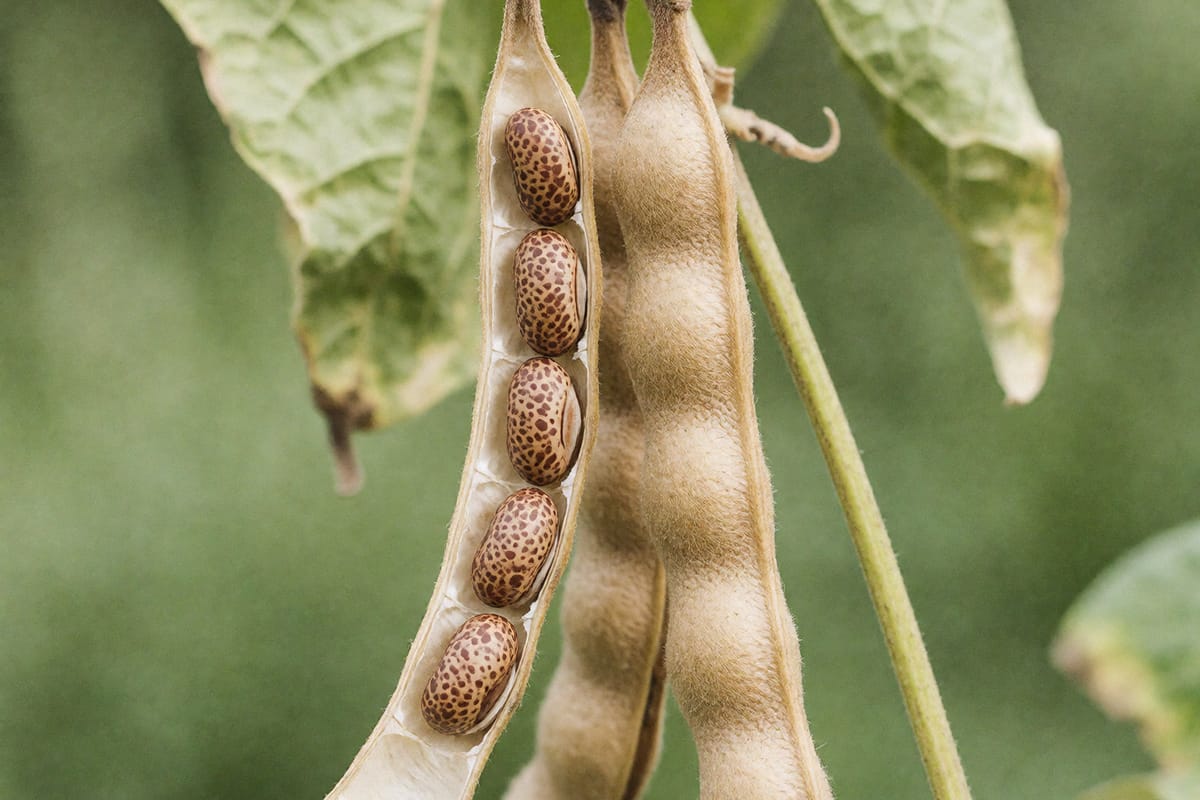
Go shake your bean trellis. If you get a dry papery rattle back, the plants have already done the work. Those pods you stopped picking three weeks ago because you were sick of beans are next year’s seed, sitting out there in the sun, free.
This is the good part of late August. The garden is tired and half of it has quit, and the plants that have quit are exactly the ones handing you seed. Beans have gone leathery. The spring lettuce bolted in July and is now a four-foot skeleton with little dandelion puffs on it. Peppers that have been ripening for a month are finally deep red. All of it wants to reproduce, and you can take that for nothing.
But not everything in the garden is honest about it, and the squash bed is where people get burned.
The only thing you really need to know
Whether a saved seed comes back true depends on who pollinated the flower it came from.
Beans, peas, lettuce and tomatoes have flowers that pollinate themselves, usually before the flower opens properly. Bees visit, but they are too late to matter. Seed from those plants comes back looking like the parent, year after year.
Squash, cucumbers, melons and pumpkins do the opposite. Separate male and female flowers, wide open, entirely dependent on insects to move pollen between them. A bee that starts on your neighbor’s pumpkins and finishes on your zucchini has just written next year’s seed for you, and it wrote something neither of you planted.
Peppers sit in between. They mostly self-pollinate, but bees cross them more often than gardeners expect, which is how you end up with a sweet bell that is quietly hot in the middle of a salad two summers later.
The easy ones, in order
Beans and peas are where anyone should start. Leave a few pods on the plant and stop touching them. When the pod is tan and brittle and the seed inside rattles, pull them. The seed should be hard enough that your thumbnail leaves no dent. If rain is coming and the pods are close, pull the whole plant and hang it upside down somewhere dry and airy. Left out in a wet week, the seed will sprout inside the pod.
Lettuce takes patience rather than skill. A bolted lettuce ripens its seed a few flowers at a time over two or three weeks, so there is no single harvest day. Bend the stalk into a paper bag and shake every few days as the puffs appear. You will get chaff along with the seed and it does not matter at all. Sow the whole mess next spring.
Peppers only need one thing: the fruit has to be fully colored, not green. Green peppers are unripe fruit, and unripe fruit holds unripe seed that will never germinate. Take a red one, scrape the seeds off the core onto a plate, and leave them somewhere warm and out of direct sun for a week or two until they snap instead of bend. If you grow sweet and hot peppers within a few feet of each other, save from a plant at the far end of the row and accept some risk.
Tomatoes want a short ferment in a jar before they will keep, which is a different job with a different reason behind it, and I wrote that one up here.
Why the squash bed lies
Most summer squash, zucchini, acorn, delicata, spaghetti squash and a lot of pumpkins are all the same species, Cucurbita pepo. They cross with each other freely. Save seed from a zucchini growing thirty feet from an acorn squash and you can plant something the following June that is neither, in a shape nobody has a name for. Butternut and the big hubbard types belong to different species and generally will not cross with the pepo group, which is the one piece of good news in this.
There is also a myth worth killing: cucumbers do not cross with squash. Different genus entirely. When a cucumber comes out bitter, that is cucurbitacin brought on by heat and irregular water, and the zucchini next door had nothing to do with it.
And there is a second problem underneath the crossing problem. You eat zucchini and cucumbers immature, weeks before the seed inside is finished. Saving from one means letting a single fruit sit on the vine until it is a hard-rinded club or a fat yellow cucumber, then giving it a few more weeks on a shelf. That is a real thing gardeners do on purpose, and it takes planning. It is not something you pull off accidentally in August with a fruit you forgot about.
The trap that catches everyone once
Check the packet before you save anything. If it says F1 or hybrid, the seed inside that fruit will not come back true no matter how carefully you handle it. Hybrids are the cross of two specific parent lines, and their offspring scatter in every direction. You get some plants like the parent, some like a grandparent, some simply disappointing. Open-pollinated and heirloom varieties are the ones that hold.
Biennials have nothing for you this year either. Carrots, beets, onions, chard, cabbage and kale do not flower until their second summer.
Whatever you save, get it fully dry, then into a paper envelope, then into a sealed jar in the coolest dark spot in the house. Beans and lettuce will still be good in three years or so. Peppers fade faster than that. When you sit down over the winter to work out what still needs ordering, Garden Planner Pro counts your indoor start dates back from your local frost dates, so you can see how much of your own seed actually covers the spring and how much of that catalog order you can cross off.
One thing tomorrow morning, and it is the one people skip: write the variety and the year on the envelope before you set it down. Unlabeled seed is not seed. It is a small jar of mystery you will throw away in February, standing over the trash, annoyed at a version of yourself who was standing in the sun in August with a pen right there in your pocket.