The One Tomato Trick That Means You Never Buy That Seed Packet Again
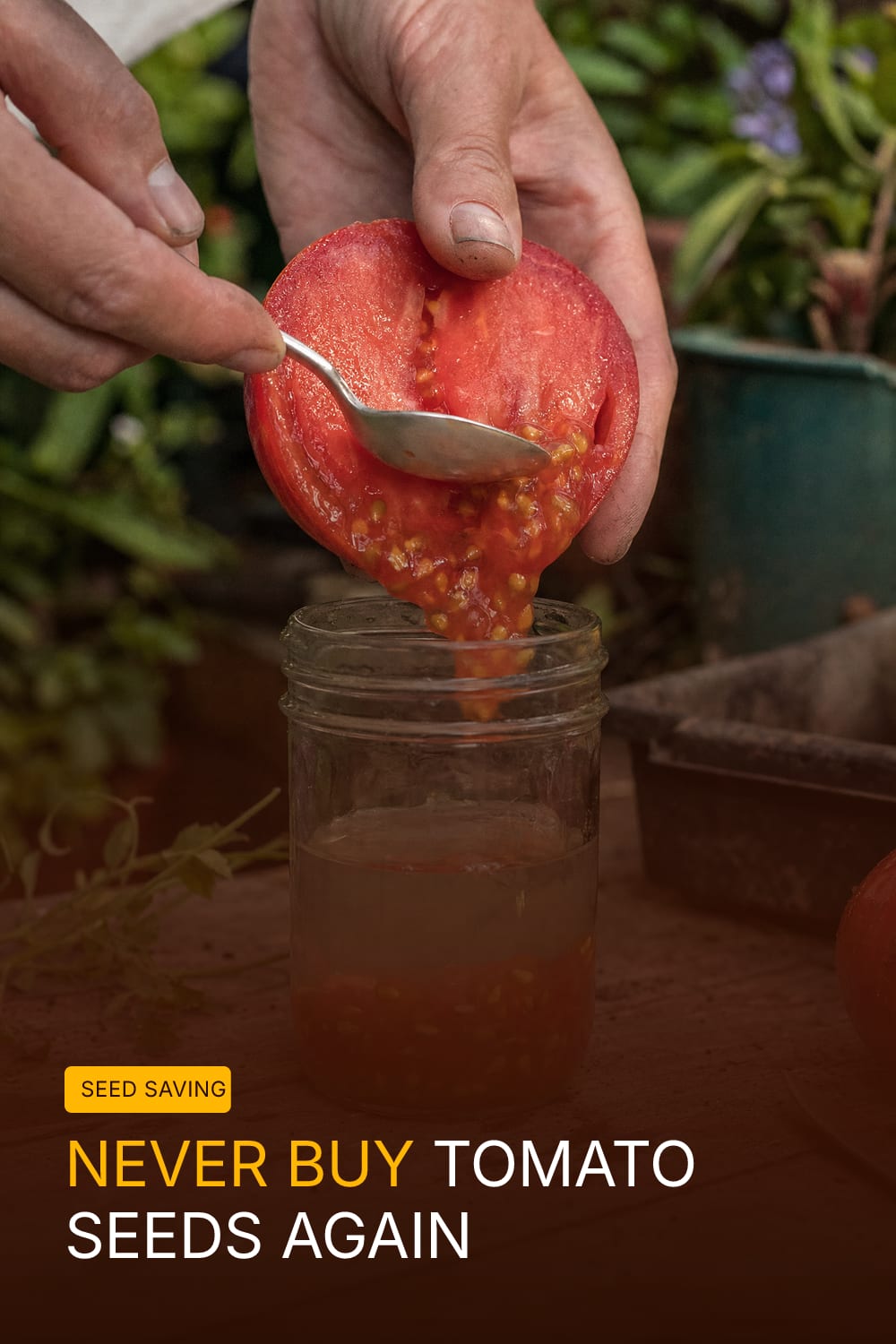
There’s a jar on my counter right now with the ugliest thing floating in it: a scoop of tomato guts sitting in cloudy water, a thin white film forming on top. It looks like something went wrong. It’s actually the whole trick.
Tomato seeds come wrapped in a gel sac that’s doing a job in nature it can’t do in a paper envelope. That gel carries a germination inhibitor, so the seed doesn’t sprout inside a rotting tomato on the ground in September. To get a seed that behaves like the one in a store packet, you have to break that gel down first, and the plant already gave you the tool to do it: rot, on purpose, for four days, in a jar.
This only works if the tomato is open-pollinated or heirloom, not a hybrid. Hybrid varieties (anything labeled F1) are a cross, and their seeds grow into something unpredictable, usually leaning back toward one of the parent plants rather than the tomato you grew. If you don’t know which kind you planted, check the seed packet or plant tag from spring, or just skip this on a plant you bought as a nameless six-pack at a big box store. Heirlooms and most named open-pollinated varieties, saved this way, come back true year after year.
Pick the best fruit off the healthiest plant, not the first ripe one you find. I learned this the slow way, saving seed from whatever tomato happened to split first, and ended up propagating a plant that was just more prone to splitting. Now I walk the row and pick the one with the best flavor, the earliest ripening, the plant that shrugged off blight while its neighbor didn’t. That’s the plant you’re choosing to grow again.
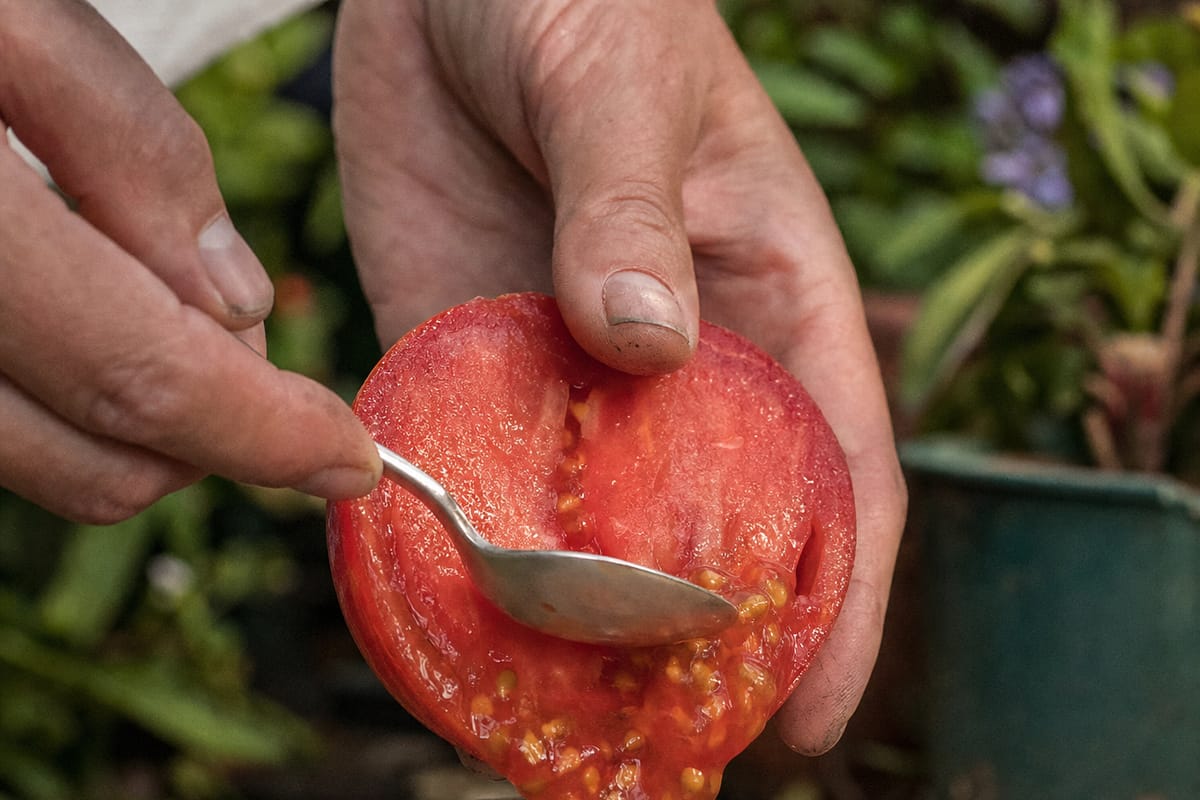
Cut it open, scoop the seeds and the pulp around them into a small jar, and add a splash of water, maybe a quarter cup. Don’t rinse anything off first. Set it somewhere out of direct sun and mostly forget about it for two to four days, stirring once a day if you remember. A film will grow on the surface. The mixture will smell sour, not pleasant, and that’s correct — it means the fermentation is doing the work of dissolving the gel coat and, as a side effect, killing off some seed-borne diseases the tomato might be carrying.
By day three or four, good seeds have usually sunk to the bottom and the pulp and any hollow, nonviable seeds float. Skim off what’s floating, pour the rest through a fine strainer, and rinse under running water while you rub the seeds between your fingers to knock off anything still clinging. Spread them on a paper plate or a coffee filter, not paper towel, which they’ll fuse to permanently the moment they dry. A single layer, out of direct sun, and they’re usually dry enough to handle in about a week, though I always give mine a couple extra days if the air’s been humid.
Label the envelope with the variety and the year before you put it away, not after. I have a small stack of unlabeled envelopes from a few seasons back that are probably a tomato, probably something good, and completely useless to me now.
Early August is the actual window for this, not a coincidence. The first fruit off your earliest plants is ripening now, weeks before the glut hits and every tomato starts looking the same. That early fruit came from whatever set flowers fastest in the heat, which is exactly the trait worth keeping. Wait for the pile on the counter in three weeks and you’ll be choosing from abundance instead of choosing on purpose.
Dried seed keeps for several years in a cool, dark spot — an envelope in a drawer works fine, no need for anything fancier. Garden Planner Pro’s calendar sync can carry a reminder forward to next year’s start date, so “test germination on the saved Cherokee Purple seed” shows up on your phone in February instead of living only in the same drawer as the envelope.
The jar on my counter still has three more days to go. It’ll keep smelling worse before it smells like nothing at all, which is how you know it’s ready.