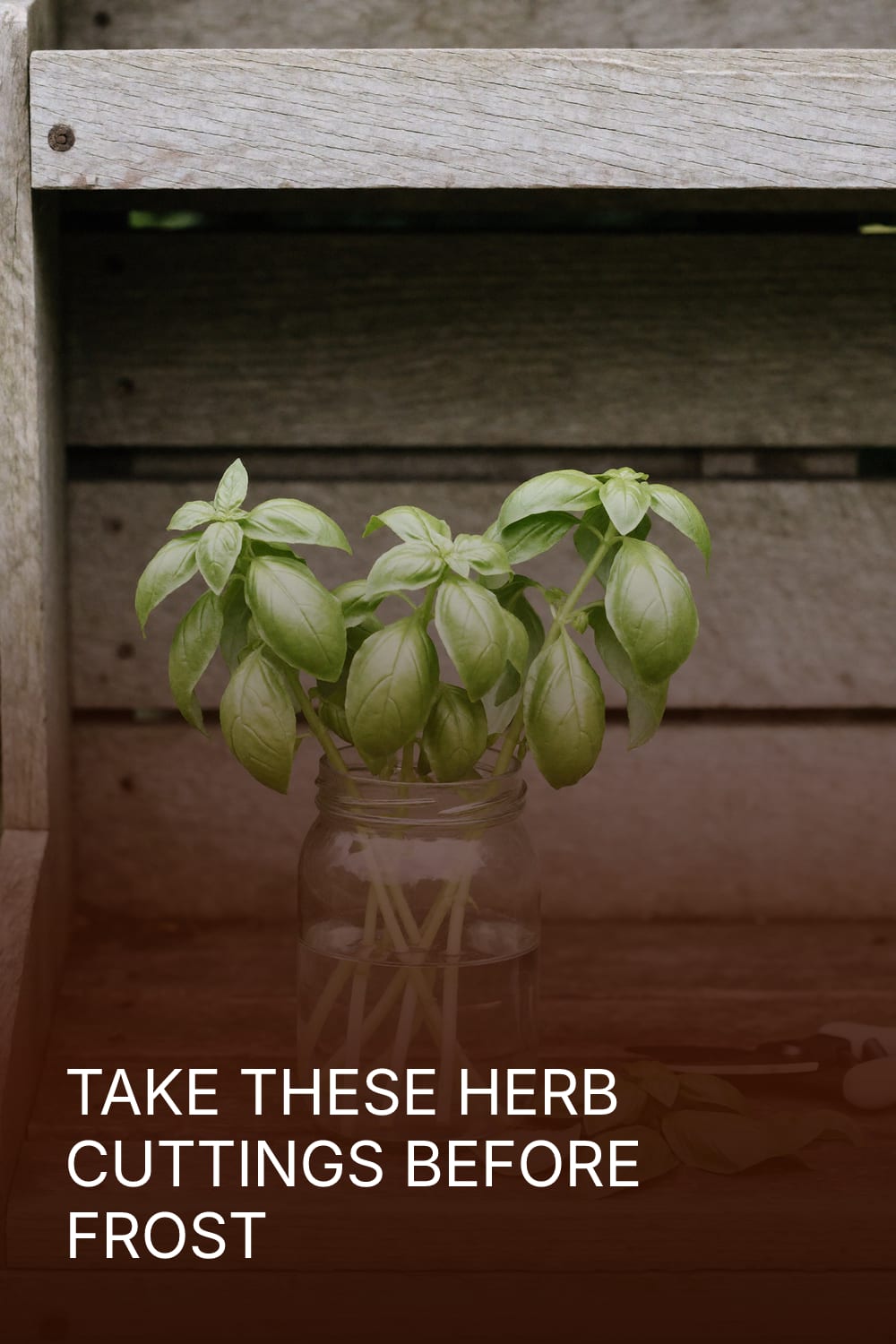
Take Cuttings From These Herbs Now or Buy Them All Again in May
Next May you will stand in a garden center holding a four-inch basil plant that costs more than a whole packet of seed, and you will buy three of them, because it is May and you want basil. I do it most years. The irritating part is that the basil already in your garden, the one currently three feet tall and flopping across the path with flower spikes coming, could have given you those three plants for nothing.
The window for that is open right now and it closes with the weather. A cutting taken this week roots in a warm house with the long end of the year’s light still behind it. The same cutting taken in the second week of October goes into a cold, dim room and sits there doing nothing while its leaves drop off one at a time.
Most of the herb bed does not need you
Most of what sits in a home herb garden survives winter without any help, and fussing over it wastes a September evening you could spend on the things that genuinely die.
| Herb | What winter does | Take cuttings? |
|---|---|---|
| Basil | Killed outright by the first frost, unhappy below about 50°F | Yes, and it is the easiest of the lot |
| Rosemary | Reliably hardy to roughly zone 7, borderline in 6 depending on cultivar and drainage | Yes, if you are colder than that |
| Lemon verbena | Tender, hardy only in about zone 8 and warmer | Yes |
| Scented geranium | Tender, killed by frost | Yes, roots fast |
| Stevia, Cuban oregano | Tender | Yes |
| Bay laurel | Tender below about zone 8 | Pot the plant up instead, cuttings are slow |
| Mint, oregano, thyme, sage, chives, tarragon | Die back and come again in spring | No, leave them alone |
That last row is the one people ignore. Mint will outlive most of us. Sage and thyme and oregano come through a northern winter looking rough in March and then throw new growth from the base as soon as the soil warms. Every year I see someone potting up a perfectly hardy oregano to keep on a windowsill where it will stretch, go pale and die by February, and the plant they abandoned outside would have been fine.
The soft ones go in a glass of water
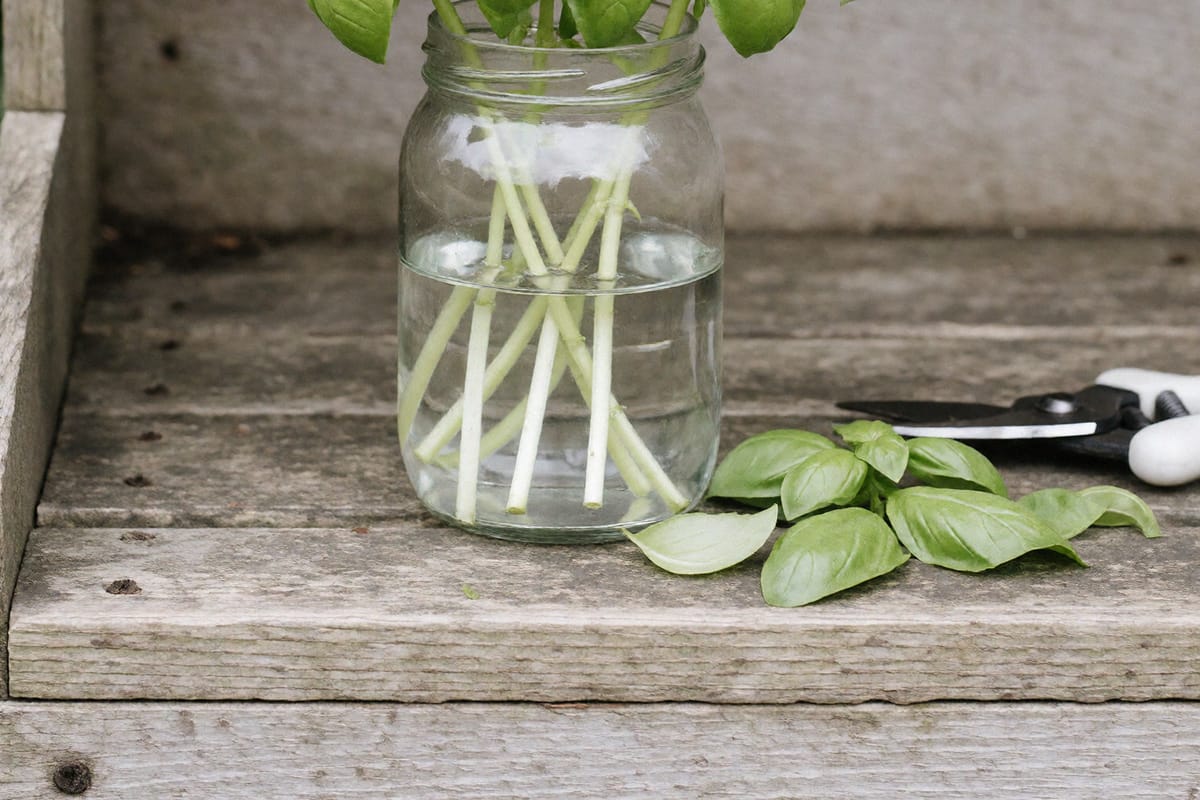
Basil, scented geranium, Cuban oregano and stevia all root from soft stem tips, and the method is barely a method.
Cut a four to six inch tip, using a shoot that is not flowering. Strip the leaves off the bottom half so nothing sits underwater, and pinch out any flower buds at the top, because a cutting that is trying to make seed is not trying to make roots. Put the stems in a jar of water on a bright counter, out of direct afternoon sun. Change the water every couple of days.
Basil usually shows white roots in a week to ten days. When they are an inch or two long, pot the cutting into ordinary potting mix and keep it damp for the first week while it adjusts to soil, which is a real adjustment: water roots and soil roots are not quite the same tissue and a cutting left in a jar for a month often sulks when it finally gets planted. Take more cuttings than you need. Some rot, and they cost you nothing.
The woody ones need grit and patience
Rosemary is the one worth the trouble, and it will not cooperate in a glass of water. It rots.
Take the cuttings from this year’s growth, the part of the stem that has firmed up but has not gone grey and papery yet. Strip the lower needles, dip the cut end in rooting hormone if you have it, and push the stems into a pot of gritty, barely damp mix. Half potting soil and half perlite or coarse sand is fine. Bright light, no direct sun, and enough humidity that the needles do not crisp before roots arrive: a clear bag propped up on sticks over the pot does the job.
Then wait, and do not keep tugging on them. Rosemary can take a month or two. Some of the cuttings will die and look no different for a while, which is maddening. This is why you start in August rather than at the end of September, when you have no margin for a batch that fails.
If you do not know your first frost date offhand, the planting calendar in Garden Planner Pro is built around your local frost dates, and reading that one number off it tells you how many rooting weeks you have left.
Why not just dig up the rosemary
Because it usually dies. A mature rosemary that has been in the ground all summer has a root system far wider than any pot you will put it in, and cutting most of that away in autumn, then moving what is left into dry indoor air, is a shock a lot of plants do not come back from. A rooted cutting has never known anything except a pot, which is the whole advantage.
There is a second reason, and it is the one I care about more after a bad year with whitefly. Whatever is living on the outdoor plant comes indoors with it. Aphids and spider mites that were kept in check all summer by rain, wind and predators find a heated room in November very agreeable, and then they find your houseplants. Cuttings arrive clean.
The mistake that undoes all of it
Cuttings taken off a flowering shoot root badly, and by late August most basil is flowering somewhere. Look at the plant properly before you cut. You want the vigorous side shoots low down, the ones with no bud showing at the tip, not the tall leggy stems with a spike on top that are the first thing your hand reaches for.
And give whatever roots the brightest window in the house. Herbs kept in a dim room over winter do not really die, they thin out and lose their flavor, which is worse in a way, because in April you look at a pale exhausted basil and go and buy three new ones anyway.