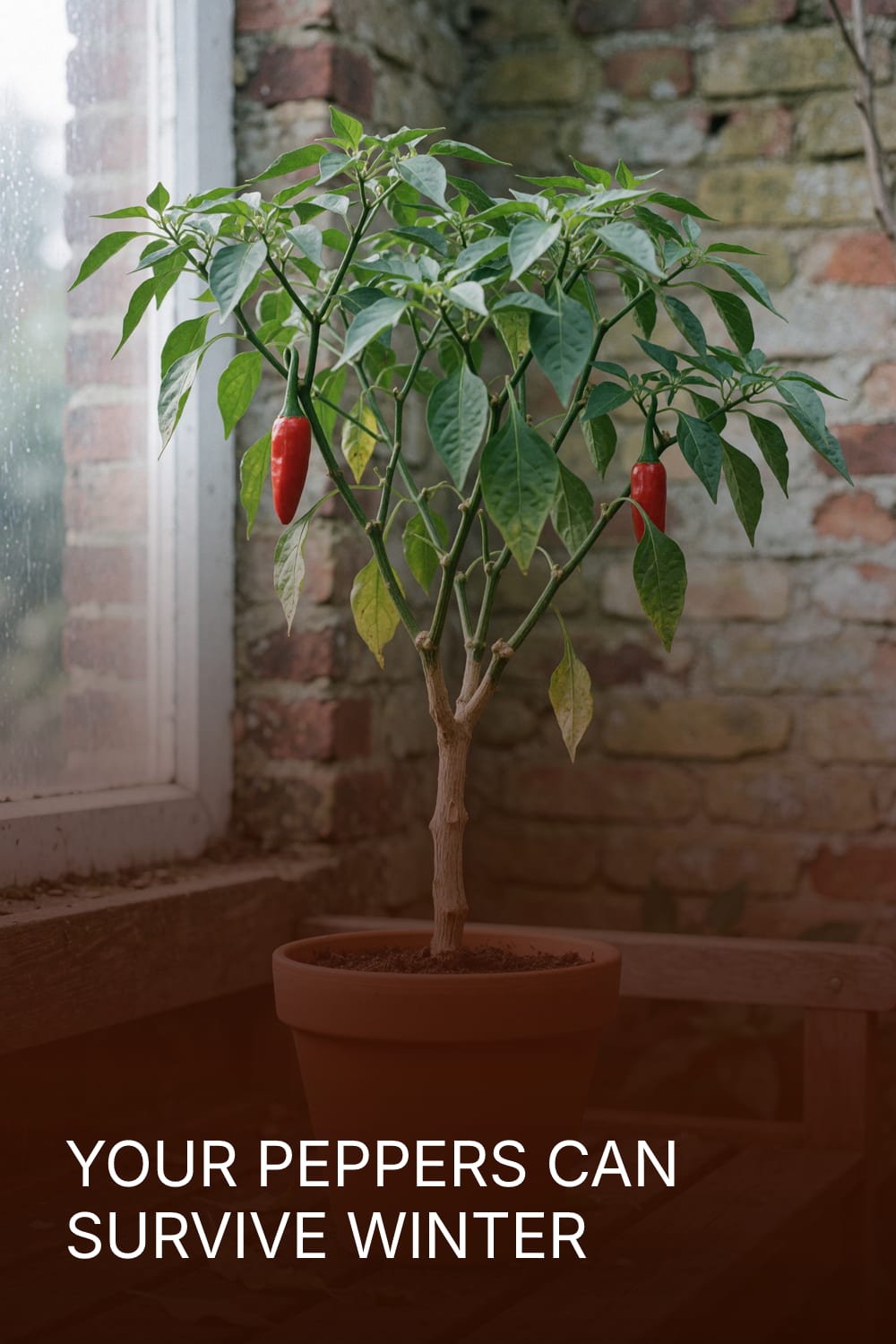
That Pepper Plant Is a Perennial, and Composting It in October Is a Waste
- Peppers
- Fall Garden
- Planning
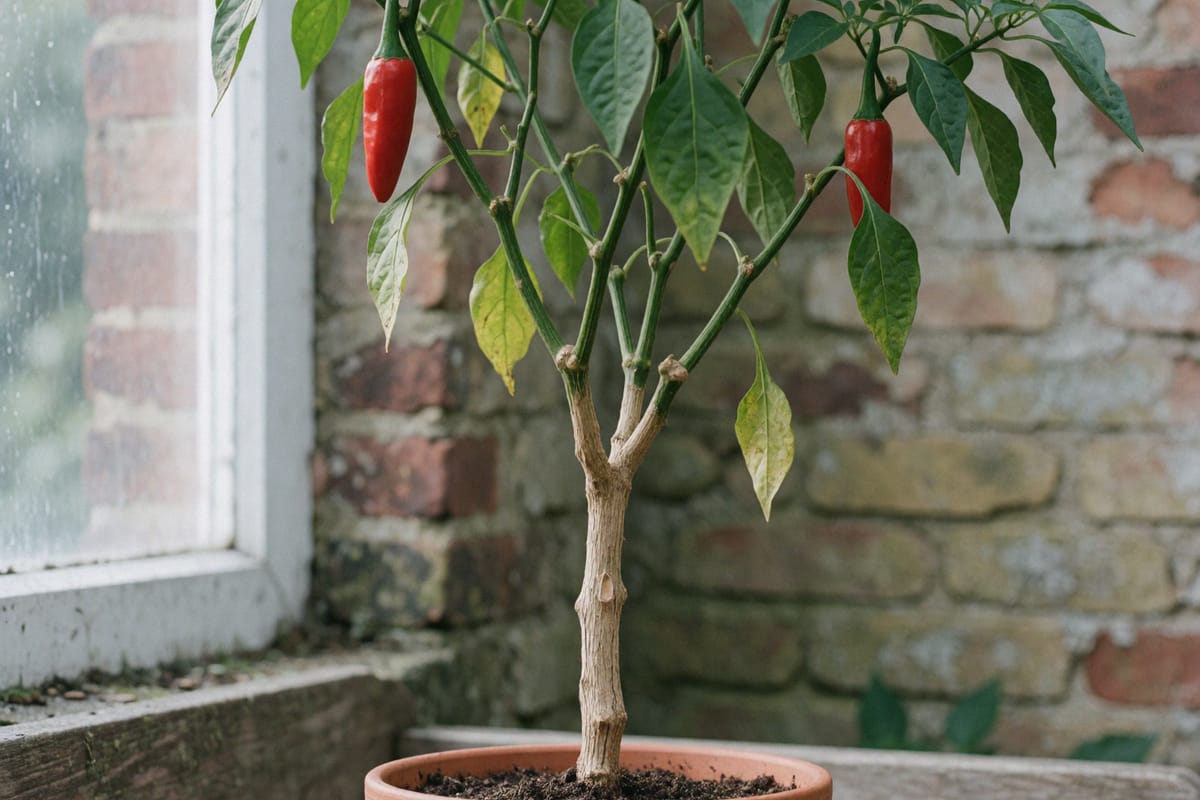
Go out and look at the base of your oldest pepper plant. Push the leaves aside and find where the stem meets the soil. On a plant that has been in the ground since May, that stem is no longer green. It is tan, slightly ridged, woody enough that your thumbnail does not dent it. That is a little trunk, and trunks are not something annuals bother to grow.
Peppers are tender perennials. In the parts of Central and South America they came from, a plant keeps going for years and gets genuinely shrubby. What kills them here is not old age or exhaustion. It is one cold night in October. We treat them as annuals because our winters make us, and then every spring we buy the same variety again and spend until August waiting for it to catch up.
You can opt out of that. A pepper brought indoors before frost, cut back to a stick and kept barely alive through the dark months, wakes up in March with a full root system already underneath it. That head start is the whole point. Mine set fruit weeks ahead of the seedlings I started in February, because it was not building roots in June. It already had them.
Which plants are worth the windowsill
Not all of them. A shelf of leafless sticks in February gets old fast, so be choosy about what earns the space.
The best candidates are the slow ones. Habaneros, scotch bonnets, and anything else that took until September to give you a decent picking are the plants where a head start actually changes your season. Rocotos (the fuzzy-leaved Capsicum pubescens ones) handle cool rooms better than most and are the closest thing to a real perennial in the genus. Bell peppers are the least rewarding. They are quick enough from seed that saving one buys you very little.
Skip any plant that has spider mites, aphids you have been losing to all summer, or the mottled deformed leaves of a virus. A sick plant does not get better in a dim room in January. It becomes a reservoir that infects everything on the windowsill with it.
Timing, and the mistake of waiting for frost
Peppers do not need to freeze to be damaged. They start sulking when nights sit below about 50°F, and a plant that has already taken a week of chilly nights comes indoors weaker than one you lifted in warm weather. So the move happens on the calendar, not on the forecast. Count back two to three weeks from your average first frost date, and do it then, while the plant is still comfortable.
For most of the northern half of the country that means somewhere between the middle of September and the first week of October, which is why late August is the right time to be reading this rather than the night before. (If you have never pinned down your own first frost date, Garden Planner Pro sets its whole planting calendar off your local frost dates, so it will tell you the window instead of making you dig through a zone map.)
Cutting it back is the part people flinch at
Dig the plant with as much root as you can lift, or slide it out of its pot. Knock most of the old soil off. Trim any roots that have wound themselves into a circle, then repot into something smaller than you think. A container barely bigger than the root mass is right, because wet soil with no roots in it is how these plants rot over winter.
Then cut the top back hard. Leave the woody trunk and the main Y of branches above it, roughly four to eight inches of plant total, and take everything else. Strip off the remaining fruit and most of the leaves. This feels like killing it. It is not. Every node on that woody frame holds a dormant bud, and cutting back means the plant is not trying to support foliage it cannot photosynthesize for in a north-facing window.
Before it comes through the door, hose the whole plant down, undersides included, and treat it with insecticidal soap. Then keep it away from your houseplants for two weeks. Spider mites are the reason most overwintering attempts fail, and they arrive invisible in September and explode in the dry heat of December.
What the next four months look like
Boring, mostly. Put it somewhere cool and bright: an unheated spare room, a basement window, a garage that stays above freezing. Sixty degrees is fine. Water only when the top couple of inches are dry, which in a small pot in a cool room might be every two or three weeks. No fertilizer.
It will drop leaves. It may drop all of them and sit there as a bare woody stub for weeks, and this is where most people give up and throw it out. Scratch the bark with a thumbnail. Green underneath means it is alive and waiting. Some plants push out a few pale leaves in midwinter and then hold; others do nothing at all until the light changes.
Around late February the day length gets long enough to matter. Move it into the brightest spot you have, start watering a little more often, and give it a weak dose of fertilizer. New growth comes from those nodes on the old wood within a couple of weeks. From there it is an ordinary transplant: harden it off over a week or two in May, and put it back out after your last frost, already three times the size of anything at the garden center.
The thing most likely to lose the plant for you is a watering can. Cold rarely does it, and neglect almost never does. A leafless pepper in a cool room uses almost nothing, and if you keep it on the same schedule as your monstera, the roots will be mush by Christmas. When you are unsure whether to water it, don’t.