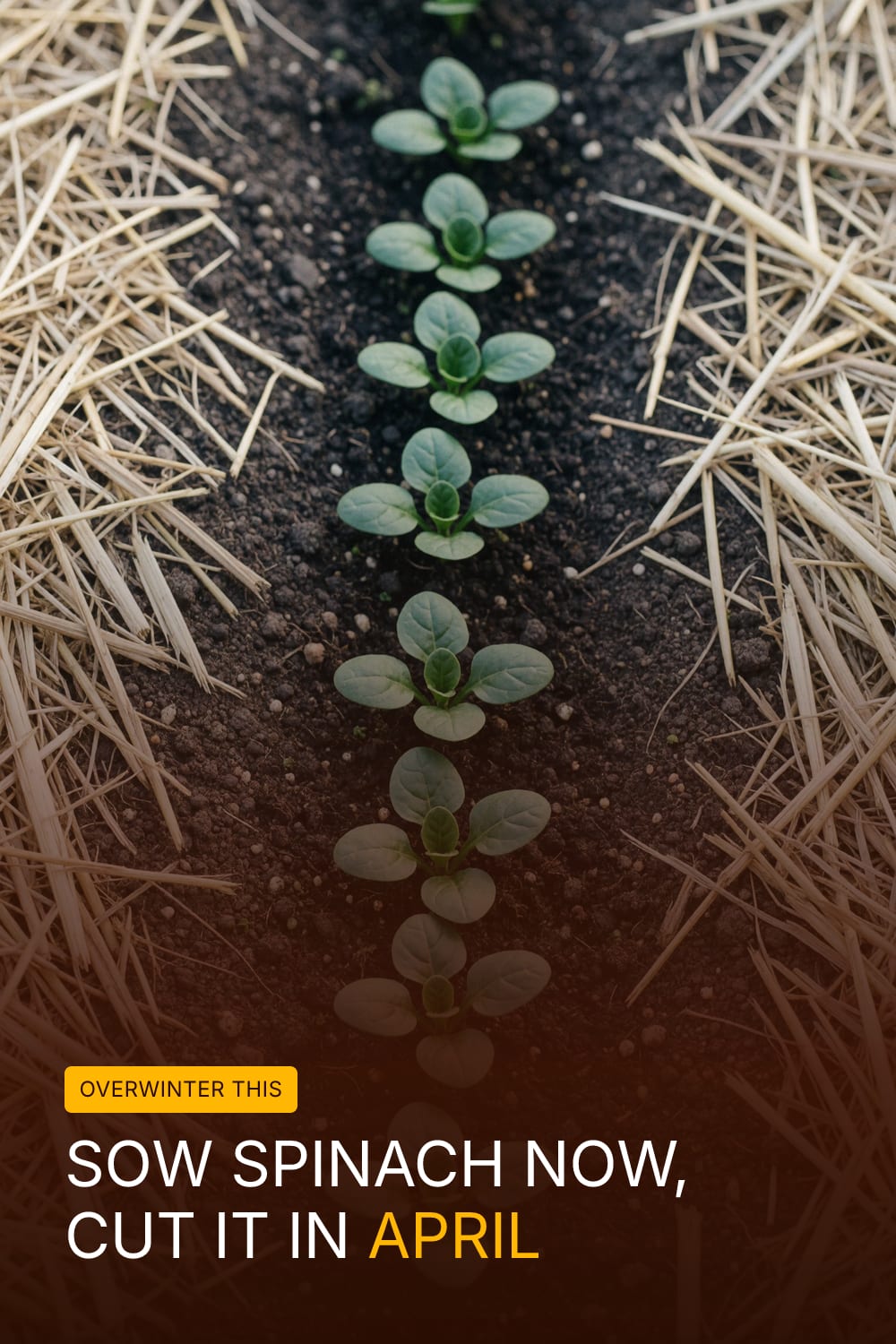
Sow Spinach Now, Ignore It All Winter, Cut It in April
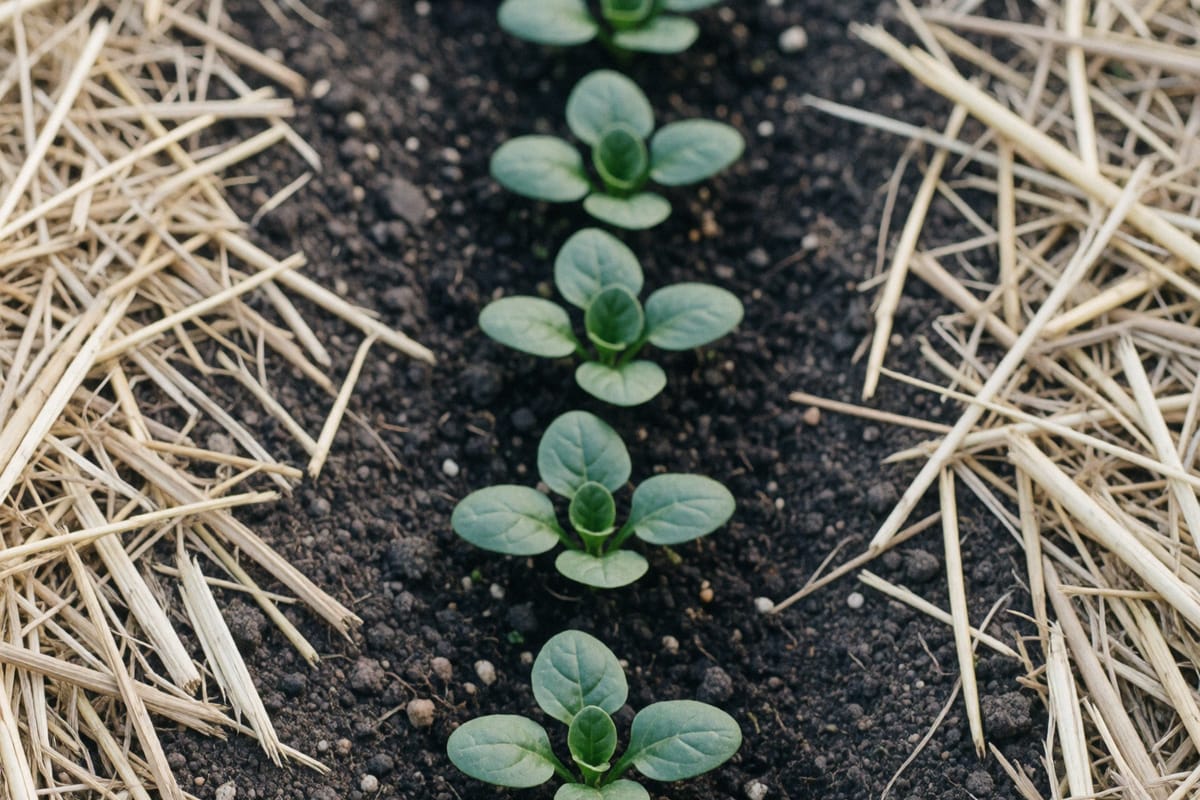
The best spinach I have ever grown was sown at the end of a hot August, sat under a foot of snow doing nothing whatsoever for three months, and got cut in April while the ground where I meant to sow the spring crop was still too wet to walk on.
That is the whole trick, and it is genuinely close to free. You sow now. The plants get small and stall out. You throw some straw over them in November. Then you forget about the bed entirely until the day in early spring when you notice the leaves have gone from flat and miserable to glossy and standing up, and there is a harvest sitting there weeks before anything you plant in March could possibly be ready.
What the plant is doing out there
Spinach is not surviving winter the way a carrot survives it, sitting inert underground. It stays green and alive above the soil the entire time, in a low flat rosette pressed down against the ground, and it is one of the hardiest things in the vegetable garden. Established plants shrug off hard freezes. What they will not do is grow through them.
Growth stops for a reason that has nothing to do with cold. Below roughly ten hours of daylight, most cold-season crops simply hold. Eliot Coleman named that stretch of the calendar the Persephone days in his winter growing books, and it is the single most useful idea for planning a garden like this: whatever size the plant reaches before the light goes, that is the size it stays at until the light comes back. This is why the sowing date is the entire game. A plant that goes into December with five or six good leaves has a working root system and a solar panel, and it explodes in February. A plant that germinated three days before the light ran out has neither, and it just sits there, alive but useless, until spring.
So the target is a small, sturdy, well-rooted plant by late fall. Not a big one. Big lush spinach going into winter is more likely to rot at the crown under wet mulch than a modest one is.
When to put the seed in
Count backward from your average first frost and sow somewhere in the six to eight weeks before it. In much of the country that lands right now, in the last days of August and the first two weeks of September. Colder and further north, you are already at the back edge of the window and should sow this week. If your first frost is not until November, you have until late September and can afford to wait for the soil to cool off.
I have sown too late more times than too early, and the failure is unremarkable and disappointing in the same way every time: the seedlings look fine in October, they never get past two true leaves, and half of them are gone by March. If you do not know your date offhand, the planting calendar in Garden Planner Pro works off your local frost dates rather than a generic month, and this is exactly the kind of question it answers in one look.
The germination itself is the only fiddly part, because spinach seed hates warm soil and late August soil is still warm. Sow a bit deeper than you would in spring, about three quarters of an inch, water the furrow before you sow rather than after, and lay a board or a scrap of shade cloth over the row for the first four or five days to hold the moisture and knock the soil temperature down. Check underneath daily and pull the cover the moment you see anything green. Sow thickly. It is cheap seed and germination this time of year is never as good as the packet suggests.
The varieties that come through
Not every spinach is built for this. The ones that overwinter reliably are the old savoyed and semi-savoyed types with thick crinkled leaves: Bloomsdale Long Standing, Winter Bloomsdale, Giant Winter, and most things sold with the word winter in the name. The smooth-leaved baby-leaf varieties bred for salad bags are quicker and more tender and they are the first to melt in a bad February.
Anything sold as a summer or bolt-resistant type is being selected for the opposite problem. It will grow fine this fall and it will not necessarily be there in spring.
Cover it once, then leave it
Wait until the plants have stopped growing and you have had a couple of proper freezes. Mulching too early, while the soil is warm and the plants are still soft, is a good way to grow slugs and crown rot. Once the bed is cold, put three or four inches of clean straw or shredded leaves loosely over the top of the plants. It is insulation against the freeze and thaw cycle more than against cold itself, since it is repeated freezing and heaving that tears fine roots. A low tunnel of row cover on hoops does the same job better and gives you the option of picking a few leaves in January.
Then, actually leave it. The plants will look dreadful in midwinter. Flat, dark, slightly translucent, apparently dead. Do not pull them and do not water them. In late winter, pull the mulch back off on a mild day so the crowns get light and air.
The one thing that will undo all of it is spring impatience. Overwintered spinach bolts hard once it warms up and the days get long, and you get a shorter picking window than a spring sowing gives you. Cut generously and often from the moment there is anything worth cutting, take the outer leaves and leave the center, and when you see a stem starting to rise out of the middle of a plant, harvest the whole thing that day. You are not going to talk it out of flowering.