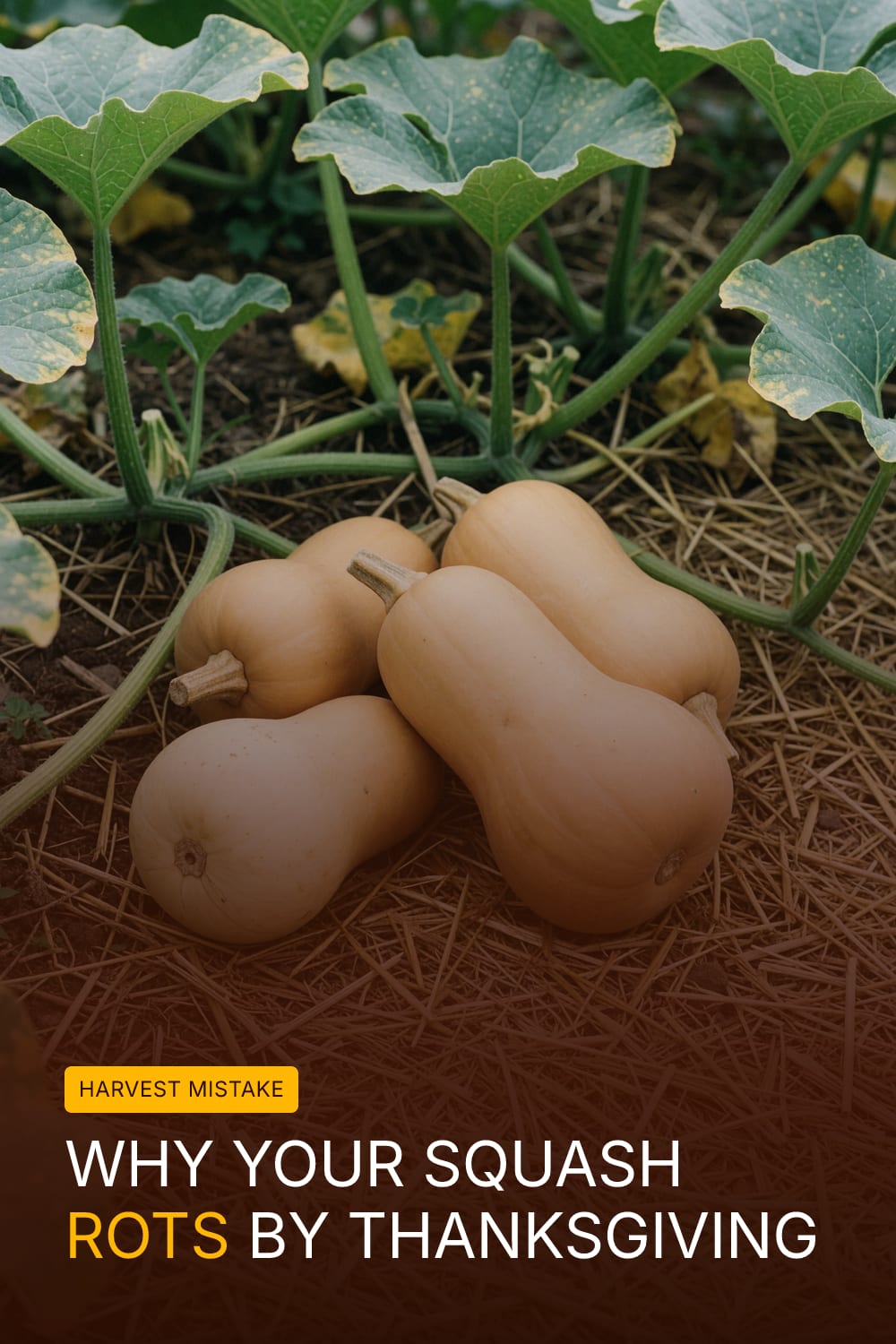
Your Winter Squash Will Rot by Thanksgiving Because of How You Cut It Off the Vine
Every squash I have ever lost went the same way. Sometime in November I pick one up off the shelf and my thumb sinks in a little at the stem end, and underneath the tan skin there is a soft brown ring going wet in the middle. It is always the stem end. It is almost never the bottom.
That squash did not fail in November. It failed the afternoon in September when I pulled it off the vine with my hand because I had both arms full and the pruners were back at the house.
The stem is a wound, and you decide how bad it is
A winter squash comes off the plant with an open cut on it. Everything about whether it keeps until March comes down to how clean that cut is and how fast it dries.
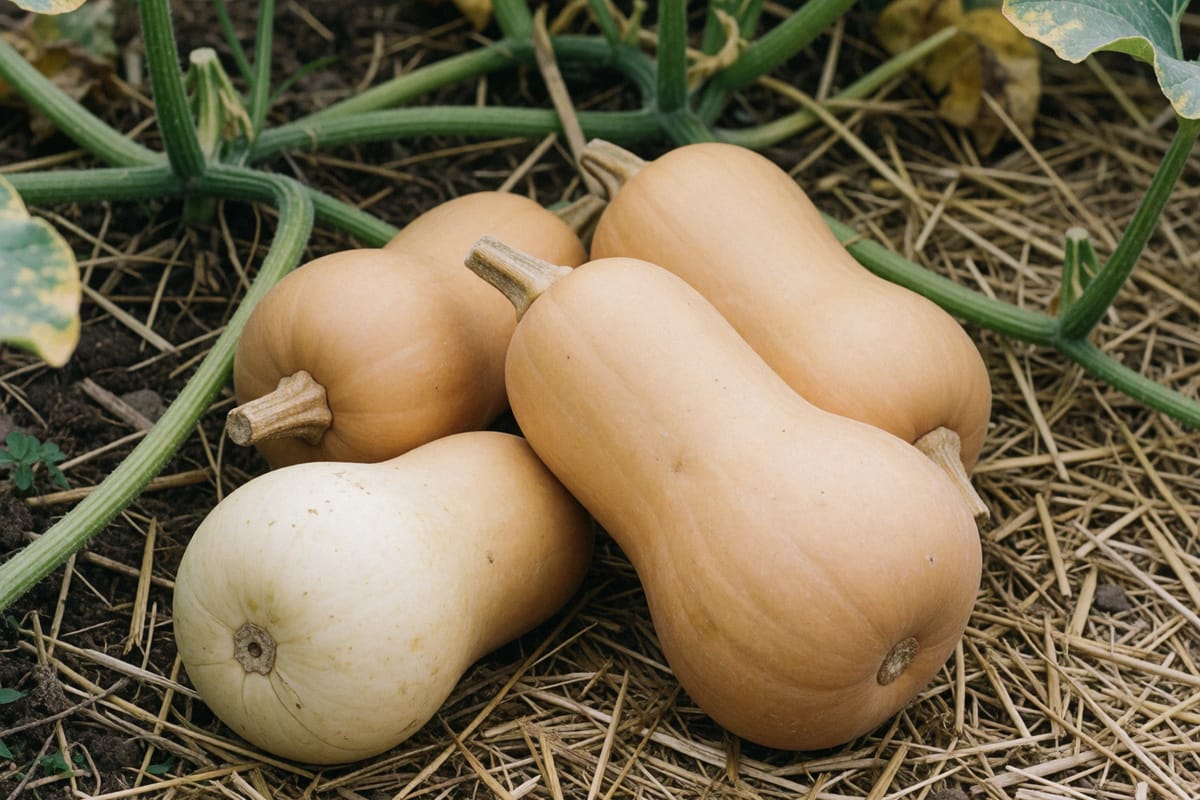
So cut it, with pruners or a knife, and leave two or three inches of stem attached. Do not twist it off. Do not tug. A stem that tears away takes a plug of flesh with it and leaves a soft ragged crater sitting right at the top of the fruit, which is exactly where water collects and exactly where soft rot starts.
And once it is cut, the stem is not a handle. I know it looks like one. Carry a fifteen-pound Hubbard by the stem and the stem will snap off at the shoulder eventually, usually while you are walking, and now you have a squash with a hole in it that needs eating this week. Carry them in a basket, one layer, and set them down instead of tossing them. Bruises you cannot see turn into the soft patches you find in December.
Ripe, and how to tell for certain
Color lies. Half the squash in my garden looks finished by the middle of August and none of it is.
The rind is the real test. Press a thumbnail against it somewhere out of sight, near the blossom end. A ripe squash resists, and your nail slides off leaving nothing. An unripe one dents, and that one is never going to store no matter what you do with it afterward; eat it in the next couple of weeks and stop thinking about it.
Then look at the finish. Immature squash is glossy. As it ripens the shine goes flat and slightly dusty. Butternut loses every green streak and settles into one even tan. The stem itself dries and turns corky and pale instead of green and fleshy, and the tendril on the vine closest to the fruit browns off. The patch where the fruit sat on the ground goes from whitish green to cream or deep orange.
Give it as long as you can. Flavor keeps developing on the vine well past the point the fruit looks done, which is why mid-September squash tastes better than anything you rush off the plant in August.
But get it in before the cold does
The limit on all that patience is your first hard frost. Frosted fruit stores badly, and a stretch of nights in the forties will shorten how long it keeps even when nothing looks damaged. If frost is forecast and the squash is anywhere near ready, bring it in. A vine can be dead and the fruit under it perfectly fine, but do not leave that fruit sitting out in the cold for a week afterward.
This is the week to look up your actual first-frost date rather than guessing from last year. Garden Planner Pro keeps a planting calendar tuned to your local frost dates, which is mostly useful in spring, and then quietly becomes a harvest deadline in the fall.
Curing, and the one squash that hates it
Curing is ten to fourteen days somewhere warm and dry with air moving around the fruit: 80 to 85 degrees is the target. A sunny spare room, a porch out of the rain, the top of the refrigerator. The skin hardens, the stem scar seals over, and the flavor sweetens as starch converts to sugar. Do not crowd them.
Acorn squash is the exception, and it is a real one. Warm-curing acorn squash makes it stringy and dull and shortens its storage life instead of extending it. Cut it, let the stem dry a day or two, and put it straight into cool storage.
Everything else goes from curing into a spot around 50 to 55 degrees, with moderate humidity and no pooled damp. A basement stairwell, an unheated back bedroom, a cool closet. Not the garage floor, where it drops below 50 on a January night. Set them in a single layer with a little air between them, and keep them away from apples and pears, whose ethylene pushes squash toward ripening past the point you want.
| Squash | It’s ready when | Roughly how long it keeps |
|---|---|---|
| Acorn | Rind hard, ground spot turned orange | 1-2 months (skip the warm cure) |
| Delicata | Cream ground deepened, stripes dark, rind hard | 1-3 months |
| Spaghetti | Even deep yellow all over, no pale patches | 2-3 months |
| Kabocha | Rind dull and hard, stem corky | 3-4 months, better after a few weeks |
| Butternut | No green streaking left, uniform tan | 4-6 months |
| Hubbard | Rind hard enough to resist a nail flatly | 5-6 months |
One habit undoes all of this, and it is the tidy one. Do not wash them. Water sitting in the stem scar of a freshly cut squash is the whole problem you spent two weeks curing away. If they came in muddy, let the mud dry and brush it off with a dry cloth, then go look at them again in three weeks and pull out anything with a bruise for the kitchen before it takes its neighbors with it.