Your Onions Rot in Storage Because of What You Did the Week You Pulled Them
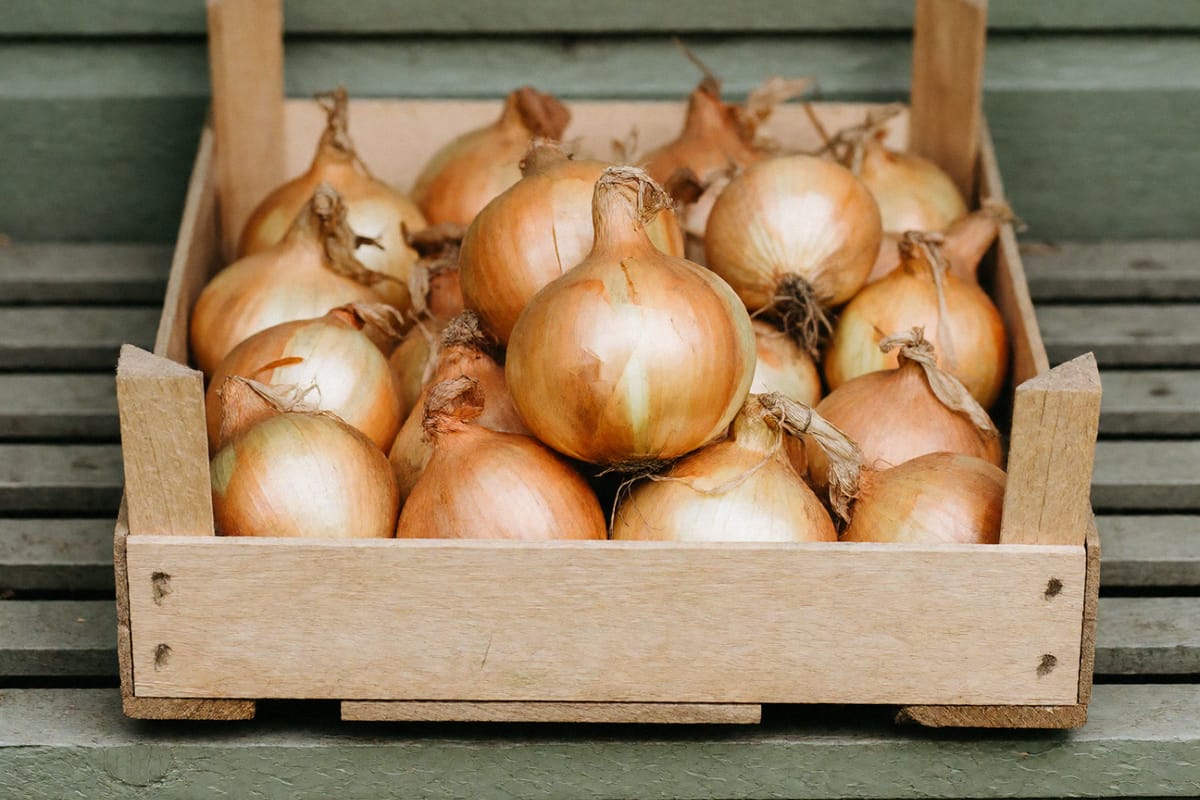
The onion goes soft at the top first. You reach into the crate sometime in November, pick one up, and the neck squashes between your fingers like a wet paper towel while the rest of the bulb still looks fine. Cut it open and the inner rings have gone tan and slimy from the shoulder down.
Nothing went wrong in November. That onion was lost in August, in the ten days after it came out of the ground, and the whole business is decided by one part of the plant that almost nobody watches.
It happens at the neck
The neck is the pinched bit where the leaves meet the bulb, and until it dries shut it is an open door into the middle of the onion. Grey mould spores are already sitting on the foliage of a healthy crop, doing nothing much. They get in through that wet neck, they grow slowly in the dark at storage temperatures, and two or three months later you find the result. That is why the rot always seems to start at the top, and why it shows up long after the harvest looked like a success.
So curing is not a drying-out step you do to be thorough. It is the step that closes the door.
Which also explains a thing that confuses people every year: the biggest, proudest, thickest-necked onions in the bed are usually the first to go. A neck the width of your thumb takes far longer to seal than a pencil-thin one, and often never fully does. Bulbs that sent up a flower stalk are worse, because that stalk leaves a hollow stem running straight into the center.
Getting them out at the right moment
Wait for the tops to fall over on their own. When most of the bed has flopped and the necks have gone soft an inch above the bulb, the plant has stopped sizing up and is telling you it is finished. Stop watering at that point. Give it a few dry days if the weather offers them, then lift the whole plant, leaves and all.
Do not bend the tops over by hand to hurry it along. Old advice, still repeated, and it bruises the neck at exactly the moment you need it intact.
Leave the leaves attached. They feed the last of themselves into the bulb while it cures, and they are what seals that neck as they dry. Leave the roots on too. And do not wash anything. Brush the loose dirt off once the bulbs are dry and live with the rest of it. Water on a curing onion is the one thing you are trying to avoid.
Where they go for the next three weeks
Warm, shaded, and moving air. A covered porch, an open shed, a garage with a box fan running, a spare room with the window cracked. Single layer if you have the room, on something that breathes underneath, like a screen or a slatted crate. Not a heap on concrete and not a closed plastic tote.
Shade matters more than people expect in August. Onions sunscald, and a scalded patch on the shoulder is a soft spot waiting to happen.
Three weeks is typical and humid weather stretches it. You can stop guessing by checking three things. The outer skins should rustle and slip a little when you rub them. The roots should have gone wiry and stiff. And the neck should be tight and papery all the way down when you roll it between finger and thumb. That last one is the test that counts. Any give at all, any coolness, and the bulb goes back for another week.
Then cut the tops to about an inch above the bulb, trim the roots close, and sort.
Sort hard, and eat the rejects first
Set aside anything with a thick or spongy neck, anything that bolted, anything bruised or nicked by a fork, anything that has lost most of its outer skin. None of those keep. They are good food this month and a liability in a crate in December, so they go on the kitchen counter and get used now. One rotting onion in a closed box takes several of its neighbors with it.
Variety decides most of the rest. Sweet onions carry a lot of water and little of the sulfur chemistry that helps a bulb keep, so they measure their storage life in weeks no matter how well you cure them. The pungent yellow storage types are the ones that hold into late winter.
| Crop | Temperature | Notes |
|---|---|---|
| Storage onions | 32-40 F | Dry, dark, air moving through. Mesh bag or open crate |
| Sweet onions | Refrigerate | A few weeks at best. Use them first |
| Garlic | 60-65 F | Dry and dark. Avoid 40-55 F, which wakes it up and starts sprouts |
Never in a sealed bag, never in the bin with the potatoes, and garlic does not belong in the fridge, which is a common way a good crop gets quietly ruined in September.
Before you eat the best of the garlic
Your garlic came out in July and has been curing while the onions were still in the ground. Same treatment: leaves on, shade, airflow, about three weeks, done when the neck is dry and the outer wrappers are papery.
Go through it before it turns into dinner. The biggest bulbs with the fattest cloves are next year’s seed garlic, and clove size is most of what decides bulb size in the crop that follows. Pull four or five of the best heads now and put them somewhere you will not absentmindedly reach for them, because they go back in the ground in October and you will not want to buy what you already grew. Garden Planner Pro will hold that planting date against your local frost dates so it does not slide past you in the middle of fall cleanup.
The rest is yours. Braid the softnecks if you like the look of them hanging in the kitchen, though a mesh bag in a dark cupboard keeps them just as well and takes ten seconds.