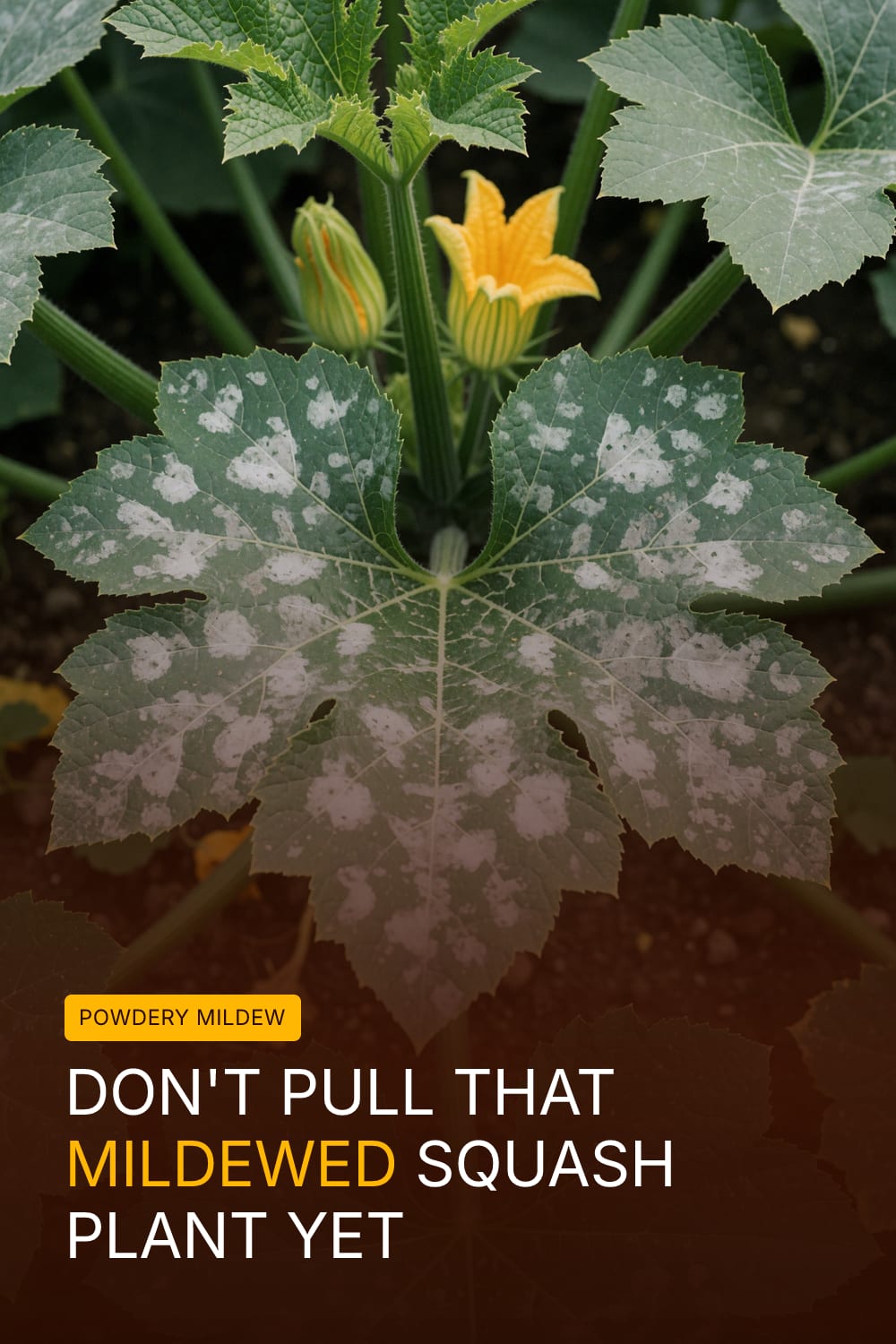
Your Squash Leaves Turned White Overnight - Don't Pull the Plant Yet
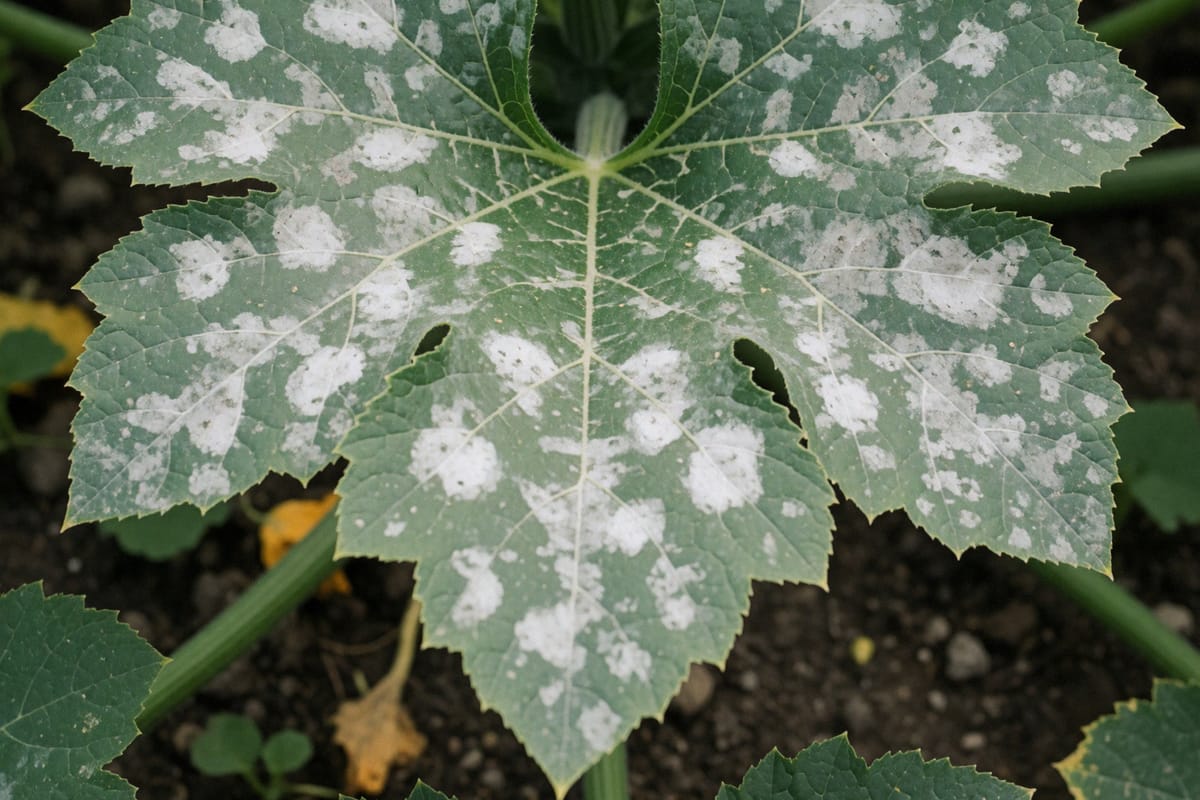
You walked past the squash on Sunday and it looked like a squash plant. You walked past it Wednesday and half of it looks like somebody came through with a flour sifter. Grey-white patches on the upper side of the older leaves, a few spots on the stems, and it is spreading toward the middle of the plant while you stand there looking at it.
That is powdery mildew, it is early August, and it is doing the same thing in every garden on your street this week. The instinct is to pull the plant and be done with it. Hold off. The coated leaves are finished and nothing brings them back, but a squash plant carrying powdery mildew will often keep setting fruit for another three or four weeks. That is most of what is left of the season anyway.
This one ignores everything you know about watering
Most of the fungal trouble in a vegetable garden needs free water sitting on a leaf before the spores can germinate. That is where all the standard advice comes from: water at the base, water in the morning, keep the foliage dry.
Powdery mildew skips that step. Humid air is enough for it, which is why it turns up in the middle of a dry stretch when nothing else is going wrong, and why the neighbor who waters with a sprinkler at dusk somehow has less of it than you do. Water sitting on the leaf surface works against these spores rather than for them.
The air circulation part still holds, though. A squash plant in August is a dense pile of overlapping leaves with dead air underneath, and that bottom layer is always where it starts.
Cut the worst leaves, then stop cutting
Go in with clean snips and take the leaves that are more than about half covered. Cut the petiole down at the base rather than leaving a stub. Those old lower leaves are producing spores by the million and contributing almost nothing to the plant at this point, so pulling them out buys you airflow and lowers the pressure on everything above.
Two things will tempt you into going further, and both are mistakes.
Do not take more than roughly a third of the canopy in one session. A plant that just lost most of its leaves in August has to rebuild before it can ripen anything, and you will lose more fruit to that than to the mildew.
And leave cover over the fruit. Squash sunscald is real and it happens fast on a 90 degree afternoon, especially on the shoulders of a winter squash that spent its whole life shaded. A pale, papery, slightly sunken patch on the top of a fruit is a leaf you should not have cut.
Carry what you cut out of the garden. A compost pile that genuinely heats will handle it. Mine does not, so mine goes in the yard waste bin.
What to spray, and what it can honestly do
Everything you can spray at this stage is a protectant. None of it cleans a coated leaf. What it does is keep the new growth in the middle of the plant from going the same way, which is the whole game from here.
Potassium bicarbonate is what I reach for first. It kills spores on contact, tolerates heat better than most options, and does not smell like anything. Horticultural oil and neem work by coating the surface, but neither should go on above about 90 degrees or onto a plant that is already wilting in the heat, or you will burn the leaves worse than the fungus would have. Sulfur is effective and cheap with two hard rules attached: not above about 90 degrees, and never within two weeks of an oil spray, because that combination scorches foliage.
I have tried the milk spray several times over the years with results I would call inconsistent at best. Some seasons it seemed to slow things down. Other seasons it did nothing I could see. I would not build a plan around it.
Whatever you use, get it onto the new leaves and the undersides, not just the tops, and repeat it about weekly. Once a leaf is white it is a lost cause and not worth the spray.
The move most people miss in the first week of August
Summer squash runs somewhere around 45 to 55 days from seed to first picking. Sown right now, a fresh zucchini or yellow squash can be producing by late September across a good part of the country, on clean young leaves, in cooler weather that mildew likes less. A sowing this late usually comes up after the squash vine borer’s main flight has passed, which is a second reason it tends to do well.
Whether it works where you are is a first frost question and nothing else. Count backward from your average first frost, add a week of margin, and see whether the number still covers the days to maturity on the packet. Garden Planner Pro keeps a planting calendar tuned to your local frost dates, which is the fastest way to settle it.
Do not try this with winter squash. At 90 to 110 days it has no chance sown in August anywhere with a real winter.
When it is genuinely time to pull the plant
Check the base of the stem before you decide anything. If it is mushy, split, or has what looks like wet orange sawdust packed around it, you are looking at squash vine borer damage and the mildew was never the problem. That plant is done, and it goes in the bin today rather than the compost.
Otherwise let it run until the fruit stops sizing up or the first frost takes it. And while you are still annoyed enough to remember, write down which variety this was. Plenty of modern squash and cucumber varieties carry real powdery mildew resistance, and the difference between a resistant plant and a susceptible one in a bad August is not subtle. In February, staring at a seed catalog, you will have completely forgotten which one let you down.