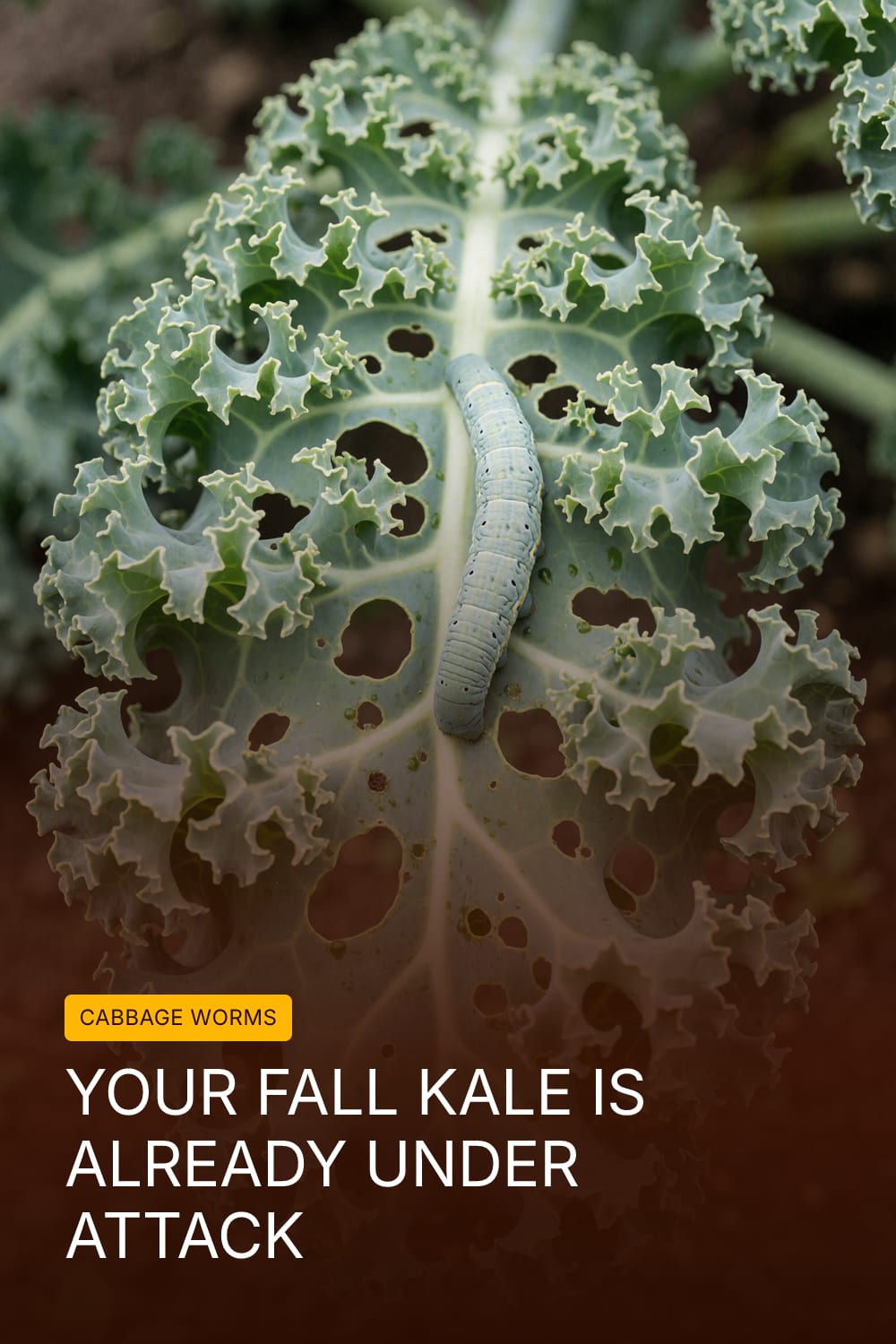
Those White Butterflies Over Your Fall Kale Aren't Just Passing Through
- Pests
- Fall Garden
There is a small white butterfly working its way down my brassica bed right now, dropping onto a leaf for half a second, lifting off, dropping again. It looks like it is feeding. It is not. It is laying, one egg per landing, on the undersides of the leaves of every kale, broccoli and cabbage plant I set out three weeks ago.
I used to enjoy watching them. They are pretty, they move like paper in wind, and in May they never seemed to cost me much. That is the part that took me years to work out: the butterflies in May and the butterflies in August are not facing the same odds.
Why the fall planting takes it so much worse
A spring brassica goes into a garden where the pest population is starting from almost nothing. Whatever overwintered has to find you, mate, and build up, and by the time it has, you are already cutting broccoli.
An August brassica goes into the opposite situation. Those butterflies have had all summer to run generation after generation on somebody’s mustard, your neighbor’s collards, the wild cress at the edge of the field. The population peaks in late summer, which is exactly when we are pushing tender, well-watered, nitrogen-fed transplants into open ground with no leaf mass to spare. A spring cabbage can lose a third of its foliage and shrug. A six-inch fall kale cannot.
So the same butterfly, the same egg, a very different outcome.
The three things chewing, and how to tell them apart
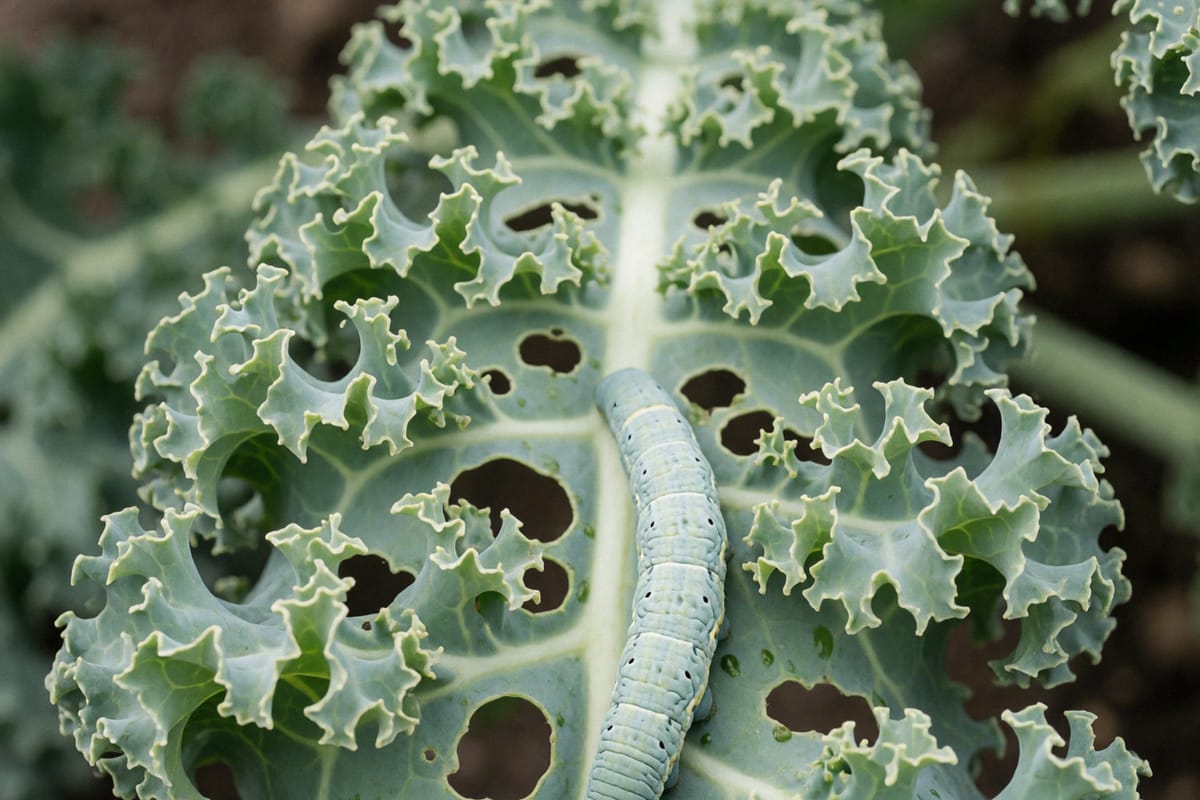
Almost everyone calls all of it “cabbage worms.” Three different caterpillars are usually involved, and knowing which one you have matters less than you would think for treatment, but a lot for finding them in the first place.
| What you have | What it looks like | How it gives itself away |
|---|---|---|
| Imported cabbageworm | Velvety green, sluggish, a faint yellow line down the back, about an inch grown | Sits still along a midrib in plain sight; the white butterfly is its adult |
| Cabbage looper | Smoother, thinner, paler; arches its back into a loop as it walks | The loop. Nothing else in the bed moves that way |
| Diamondback moth larva | Tiny, maybe a third of an inch, tapered at both ends | Thrashes when you touch the leaf and drops on a silk thread |
You will find the frass before you find any of them. Look into the crotch where a leaf meets the stem, or down into the center of a cabbage: dark green pellets, coarse as ground pepper, sometimes a small heap of it. Frass in the crown means something is living above it right now.
The eggs are worth learning too, because that is the cheapest moment to intervene. Imported cabbageworm eggs are laid singly, not in clusters, on the leaf underside. Pale yellow, shaped like a tiny bullet standing on end, small enough that you will want to tip the leaf toward the light. Once you have seen one you see them everywhere, which is either useful or depressing depending on the morning.
What actually stops them
Handpicking works better on brassicas than on almost anything else, because the imported cabbageworm is slow and does not hide well. Ten minutes down the row every couple of days through late August will hold a small planting on its own. Turn the leaves. Check the crown.
When the numbers get past that, Bt (Bacillus thuringiensis var. kurstaki) is the thing. It is a bacterium that only affects caterpillars, so it leaves the ladybugs and the parasitic wasps alone, and it is approved for organic growing. Two things determine whether it works for you. It has to be eaten, so it goes on the leaf surfaces the caterpillars are chewing, undersides included. And sunlight breaks it down, so spray in the evening and expect to go again after rain or after a flush of new growth that came in unprotected. People who say Bt did nothing for them usually sprayed once, at noon, on the tops of the leaves.
Spinosad also works, and works faster, but it is harmful to bees while the spray is still wet, so keep it off anything flowering and apply it late in the day.
The version where you skip all of this
Cover the bed the day you transplant.
Insect netting or a lightweight row cover, hooped so it is not resting on the leaves, buried or pinned tight at every edge. Brassicas grown for leaves and heads need no pollinator visits at all, so unlike squash there is no point where you have to take it off. You are not treating a problem, you are declining to have one, and it is the single cheapest change I have made to my fall garden.
Two ways it goes wrong. If you cover a bed a week after planting, you may have sealed the eggs in with the plants and built them a predator-free greenhouse. Check the undersides first, or cover at the moment of transplanting when the leaves are still clean. And if the same bed grew brassicas this spring, cabbage root maggot and some other pests can emerge from the soil underneath your beautiful sealed cover. Rotate the bed, then cover it.
Fall brassicas take most of the autumn to size up, and the difference between a kale patch you harvest into December and one you give up on in September usually comes down to what happened in these three weeks in August. If you are trying to work out whether there is still time for a second sowing behind the ones already in, the planting calendar in Garden Planner Pro counts backward from your own first frost date, and its pest guides cover the caterpillars above if you want a photo to check against at the bed.
Go out tomorrow morning and turn over ten leaves. Not the ones with holes, the clean ones at the top. That is where she was landing yesterday.