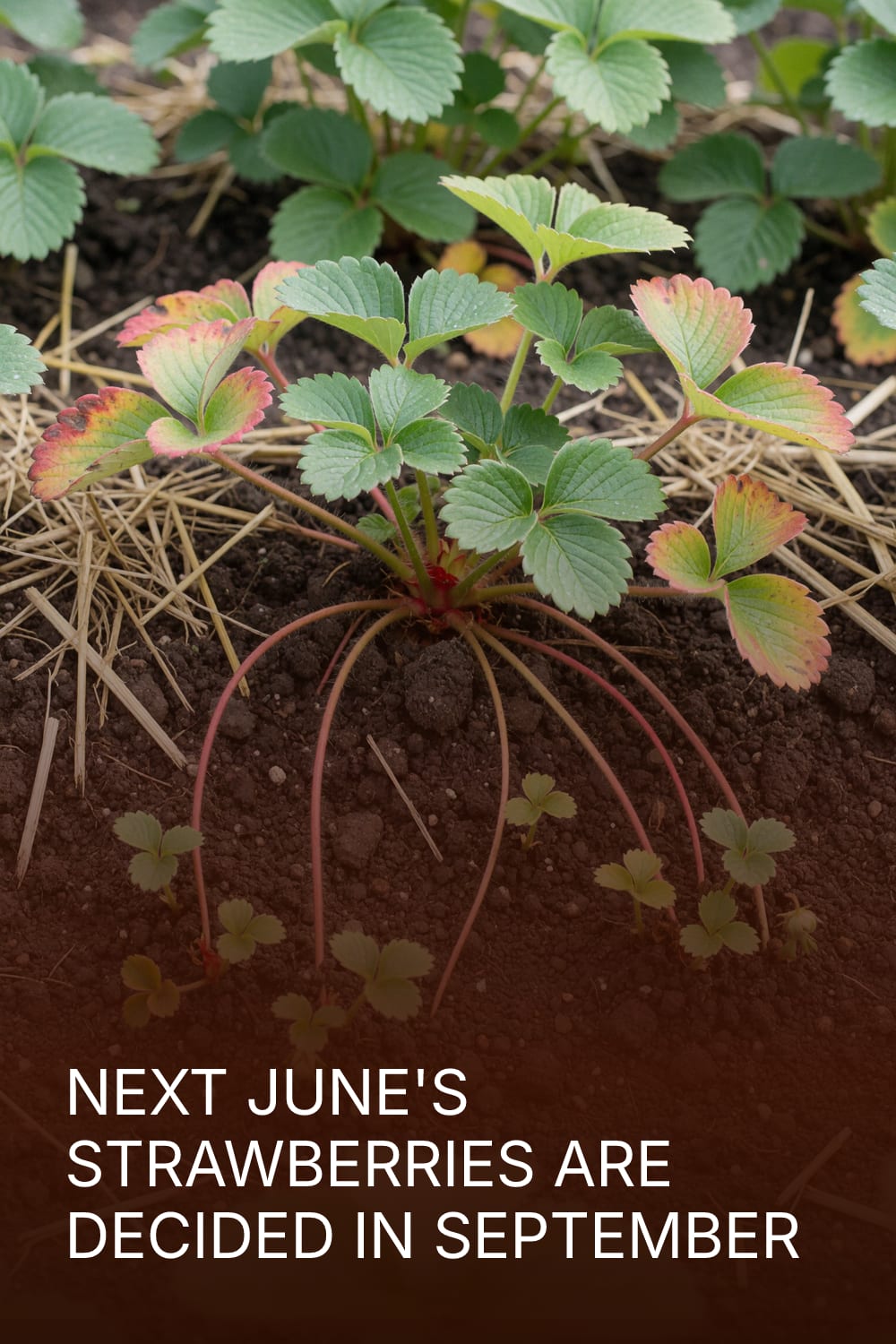
Next June's Strawberry Harvest Is Decided in September, Not Spring
- Strawberries
- Fall Garden
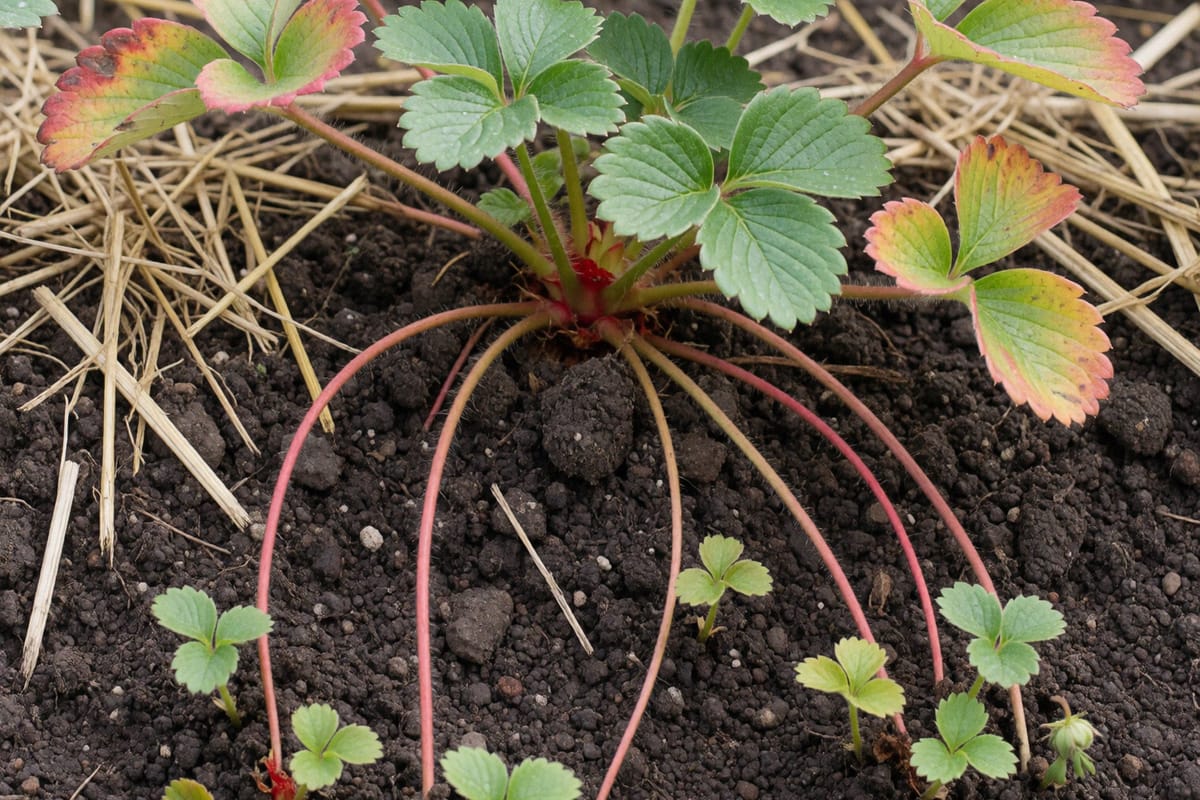
The strawberry bed is the saddest-looking thing in my garden right now. The outer leaves have gone dull red and blotchy, half the row is buried under runners that went wherever they felt like going, and the whole thing has the look of a plant that has finished for the year and knows it.
It hasn’t. This is the month it decides how many berries you get next June.
June-bearing strawberries read daylength. As the days shorten and the nights cool off, the crowns switch out of runner-making mode and start forming the flower buds that will open next spring. Every berry you pick in June already exists, in miniature, inside a crown sometime around now. That is a strange thing to sit with, and it reframes what fall care is for. You are not tidying up after this year. You are feeding the plant during the week it is writing next year’s crop.
Which means the April routine most of us run, where we notice the bed in early spring, pull the mulch back, throw down some fertilizer and hope, arrives about six months after the decision was made.
Thin the runners, and be harder about it than feels right
If you let a matted row do whatever it wants, by September you have a mat rather than a row. Fifty plants where there is room for fifteen, all of them shading each other, all of them competing for the same water. Crowded beds give you an enormous number of very small berries. It is the single most common reason a three-year-old bed produces worse fruit than it did in year one, and it happens so gradually that nobody notices the year it went wrong.
So go through it now. Keep the strongest daughter plants, roughly a hand’s width apart, and cut the rest off where the runner leaves the parent crown. Keep the row itself somewhere around a foot and a half to two feet wide and pull anything that has wandered into the path. I find it easier to do this sitting down with a pair of snips than crouching, because it takes longer than you think and the temptation to leave “just this one” is what ruins the job.
Pull out the oldest crowns while you are in there. A strawberry plant peaks in its second and third year and then coasts downhill. If a crown is woody, thick and stubby with hardly any new leaf coming from the center, its best fruit is behind it. Take it out and let a young daughter plant have the space.
Water it like it’s still working, because it is
This is the part people skip. The bed looks done, so the hose stops going that way, and the plants set their flower buds through a dry spell.
Strawberries root shallowly, so a hot dry September hits them harder than it hits a tomato. Keep the bed watered through bud set the same way you would in midsummer, deeply, and keep going until the ground is genuinely cold. A light feed helps here too, something modest and nitrogen-leaning, but water is the bigger lever and it is the free one.
If you keep a watering schedule in Garden Planner Pro, this is a good week to make sure the strawberry bed didn’t quietly fall off it when the harvest ended. Mine did, two years running, which is how I learned to connect a thin June to a dry September.
If you are planting a new bed, your zone decides the month
Fall planting is genuinely better in mild-winter regions. Set plants out in early autumn, let them root through cool damp weather, and they arrive at spring established enough to fruit properly the first season, without the deblossoming ritual that spring-planted June-bearers need. In roughly zone 7 and warmer, that window is now through October.
Colder than that, be careful. The risk in zones 5 and 6 is frost heave: soil that freezes and thaws repeatedly through winter physically lifts a shallow-rooted young plant out of the ground, and a crown sitting proud of the soil in February is a dead crown. You can plant early enough in September to get real roots down and mulch heavily, and plenty of people do it successfully. But spring planting is the safer default up there, and there is no shame in waiting.
One rule holds in both cases. Set the crown so the soil line sits right at the middle of it, with the roots fully covered and the growing point sitting clear on top. Bury the crown and it rots; plant it too high and the roots dry out. That one detail kills more new strawberry plants than winter does.
Don’t mulch yet
Every year somebody does all of the above, feels productive, and finishes by burying the bed in straw in September. Too early. Mulch put on while the plants are still growing traps warmth and moisture around the crowns and invites rot, and it can interfere with the cold exposure the plants need going into dormancy.
Straw goes on after the plants have gone dormant and taken a few hard freezes, which in most of the country means late November or into December. Put a note in the calendar now, though, because that job arrives at the exact moment nobody wants to be outside gardening, and an unmulched bed in zone 5 is how you end up replanting in spring.