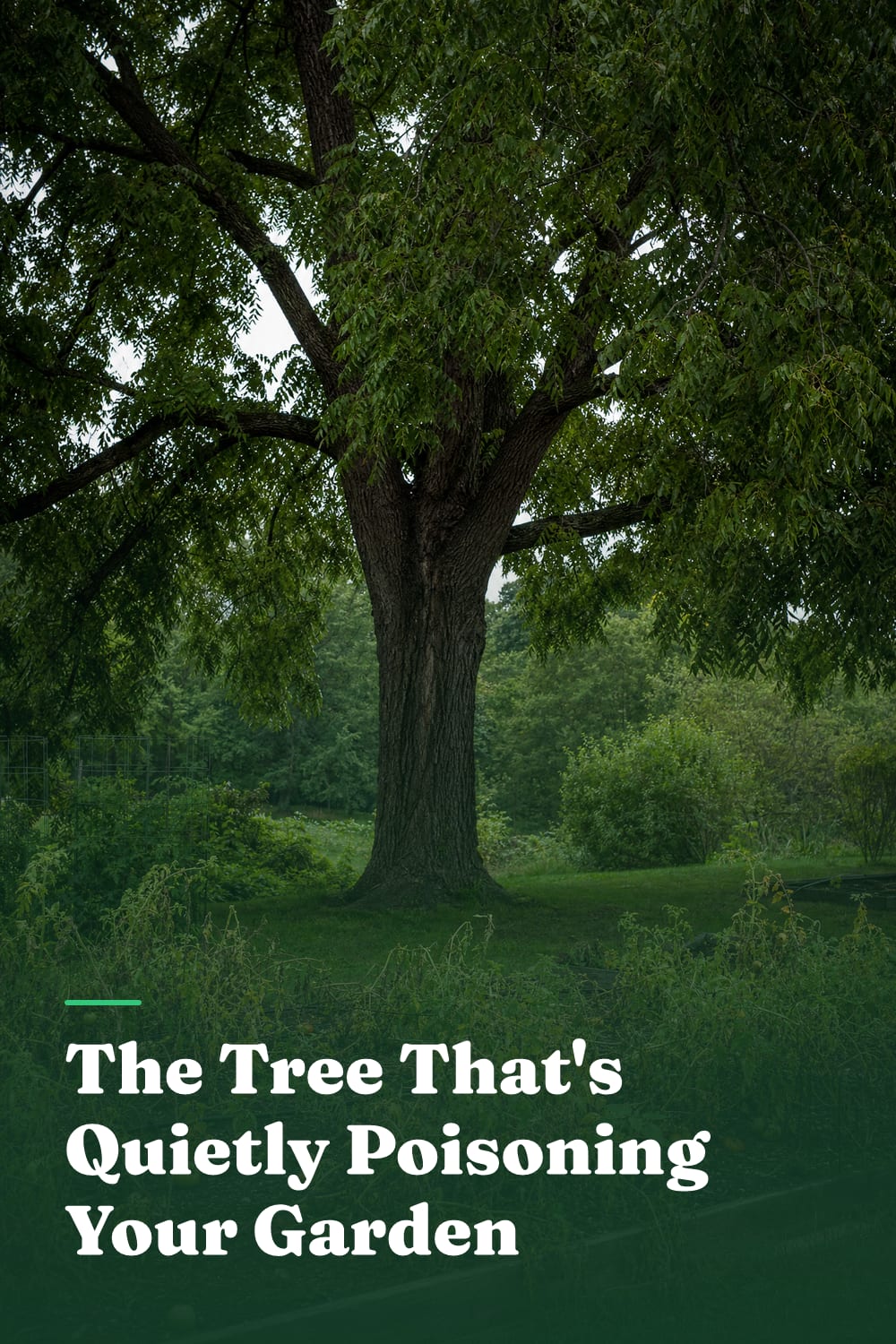
Never Plant a Vegetable Garden Near This Tree - It's Quietly Poisoning Your Soil
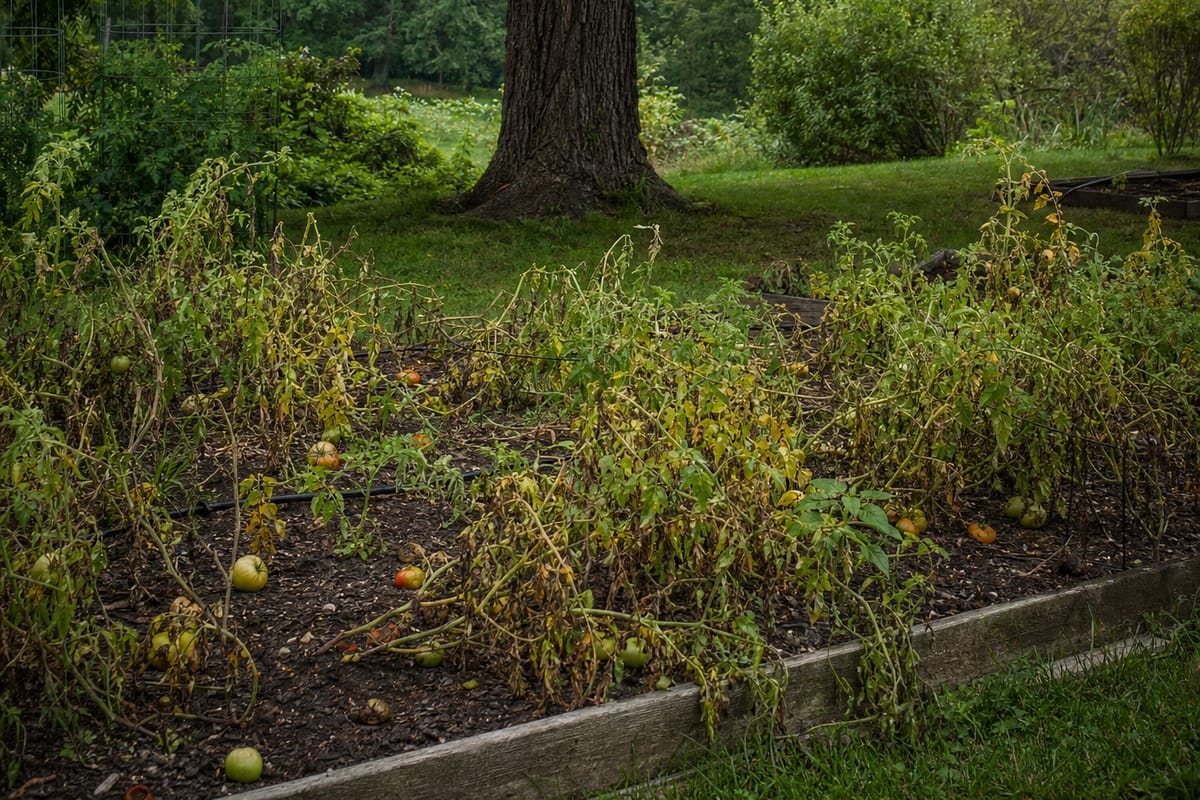
It took me most of a summer to work out why one end of a bed kept dying.
Same soil, same compost, same watering, same day of planting. The squash at the far end was enormous. The tomatoes at the near end went yellow, wilted in a way that watering didn’t touch, and were dead by the middle of July. I tested the soil. I dug out a plant expecting root damage and found perfectly normal roots. It made no sense at all until somebody asked what the big tree at that end of the yard was.
Black walnut. Juglans nigra. It had been quietly poisoning that corner the entire time.
The tree fights back, chemically
Black walnuts produce a compound called juglone, and they put it everywhere: roots, leaves, bark, and the husks around the nuts. As those break down, juglone leaches into the surrounding soil.
This is a textbook case of allelopathy, where a plant chemically suppresses its neighbors to cut down competition for water, light and nutrients. The walnut is not being incidental about it. Suppressing whatever grows nearby is the strategy.
For gardeners the result even has its own name: walnut wilt. Sensitive plants inside the root zone yellow, wilt and usually die, while getting perfectly adequate sun and water. That last part is what makes it so hard to diagnose. Everything you’d normally check comes back fine.
Which plants suffer and which don’t
The split is surprisingly clean, and it’s why one bed can contain both a thriving crop and a dying one.
Hit hardest: tomatoes, peppers, eggplant and potatoes, so essentially the entire nightshade family. Also apple and pear trees, blueberries, azaleas, rhododendrons and peonies.
Generally fine nearby: beans and peas, squash, melons and pumpkins, corn, onions, garlic and carrots. Black raspberries tolerate it too, which is odd given how badly blueberries take it.
That divide explains my bed exactly. The squash end never noticed a thing. The tomato end never stood a chance.
The root zone is bigger than you think
This is the part almost everyone underestimates, myself very much included.
The danger isn’t limited to the shade under the canopy. A black walnut’s roots spread well past its dripline, and for a mature tree the root zone can extend fifty feet or more from the trunk. Juglone concentration is highest near the trunk and falls off with distance, but sensitive plants can still struggle a long way out.
A useful rule of thumb is to treat a radius roughly equal to the tree’s height as questionable ground for nightshades. And roots pay no attention to property lines, so a neighbor’s walnut two yards over is entirely capable of being your problem.
Fallen leaves and husks matter as well. If they’re blowing into your beds, they’re bringing juglone with them.
Removing the tree doesn’t fix it immediately
Worth knowing before anyone reaches for a chainsaw: decomposing roots and buried material keep releasing juglone for a few years after the tree comes down. Cutting it in March does not give you a clean bed in May.
What to do if you’ve got one
Map the root zone before you plant rather than after, which is the mistake I made. Walk out from the trunk to roughly the tree’s height and treat everything inside that as off limits for sensitive crops.
If you want to grow nightshades in that zone anyway, a raised bed on its own isn’t enough, because walnut roots will grow up into the bed from below and bring the juglone with them. You need a solid barrier at the base, and you need to keep the bed topped up with clean soil.
Otherwise, plant to the tolerant list. Beans, squash, corn and onions will coexist with a black walnut perfectly happily, and there’s a decent garden in those crops alone.
Keep the debris out. Rake up fallen leaves, twigs and husks rather than letting them break down into beds meant for sensitive plants, and don’t compost walnut material into anything destined for the tomato bed. Composting does reduce juglone over time, but not quickly enough to be casual about it.
Why this one is worth ruling out early
Walnut wilt is one of the most common mystery failures in home gardening, and it gets misdiagnosed as blight, bad soil, poor drainage or a watering problem for entire seasons, because on paper everything else genuinely does look fine. I spent a summer testing soil that had nothing wrong with it.
If a bed keeps failing at one particular end, look up before you look down. Then check what your neighbors have too. Garden Pro Planner’s plant library covers which crops are more sensitive to difficult conditions like this, which at least helps you steer the nightshades toward a corner of the yard where they’ve got a chance.