Container Vegetable Gardening: What Actually Grows Well in Pots
My first container garden was a row of nice-looking pots on a balcony, and by August almost everything in them was dead.
I blamed the heat, then the balcony, then myself for not having a real garden. The actual reason was that the pots were too small, all of them, and I had been watering a set of plants whose roots had run out of room to go anywhere. Nothing else I could have done would have saved them.
That’s the thing to understand before you buy anything. Container gardening works genuinely well, and the difference between a productive patio and a row of crispy disappointments is mostly one decision.
A pot is a closed system
In the ground, a root that runs out of water goes looking for more. In a pot it hits plastic and stops.
Everything that makes containers different follows from that. Roots can’t forage, so they get exactly the water and nutrients you hand them. There’s no surrounding soil mass to buffer temperature, so container soil heats up fast and dries out faster. And a small volume of soil holds a small reservoir of both water and food.
Which means the two things that decide whether this works are pot size and watering consistency. Get those right and almost anything will grow in a pot. Get the first one wrong and nothing will save it.
What grows well, and how big
| Vegetable | Minimum pot size | Notes |
|---|---|---|
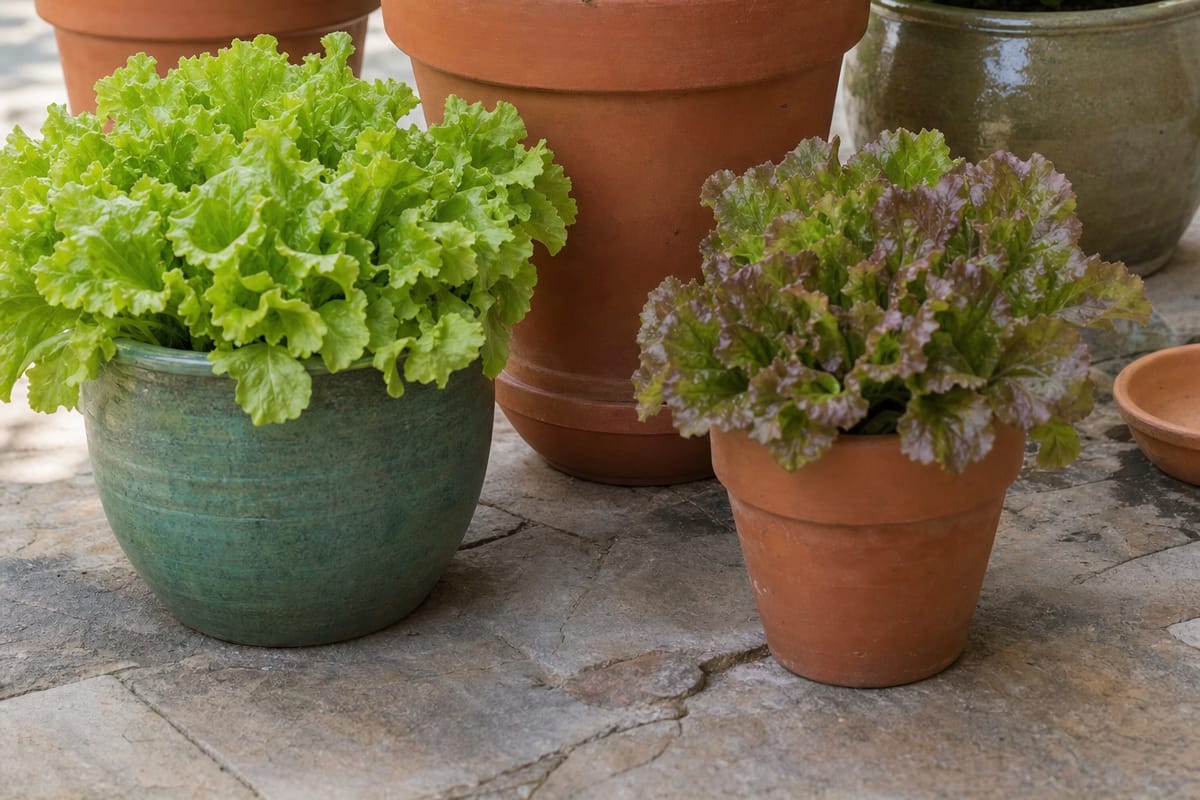
| Lettuce and leafy greens | 6–8” deep, any width | Shallow roots, fast, very forgiving |
| Radishes | 6” deep | About the quickest thing you can grow anywhere |
| Herbs (basil, parsley, chives) | 6–8” deep | Happy in pots, happy indoors on a bright sill |
| Green onions | 6” deep | Regrow from supermarket scraps, nearly unkillable |
| Peppers | 5 gallon | Compact and heavy-producing for the footprint |
| Bush beans | 5 gallon | Pick a bush variety, no trellis needed |
| Cucumbers (bush type) | 5 gallon | Must be a bush or compact variety, not vining |
| Cherry tomatoes | 10 gallon or more | Look for “patio,” “bush” or determinate types |
The ones to skip are full-size vining tomatoes, winter squash, corn and sprawling melons. They need either more root volume or more horizontal room than a pot can reasonably give, and the results are sad.
When you’re between two sizes, take the bigger one. I have never once regretted a pot being too large. A too-small pot dries out within hours on a hot day, and the plant spends the entire season stressed.
Choosing the pot itself
Drainage holes are not optional. Every container needs them, and no amount of gravel in the bottom substitutes. Without holes, water sits around the roots and rots them.
Material changes how often you’ll be watering. Unglazed terracotta breathes and dries fast, which is lovely in humidity and punishing in a hot dry summer. Plastic, resin and glazed ceramic hold moisture considerably longer. I’ve moved almost entirely to plastic on the sunny side of the house and I don’t miss the twice-daily watering at all.
Color matters more than people expect. A black plastic pot in full afternoon sun will cook roots. Light-colored containers stay meaningfully cooler.
Don’t use soil from the yard
This one gets people every year. Garden soil compacts into a dense brick inside a pot, drains badly, and suffocates roots.
Buy a bagged potting mix, and check the bag says potting mix rather than “garden soil” or “topsoil,” because those are different products sitting on the same shelf. A proper mix is light, drains freely, and still holds enough moisture to get through a day. Work in some compost at planting time for a nutrient head start.
Watering, which is the actual job
Containers dry out far faster than beds. In peak summer, anything under 5 gallons may genuinely need water every single day.
Don’t water on a schedule, though. Check instead: finger 1 to 2 inches into the soil, and if it’s dry at that depth, water until it runs freely out of the drainage holes. If it’s still damp, leave it and check tomorrow. Watering a pot that doesn’t need it is how you rot roots, and it looks exactly like underwatering from above.
A layer of mulch on top of container soil slows evaporation noticeably and almost nobody bothers. It’s worth bothering.
They get hungry too
Every time water runs out of the bottom of a pot, it takes dissolved nutrients with it. Container plants therefore run out of food far sooner than the same plant in the ground, and a plant that’s growing well in June and sulking in July is often just hungry.
Feed with a balanced liquid fertilizer every 2 to 3 weeks through the season, at the label’s dilution. Slow-release granules mixed in at planting are the lower-effort alternative if you know you’ll forget.
The mistakes worth naming
Overcrowding is the common one. Three pepper plants in a 5-gallon pot gives you three bad pepper plants. Give each the volume it needs.
Skipping drainage holes to hold more water in backfires completely. Choosing full-size varieties when a compact one exists is the other big one, so check the seed packet or tag for “bush,” “patio,” “dwarf” or “compact,” which are bred exactly for this.
Garden Pro Planner’s plant library covers 225+ vegetables, herbs and flowers with container notes, plus a planting calendar built on your local frost dates, which is useful on a balcony where you’re fitting crops into a small number of pots and want the timing right the first time.
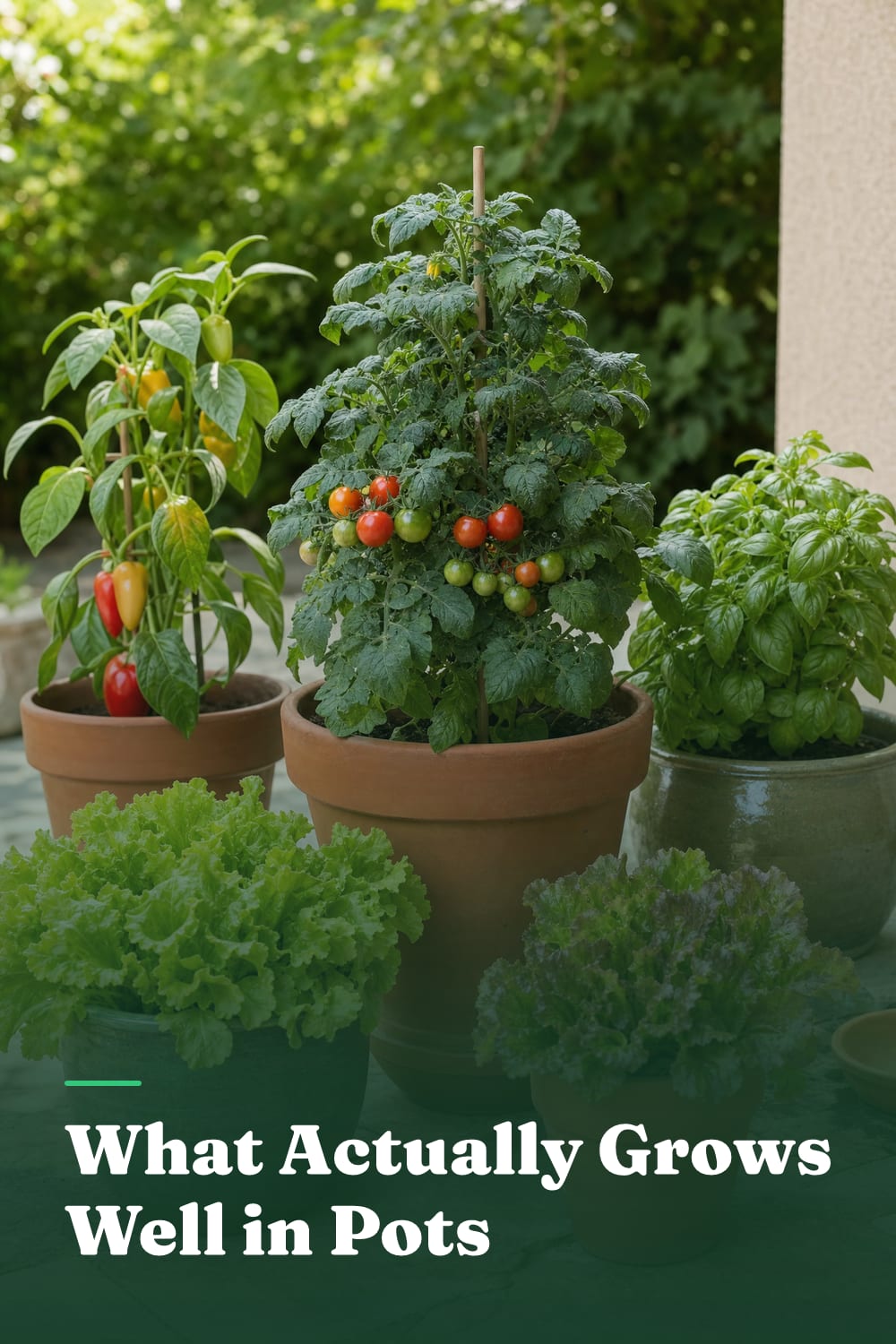
If you’re starting fresh, start small and boring: lettuce, a pepper, some basil, and one patio tomato in the biggest pot you own. Get a season of watering those under your belt and then expand. It’s a much better experience than the balcony full of dead pots I began with.