How to Get Rid of Tomato Hornworms Naturally
I have never once spotted a hornworm before I spotted its droppings. Not once, and I go looking every summer.
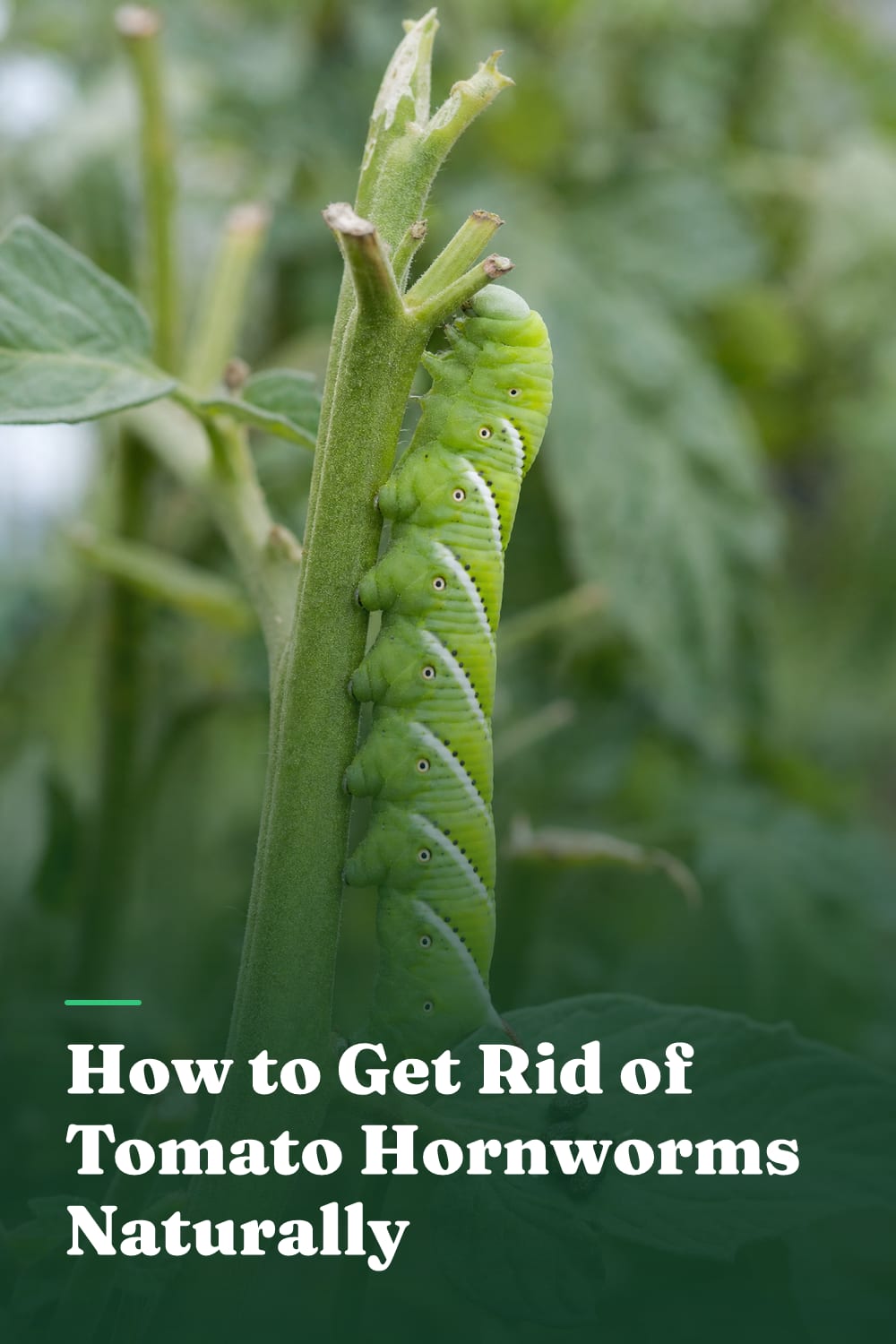
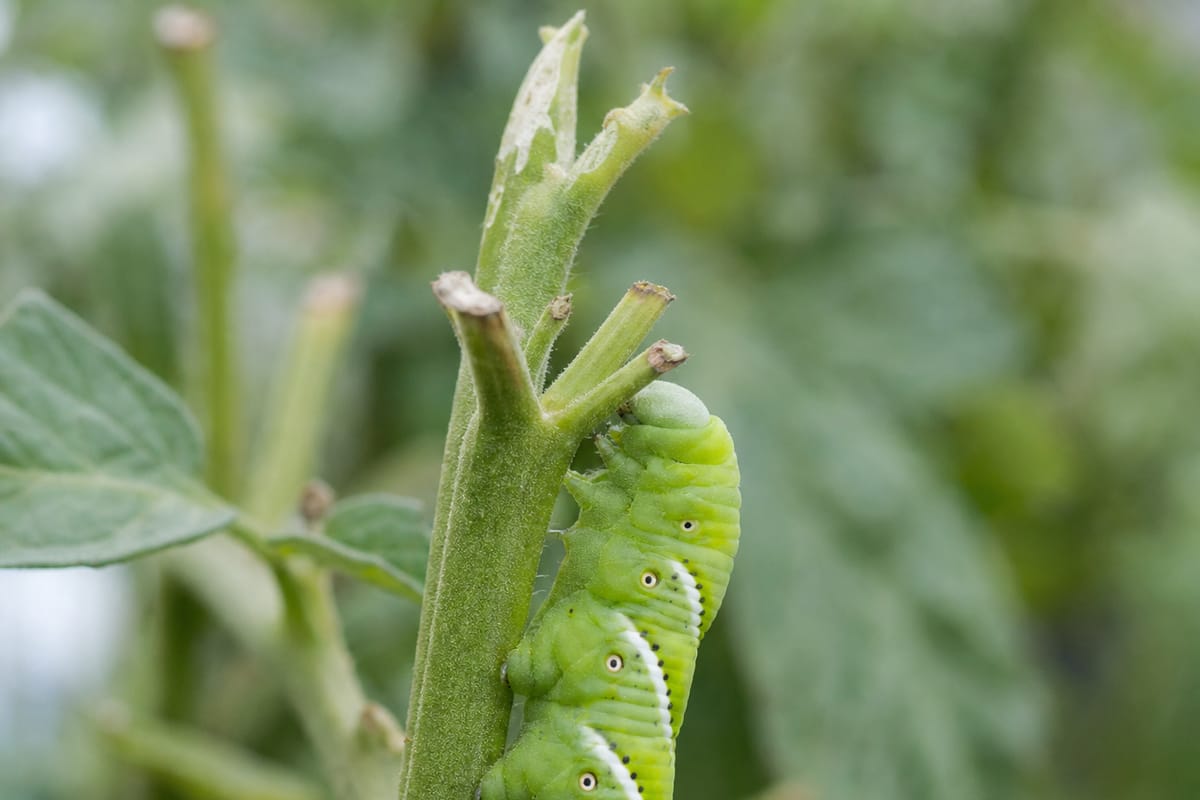
They are four inches long. They sit in full sun, at eye level, on a stem I am staring directly at. And I walk right past them, usually twice. The green is an exact match for tomato foliage, the white stripes down their sides break up the shape, and they have the good sense to hold still when you jostle the plant.
The year I understood this, I had gone out to tie up a leaning plant and found the top eighteen inches of it reduced to bare stems overnight. I stood there for a solid minute convinced something had been at it with scissors. The hornworm was about a hand’s width from my face the entire time.
So I gave up on finding the caterpillar. Now I look for what it leaves behind instead, and it takes about ten seconds.
Look at the ground, not the plant
Hornworm droppings (frass, if you want the proper word) are dark green to black, roughly peppercorn-sized, and ridged like tiny grenades. They collect on the lower leaves and on the soil right underneath wherever the caterpillar has been feeding. Fresh ones look wet and very dark. Older ones dry out and go brown and dusty.
Find fresh pellets, then look straight up. It’ll be on a stem or the underside of a leaf somewhere above them, nearly every time.
The damage has a shape to it as well, once you know what you’re looking at. Hornworms start at the top of the plant and work down, stripping leaves back to bare stem and sometimes taking chunks out of green fruit. Bare upper stems sitting above perfectly healthy lower leaves is a hornworm. Nothing else eats in that pattern.
What you’ll find when you finally see one
They’re the caterpillar stage of the five-spotted hawk moth. Three to four inches at full size, bright green, white V-shaped marks down each side, and a curved horn on the back end. The horn looks like it means business and does absolutely nothing. They can’t sting and they can’t bite. You can pick one up bare-handed, though I’ll admit the first time is a moment.
Tobacco hornworms turn up on tomatoes just as often. Straight diagonal stripes instead of Vs, red horn instead of black. Everything about dealing with them is identical, so I’ve never bothered telling them apart while I’m standing there.
One trick worth knowing: they glow under UV. Take a blacklight out after dark and hornworms fluoresce bright against the dark leaves. It feels like cheating and I recommend it without reservation.
Check its back before you do anything
This is the part I wish someone had told me sooner.
Look along the caterpillar’s back for a cluster of small white ovals standing up like grains of rice glued on end. Those are braconid wasp cocoons. A parasitic wasp laid eggs inside that hornworm, the larvae ate it from the inside, and they’ve chewed their way out to pupate on its skin. That hornworm is finished. It has mostly stopped feeding and it isn’t going to recover.
Leave it. Leave it exactly where it is. Every one of those cocoons is a wasp that’s about to hatch and go hunting for the other hornworms in your garden. Killing a parasitized hornworm trades one dead caterpillar for a dozen you’ll be finding yourself in a couple of weeks. It’s the worst deal available in the vegetable garden, and people make it constantly, because in fairness the cocoons do look like something has gone badly wrong.
Getting the rest off the plant
Hand-picking. That’s the method. They’re big, they’re slow, there are rarely more than a few on a plant, and nothing in a spray bottle works faster than your fingers.
Go out early morning or around dusk, when they sit in more exposed spots. Check the top third of the plant first. Drop what you find into soapy water, or carry them well away from the garden if you’d rather not kill them. Then check again in two or three days. Eggs hatch on a stagger, and a plant you cleared on Monday can have a fresh one by Thursday.
If you’ve got a lot of plants and real numbers to deal with, Bacillus thuringiensis (Bt) is the organic backup. It’s a naturally occurring soil bacterium that only affects caterpillars that eat it, so used as directed it leaves bees and everything else alone. Spray the upper foliage in the evening. They stop feeding within a day and die over the next few. Reapply after rain.
Making next summer easier
Hornworms overwinter as hard brown pupae a few inches down in the soil, right where the tomatoes were standing. Turning that bed over after harvest brings them up where the cold and the birds can get at them.
Rotating works for the same reason. Tomatoes, peppers, eggplant and potatoes all host hornworms, so moving the whole family to a different bed each year means the moths that emerge have a longer trip to find dinner. Planting dill, fennel, yarrow or alyssum near the tomatoes helps too, since the adult braconid wasps live on nectar even though their larvae are parasites. Garden Pro Planner’s pest guides cover hornworms and the rest of the regulars, if you want to match what you’re seeing to whatever is causing it.
Mostly though, it’s just the habit. Look down at the soil while you’re standing there watering anyway. Dark pellets mean look up. That’s genuinely the whole thing, and it’ll catch one days before it costs you the top of a plant.