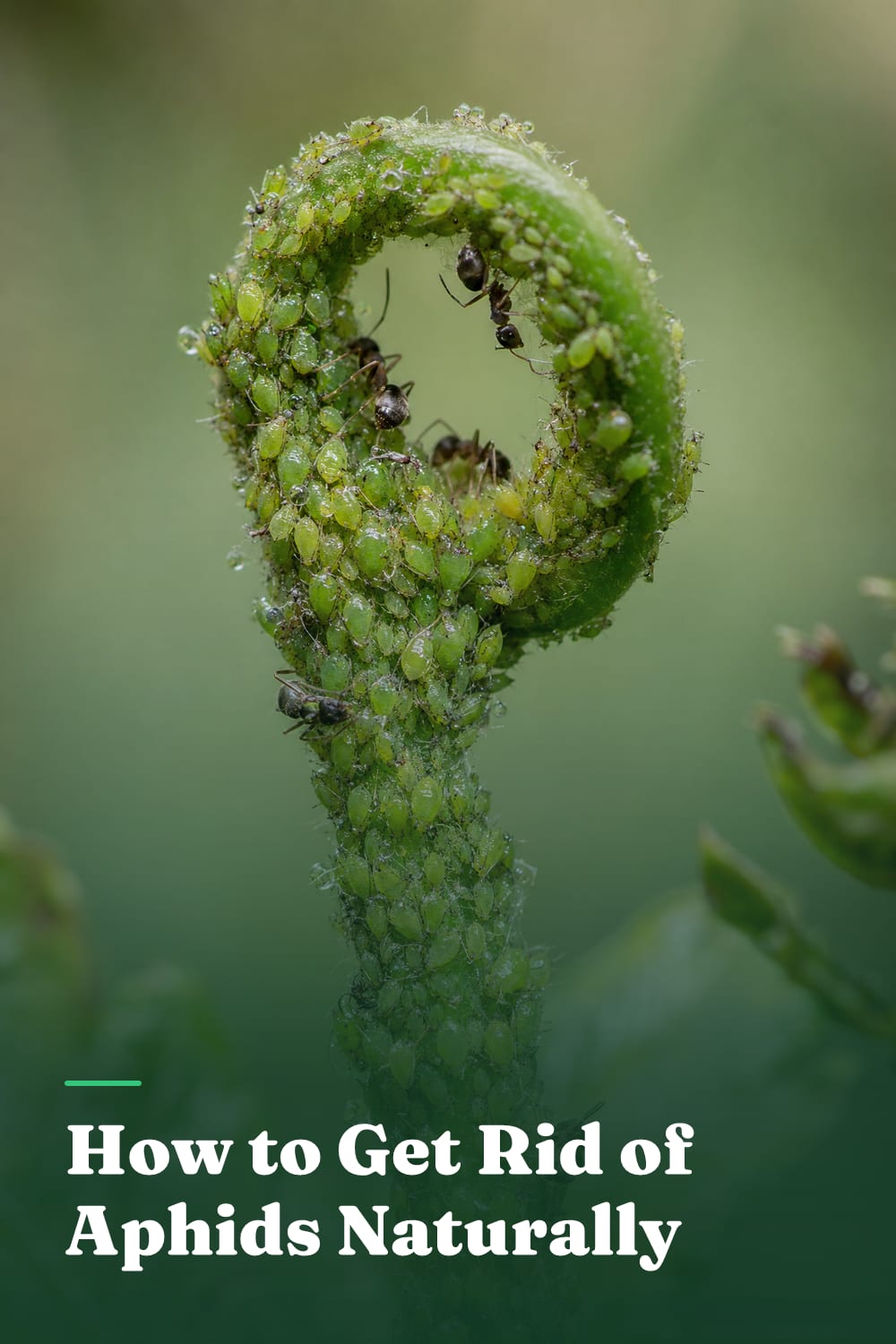
How to Get Rid of Aphids Naturally
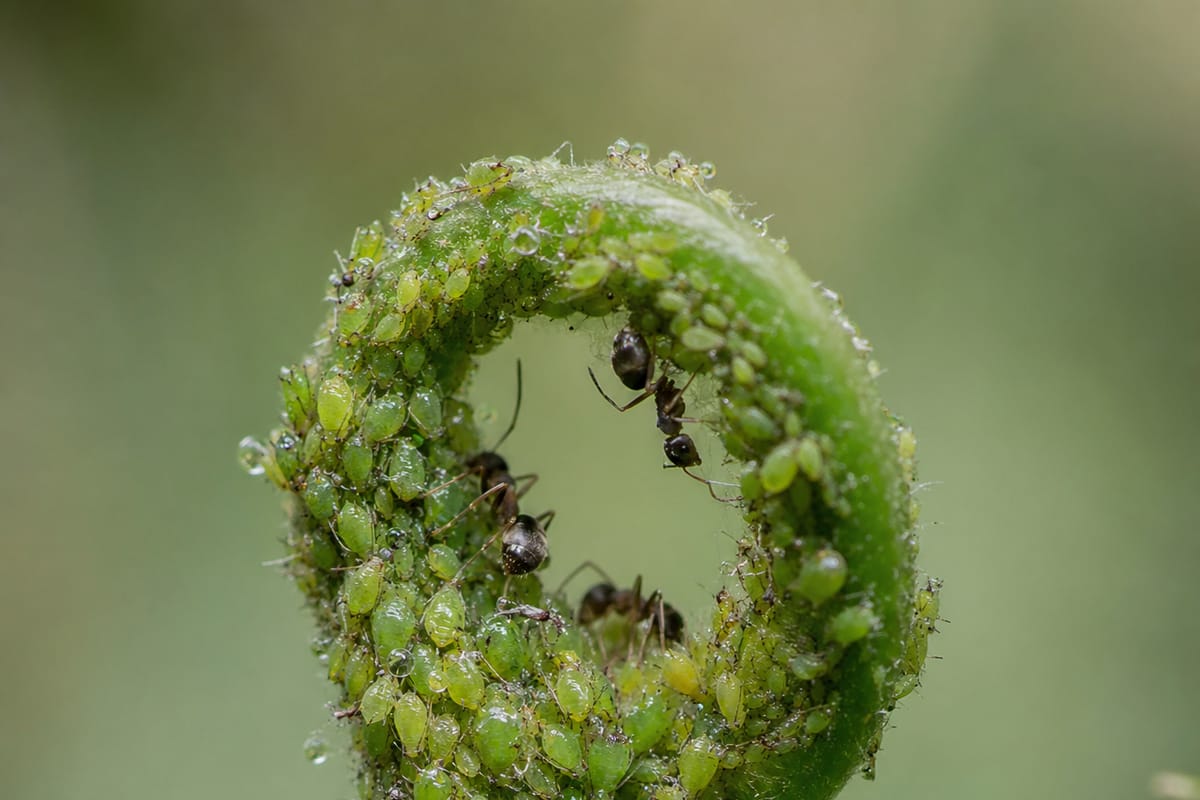
The first thing I notice is usually the ants.
Not the aphids. A steady line of ants marching up a pepper stem, which looks like its own separate problem until you find out what they’re doing up there. Ants farm aphids. They stroke them for the sugary honeydew the aphids excrete, and they’ll actively fight off ladybugs to protect the herd. So a busy ant highway going up a stem is always worth following to the end.
That’s when you see them. Clusters of small pear-shaped bodies packed tight along the newest growth and the undersides of leaves, green or black or yellow or pink depending on which species has found you.
The other things that give them away
Aphids feed by piercing plant tissue and drinking sap, and everything on this list follows from that:
New growth that’s curled, puckered or yellowing, especially right at the growing tips. A sticky gloss on the leaves, and on whatever is unlucky enough to be sitting underneath the plant. Black sooty mold, which isn’t attacking your plant at all, it’s just growing on the honeydew. And the ants.
They breed fast enough in warm weather that a cluster you could have wiped out with a thumb on Monday is a genuine infestation by the weekend. Roses, tomatoes, peppers, beans, brassicas and anything in the squash family are the ones I check first once things warm up.
Start with the hose, honestly
Most guides bury this under the sprays and it should be at the top. A hard, direct jet of water knocks aphids clean off the plant, and the ones that get dislodged largely don’t find their way back. Aim it up under the leaves where they’re clustered. Repeat every couple of days.
For a light or moderate infestation on a sturdy plant, that’s often the entire treatment. It costs nothing, it can’t burn the foliage, and it doesn’t harm a single ladybug. I run through this two or three times before I consider mixing anything up.
If water isn’t cutting it, soap
One to two tablespoons of mild liquid dish soap per quart of water. Unscented, and nothing marketed as a degreaser or containing bleach.
The important thing about insecticidal soap is that it only works on contact. It breaks down the aphid’s outer coating when it physically touches it, and it does nothing at all once dry. So coverage beats concentration every time. Get right under the leaves. A stronger mix won’t help and will make leaf burn more likely.
Test it on a few leaves and wait a day before you do a whole plant, because some plants sulk at soap. Spray in early morning or evening, never in direct midday sun.
Neem, for the ones that keep coming back
Neem oil disrupts aphid feeding and reproduction and has some residual effect, which makes it the better option when soap keeps knocking them back and they keep returning. Dilute to the label rate. Spray in the evening, since it can harm bees that contact it while it’s wet, and reapply every 7 to 14 days.
The ladybug thing
Ladybugs, lacewings and hoverflies eat aphids in genuinely impressive volume. A single ladybug larva will get through dozens a day, and the larvae (little spiky alligator-looking things, nothing like the adults) do more of the work than the beetles.
Buying a tub of live ladybugs and releasing them is mostly a waste of money. They fly off. Most of them are gone within a day or two unless there’s already a substantial aphid population holding them there, and if you’ve got that many aphids you have a bigger problem. What works better is making the garden somewhere they want to live: dill, fennel, yarrow, alyssum and cilantro left to flower all feed the adults, and skipping broad-spectrum insecticides means the ones that arrive get to stay.
Cutting the odds next season
Go easy on nitrogen. Aphids are drawn to the soft, sappy growth that heavy feeding produces, and a plant pushed hard with nitrogen is essentially advertising. Feed steadily rather than generously.
Check new plants before they come home from the nursery, undersides included, because aphids hitchhike beautifully. And if you’ve got a bed that gets hit every year, reflective mulch is worth trying, since it disorients aphids looking for somewhere to land.
When to just leave them
A handful of aphids on an established, healthy plant is not a problem and doesn’t need treating. Plants tolerate light feeding without any real cost, and a small resident population is what keeps the ladybugs and lacewings around to deal with the next outbreak.
I step in when new growth starts curling and stunting, when sooty mold is spreading, or when they turn up on seedlings, which are too small to absorb the damage. Otherwise I leave it alone. Garden Planner Pro’s pest guides run through treatment options for aphids and a long list of other regulars if you’re not certain what you’re looking at, which is worth checking before you spray anything.
The thing that actually keeps aphids down is noticing them early. Five minutes of looking under leaves once a week beats any spray you can buy in August.