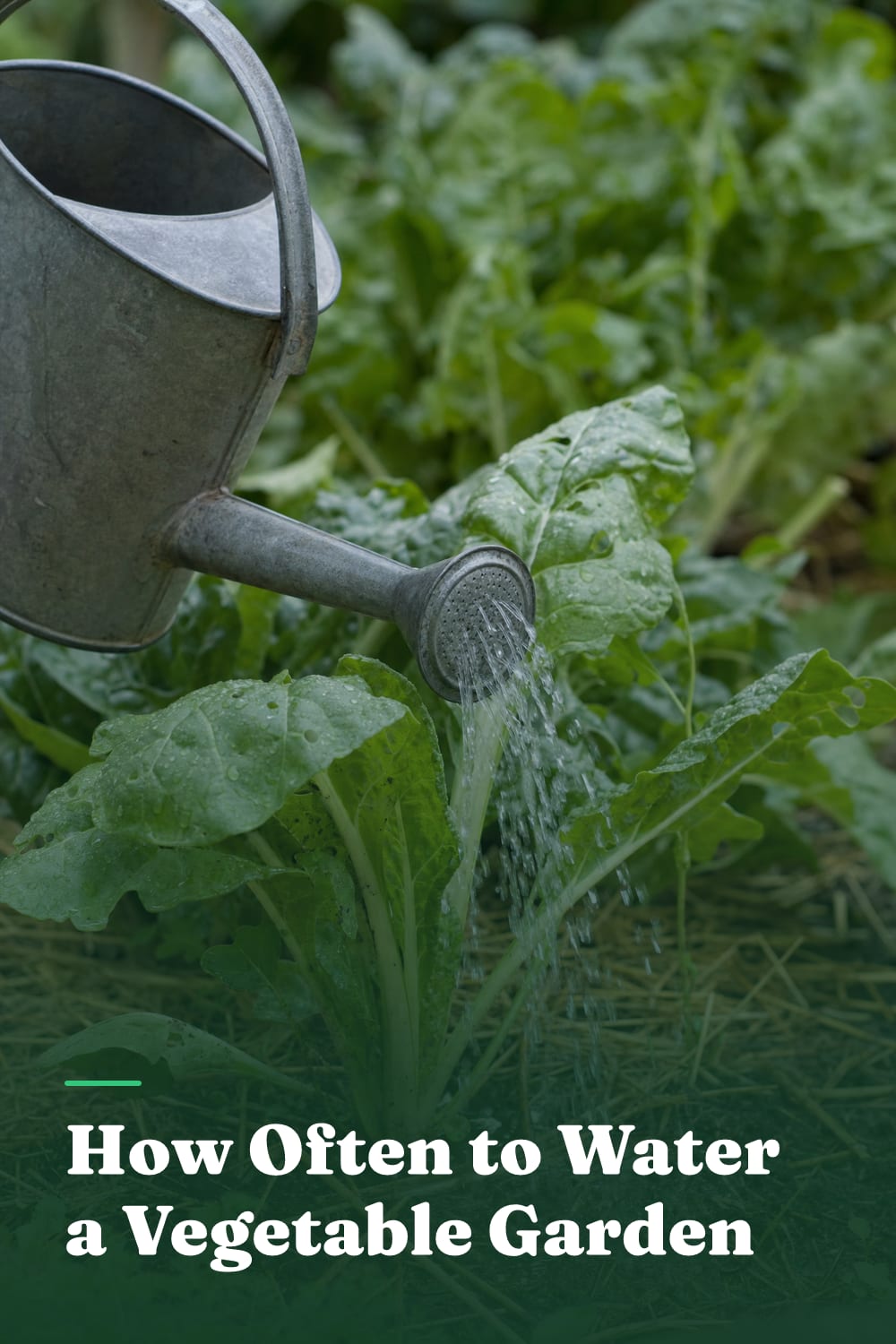
How Often to Water a Vegetable Garden
- Watering
- Summer Care
- Beginner Gardening
I once spent two weeks watering a plant to death.
It was wilting every afternoon and going yellow around the lower leaves, so I did the obvious thing and watered it more. It got worse. So I watered it more again. By the time I pulled it up, the roots were brown and slimy and had been drowning the entire time, and the wilting I’d been responding to was the plant failing to move water through roots that no longer worked.
That’s the trap in watering, and it catches nearly everyone. Overwatering and underwatering produce almost the same symptoms from where you’re standing. Wilting, yellow leaves, a plant that clearly isn’t happy. So half the time the instinct to help makes it worse.
Stop reading the leaves, start reading the soil
The fix is boring and it works: stick a finger two inches into the soil next to the plant.
Dry at that depth, water it. Still damp, walk away and check again tomorrow. That single habit resolves the ambiguity that the leaves can’t, and it’s more reliable than any schedule, app or moisture meter I’ve used.
If you want to tell the two failures apart before you dig around:
| Overwatered | Underwatered | |
|---|---|---|
| Wilting | All day, even in the morning | Worst in afternoon heat, recovers overnight |
| Leaves | Yellow, soft, limp | Crispy edges, dull, curling |
| Soil | Damp or soggy 2” down | Dry and pulling away from the edges |
| Extras | Fungus gnats, sour smell, brown mushy roots | Stunted growth, dropped flowers |
The morning test is the quickest tell. A plant that’s wilting at 7am on damp soil is drowning, not thirsty.
The one inch a week rule, and what it’s for
Most vegetable gardens want roughly an inch of water a week, from rain and irrigation combined, which works out to about 0.6 gallons per square foot.
That number is genuinely useful as a sense of scale. It is not a schedule. What it actually depends on:
Sandy soil drains fast and may want water every two or three days, where clay holds on and can go considerably longer. Hot, windy, dry weather pulls moisture out far quicker than mild weather. Seedlings have shallow roots and dry out almost immediately, while established plants reach deeper and cope. And containers and raised beds dry faster than open ground, sometimes needing daily water in August.
So use the inch as a target for the week, and use your finger to decide the days.
Water deeply, not often
A light daily sprinkle is the most common watering mistake I see, and it feels productive, which is the problem. It wets the top inch and no further, so roots stay up near the surface where the soil dries out first, and the plant becomes completely dependent on you showing up daily.
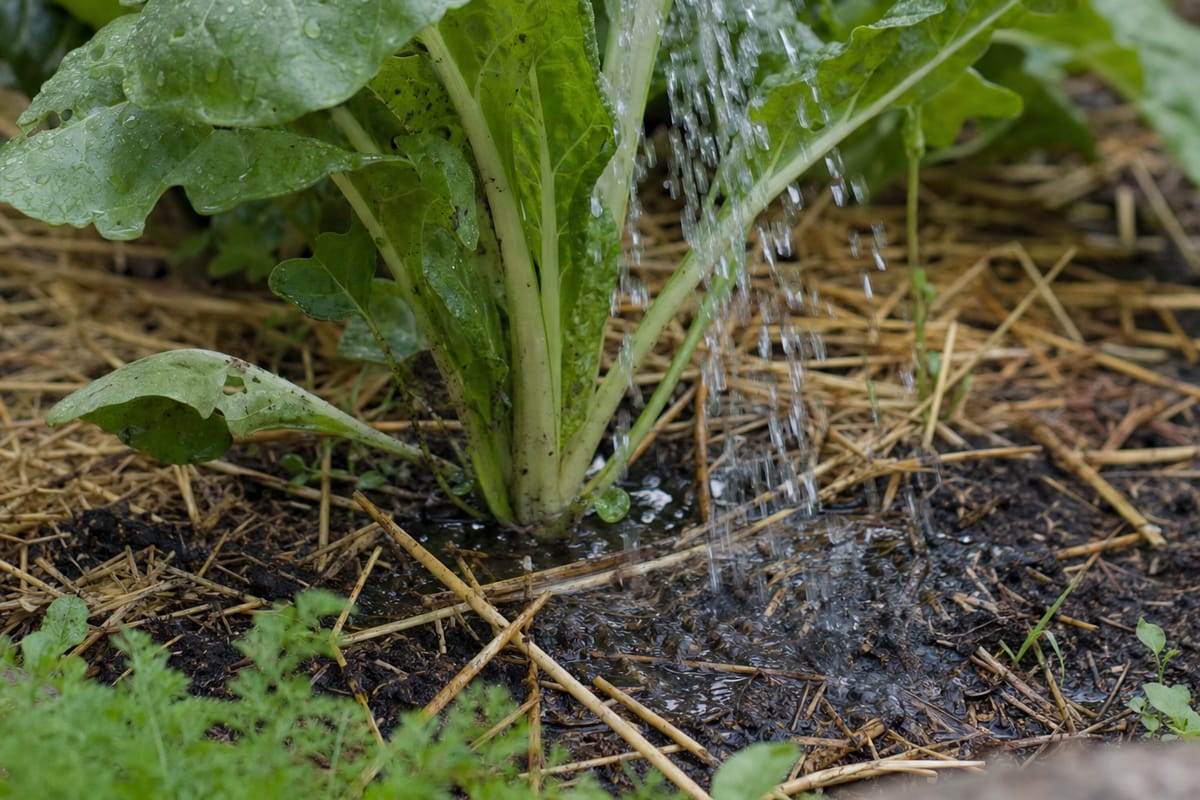
Water slowly at the base until the soil is moist several inches down. Then leave it until the top inch or two dries out. Deep, less frequent watering pushes roots downward, and a deep-rooted plant will ride out a hot week that flattens a shallow-rooted one.
Water in the morning where you can. The plant gets a full reservoir before the heat, and the foliage dries before evening, which matters because wet leaves overnight is how a lot of fungal disease gets started.
The crops that won’t tolerate inconsistency
Some plants shrug off irregular watering. These don’t:
Tomatoes are the headline case. Irregular water causes blossom end rot and split fruit, and both are about swings between dry and wet rather than a simple shortage. Once fruit sets, consistency matters more than volume.
Cucumbers and squash have enormous leaves losing water constantly. They wilt dramatically in heat and stop producing if moisture is unreliable.
Lettuce and leafy greens have shallow roots, and inconsistent water turns them bitter and sends them to seed early.
Peppers handle drought better than tomatoes once established, but still want steady moisture while they’re fruiting.
Watering less, by making it matter more
Mulch is the biggest lever. Two to three inches of straw, shredded leaves or bark cuts evaporation substantially and keeps the root zone cooler, and in high summer it’s the difference between watering every other day and watering twice a week.
Water at the base rather than overhead. Soaker hoses and drip lines put water where roots are instead of into the air, and they keep the foliage dry.
Group plants by thirst. If cucumbers and drought-tolerant herbs share a bed, one of them is always getting the wrong amount, and it’s usually both.
Garden Pro Planner sends watering reminders based on what you’ve actually planted, which mostly helps with the crops that punish you for forgetting rather than the forgiving ones.
But the finger test is the thing. If you take one habit from this, make it that: two inches down, before you turn the tap on. It would have saved the plant I drowned.