How to Get Rid of Squash Bugs Naturally
I lost most of a zucchini patch to squash bugs one July, and the part that still bothers me is how good it looked four days earlier.
That’s the whole problem in miniature. By the time anything is visibly wrong, the population has been building quietly under the leaves for weeks. The wilting arrives almost overnight, starts at the base of the plant and spreads outward, and it doesn’t respond to watering because water was never the issue.
Why the collapse is so sudden
Squash bugs feed by piercing the plant and drinking sap, and as they do it they inject saliva that disrupts the plant’s ability to move water up its own stems. So an infested plant isn’t just losing fluid. It’s losing the plumbing.
That’s why a squash plant can go from fine to flattened inside a few days, and why the vines often turn black and crispy at the base where the feeding has been heaviest. If you’re watering a wilting squash plant and nothing is improving, stop watering and start looking underneath the leaves.
The eggs are the entire fight
If you take one thing from this: the war is won or lost at the egg stage, and it costs about five minutes a week.
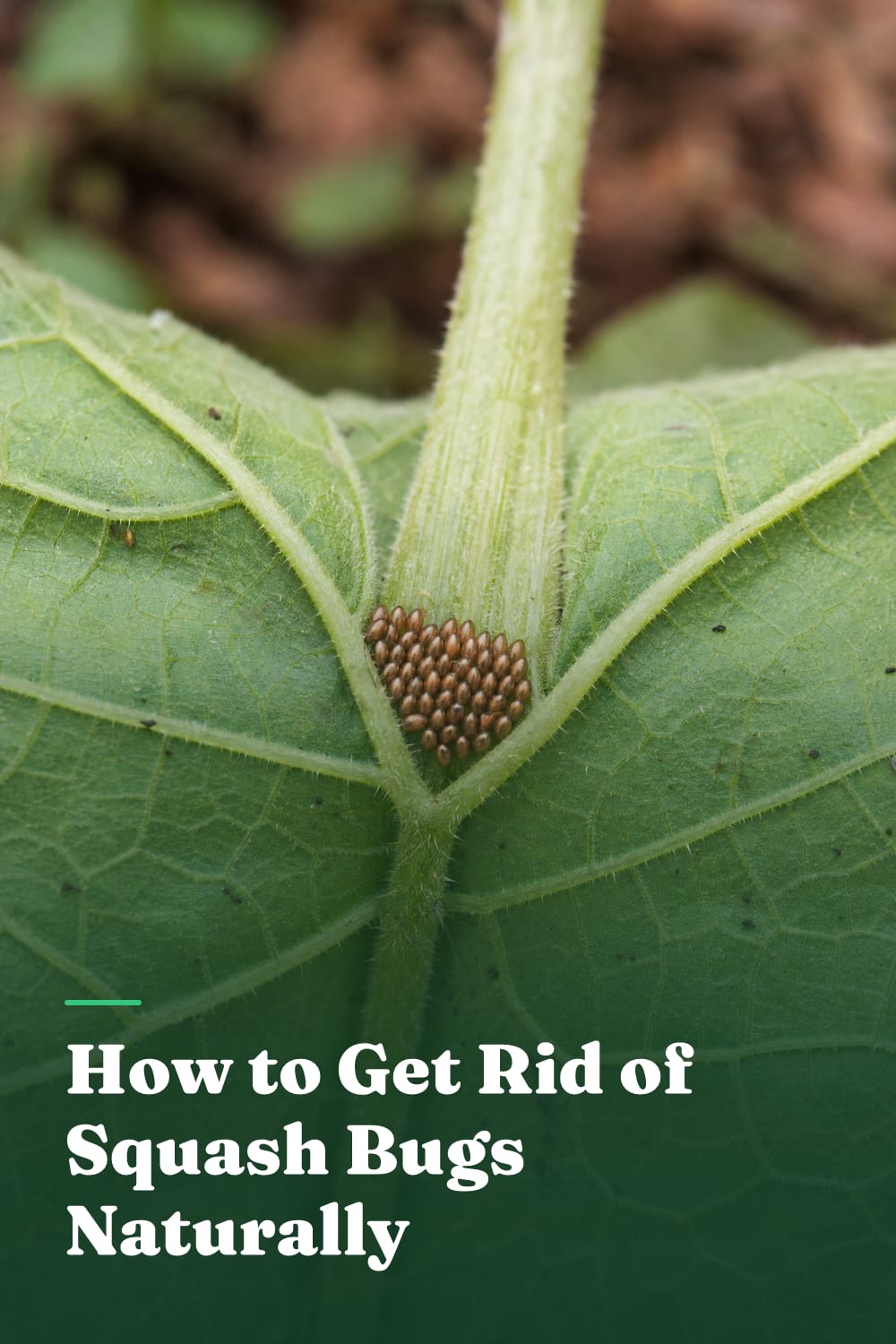
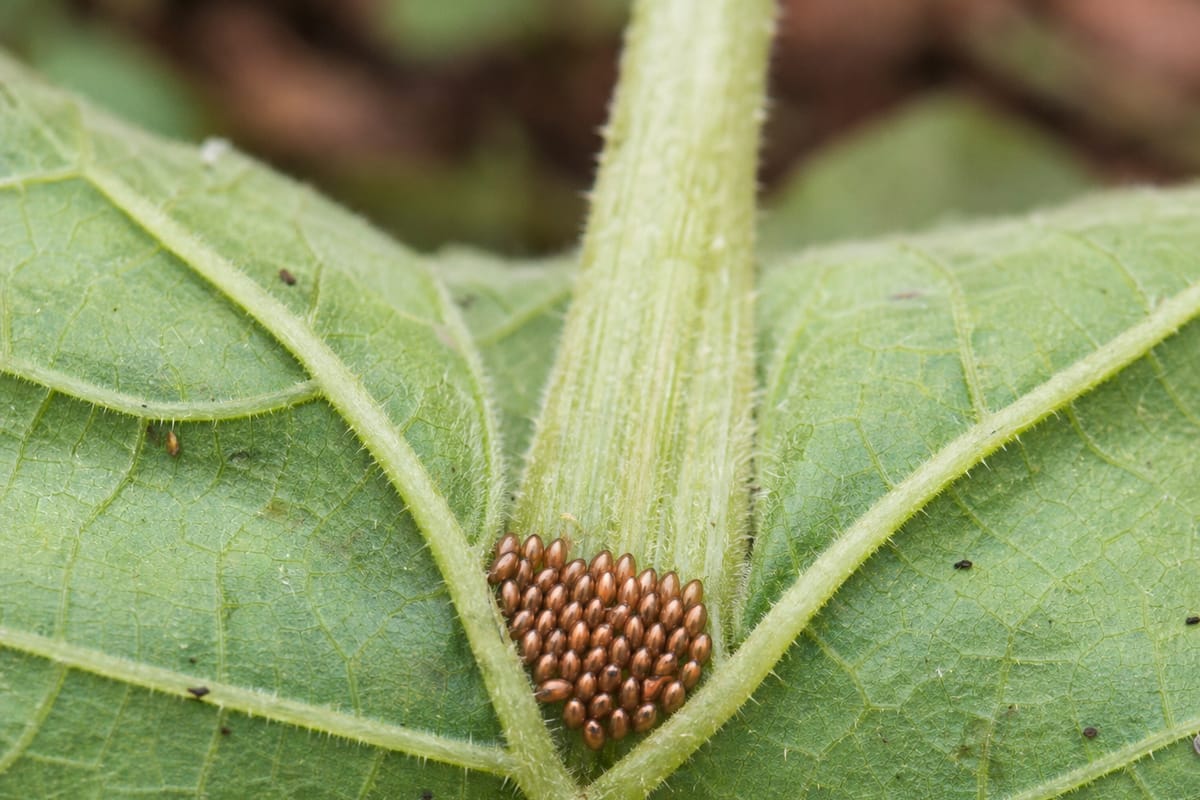
Squash bug eggs are small, oval, and a distinctive bronze-to-copper color, laid in tight clusters almost always on the underside of a leaf, tucked into the V where two veins meet. They’re genuinely easy to spot once you’ve seen one cluster. Nothing else in the squash patch looks like that.
Starting as soon as the plants have real leaves, flip the leaves over once a week and look. When you find a cluster, scrape it off into a cup of soapy water with a fingernail or the edge of a card, or just snip out that bit of leaf. That single weekly habit, kept up from early summer, is more effective than everything else in this article combined.
I skip a week in early July most years, because everything is growing and I get busy. That’s usually the week it goes wrong.
Knowing what you’re looking at
The three stages look so different that people miss two of them:
Adults run about 5/8 inch, flat-backed, brownish-gray to dark gray, and get mistaken for stink bugs constantly. They’re quick, and they’ll scuttle around to the far side of a stem the moment you disturb the plant.
Nymphs start out gray with black legs, often in loose crowds, and gradually take on adult coloring as they grow. A cluster of them on a stem is a bad sign, because it means you missed the eggs.
Eggs are the copper clusters described above, and the only stage that stays put.
Hand-picking, and the board trick
Adults are sluggish in cool morning air, which makes early morning the only sensible time to hand-pick them. Knock them into soapy water. Try this at two in the afternoon and you’ll spend twenty minutes chasing bugs around stems and catch four.
The trap board is worth the thirty seconds it takes to set up. Lay a flat board or an old shingle on the soil near the base of the plants in the evening. Squash bugs shelter in cool dark places overnight, and in the morning you flip the board and find a group of them sitting there together. It’s the highest-yield two minutes in the squash bed.
Row covers, and the catch
Floating row cover keeps adults off the plants entirely, which stops the eggs from ever being laid. Put it on at transplanting or germination.
The catch is that squash and pumpkins need pollinators to set fruit, so the cover has to come off once flowers appear. That gives you protection through the vulnerable young-plant stage and then hands the plants over. It’s a real advantage, not a complete solution, and anyone who tells you row cover solves squash bugs has not left one on into August.
Being honest about sprays
Insecticidal soap and neem will kill young nymphs if you hit them directly, undersides included. On adults they’re close to useless, because the adult shell sheds a contact spray very effectively.
So sprays are a supporting tool for a nymph outbreak, not a rescue for an established adult population. There isn’t a bottle that fixes a bad squash bug year. Hands and attention are what work.
Ending the season properly
Adults overwinter in plant debris, mulch, and the messy edges of the garden. Pulling out old vines and clearing leaf litter in fall genuinely reduces how many turn up next spring, and it’s the easiest control on this list because you were going to tidy up anyway.
Rotating where the squash family goes helps too, since populations build in the soil and debris where those crops grew before.
One last thing worth knowing: butternut and other Cucurbita moschata squash hold up noticeably better against squash bugs than zucchini and yellow summer squash, which are the ones that get hammered. If your garden loses squash every single year, working a few butternuts into the mix gives you something that will probably still be standing in September. Garden Pro Planner’s pest guides flag which of your crops are prone to squash bugs based on what you’ve actually planted, which is useful mostly because it nudges you to go flip some leaves before the damage arrives rather than after.