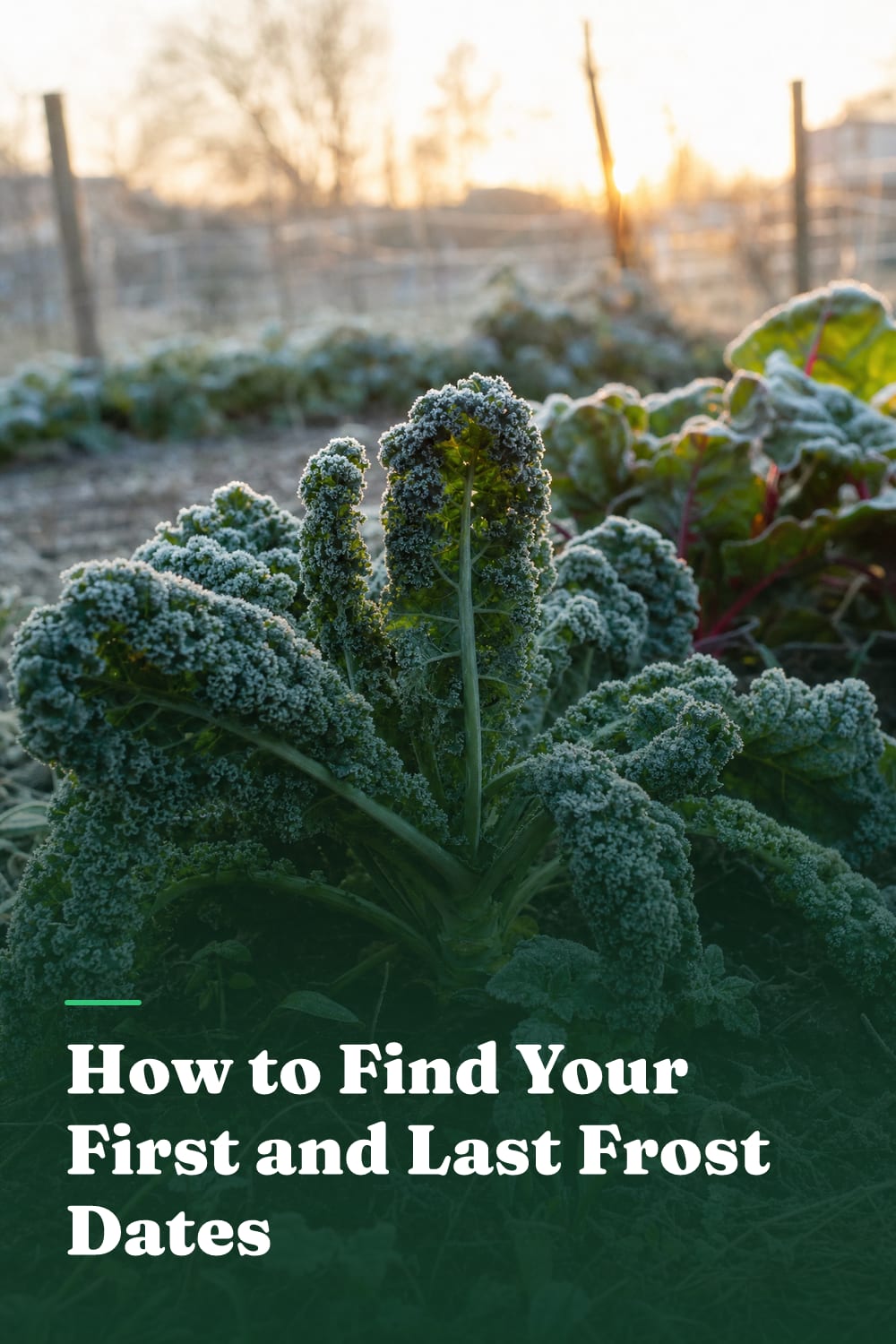
How to Find Your First and Last Frost Dates
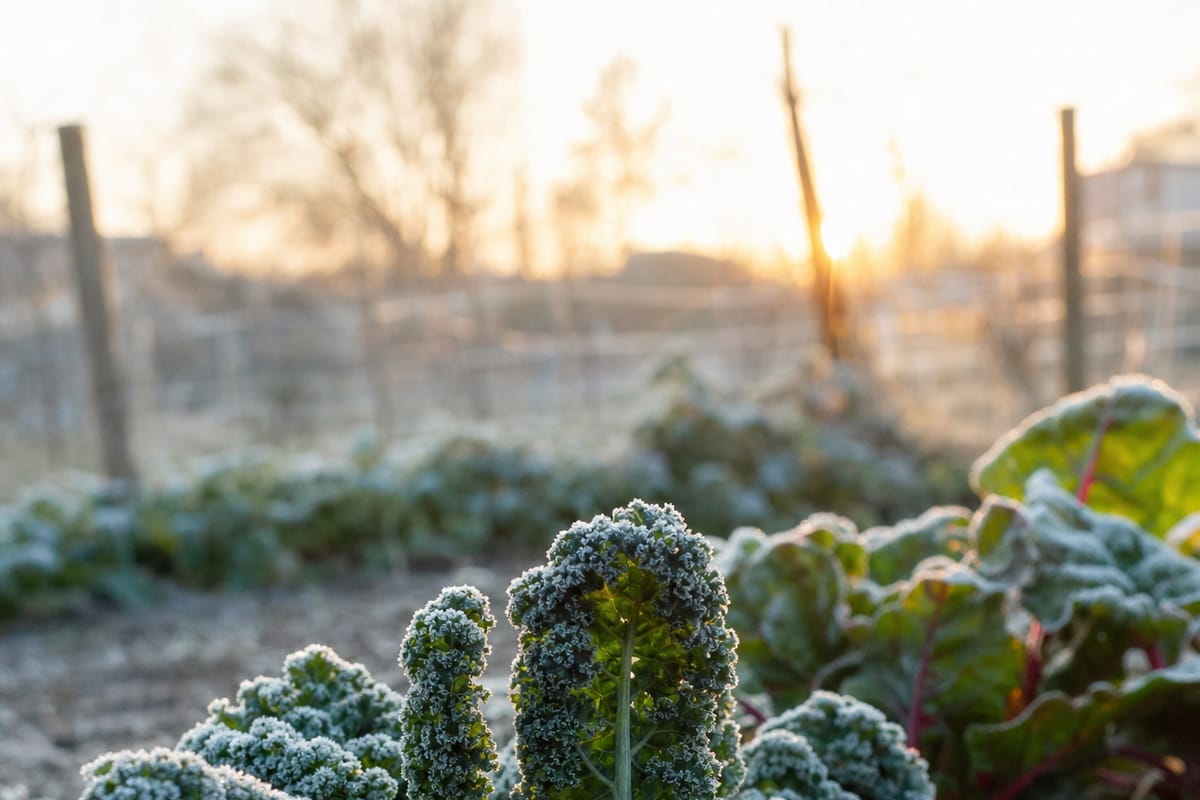
Looking up your frost dates takes about two minutes. Working out what they’re promising you took me considerably longer, and that’s the part that matters.
The lookup first. Put your ZIP code into NOAA’s climate data or the National Gardening Association’s frost date tool and you’ll have both numbers. Your regional cooperative extension service publishes them too, usually with better local resolution than a national dataset can manage. Write them down somewhere you’ll actually find them again in February.
Now the part nobody explains.
It’s an average, and averages have a back half
Your last spring frost date is the date after which frost becomes unlikely. Not impossible. Unlikely.
If the lookup hands you May 10, what that means is that in roughly half of all recorded years, the last frost fell later than May 10. That’s what an average is. It’s a coin flip, and the stake is a flat of tomato seedlings you spent eight weeks growing under lights.
I lost a full flat of tomato seedlings to a frost that arrived nine days after the date said it wouldn’t. Eight weeks of growing them under lights, gone in one clear night because I’d read that number as a promise. I have never fully trusted it since.
So I plant to the date and I still keep row cover in the shed until I’m a good two weeks past it. It costs almost nothing and it’s the difference between a bad night and starting the whole thing over.
If your source publishes probability tiers, listing a 10%, 50% and 90% date, use the 10% date for anything tender. That’s the “I really don’t want to do this twice” date.
What you count from them
Nearly every decision in a vegetable garden gets counted forward or backward from one of these two dates.
| Crop type | When to act | If your last frost is May 10 |
|---|---|---|
| Cool-season direct sow (peas, spinach, lettuce) | 4–6 weeks before last frost | Late March to mid April |
| Warm-season seed starting (tomatoes, peppers) | Sow indoors 6–10 weeks before | Early to mid March |
| Warm-season transplant | After last frost, once soil warms | After May 10 |
| Direct-sow tender crops (beans, squash) | After soil warms | Mid to late May |
The first fall frost works the same way in reverse. Take a crop’s days to maturity, count backward from that date, and you’ve got the last sensible day to sow it for a fall harvest. Add a week or two of cushion, because growth slows right down as the daylight shortens through September and October. A 55-day bean sown in August does not behave like a 55-day bean sown in June, and I’ve been caught by that more than once.
The gap between your two dates is your growing season length. Worth knowing before you order seed. If you’ve got 110 frost-free days and you’re eyeing a melon that wants 100 days from transplant, that’s a gamble rather than a plan.
Your yard isn’t the weather station
Cold air is heavy. It runs downhill and pools in the low spots, which frost first and thaw last. A south-facing slope warms up earlier in spring and hangs on later in fall. A bed against a brick wall or a driveway soaks up heat all day and hands it back overnight, and it’ll shrug off a light frost that flattens the same crop twenty feet away out in the open.
The published date came from a weather station that is definitely not in your garden. A week’s difference in either direction is completely normal.
So watch your own ground for a season or two. Where does frost turn up first? Which patch is still white at nine in the morning when everywhere else has melted off? That map is worth more than any published average and nobody else can make it for you. Though if there’s someone on your street who’s gardened the same plot for twenty years, ask them. That’s the shortcut.
The date that isn’t on any calendar
The mistake I made for years was getting past the frost date and planting immediately, straight into cold soil.
Air and soil warm on completely different schedules. Soil lags, sometimes badly, and a run of warm May afternoons can feel like planting weather while the ground six inches down is still sitting in the fifties. Tomatoes and peppers set into cold soil don’t die. They just stop. They sit there, go slightly purple, refuse to put on any growth, and then get thoroughly overtaken by identical plants somebody else set out two weeks later into warm ground.
Buy a soil thermometer. Wait for consistent 60°F soil before transplanting warm-season crops, and closer to 70°F for melons and okra. Five dollars, and it saves you a month.
Garden Planner Pro pulls your local frost dates from your location and builds the seed-starting, transplant and harvest schedule for 440+ plants around them, which takes care of the arithmetic even if it can’t take care of the judgment.
Your frost dates are a framework, not a forecast. Look them up once, then spend a season finding out all the ways your particular patch of ground disagrees with them.