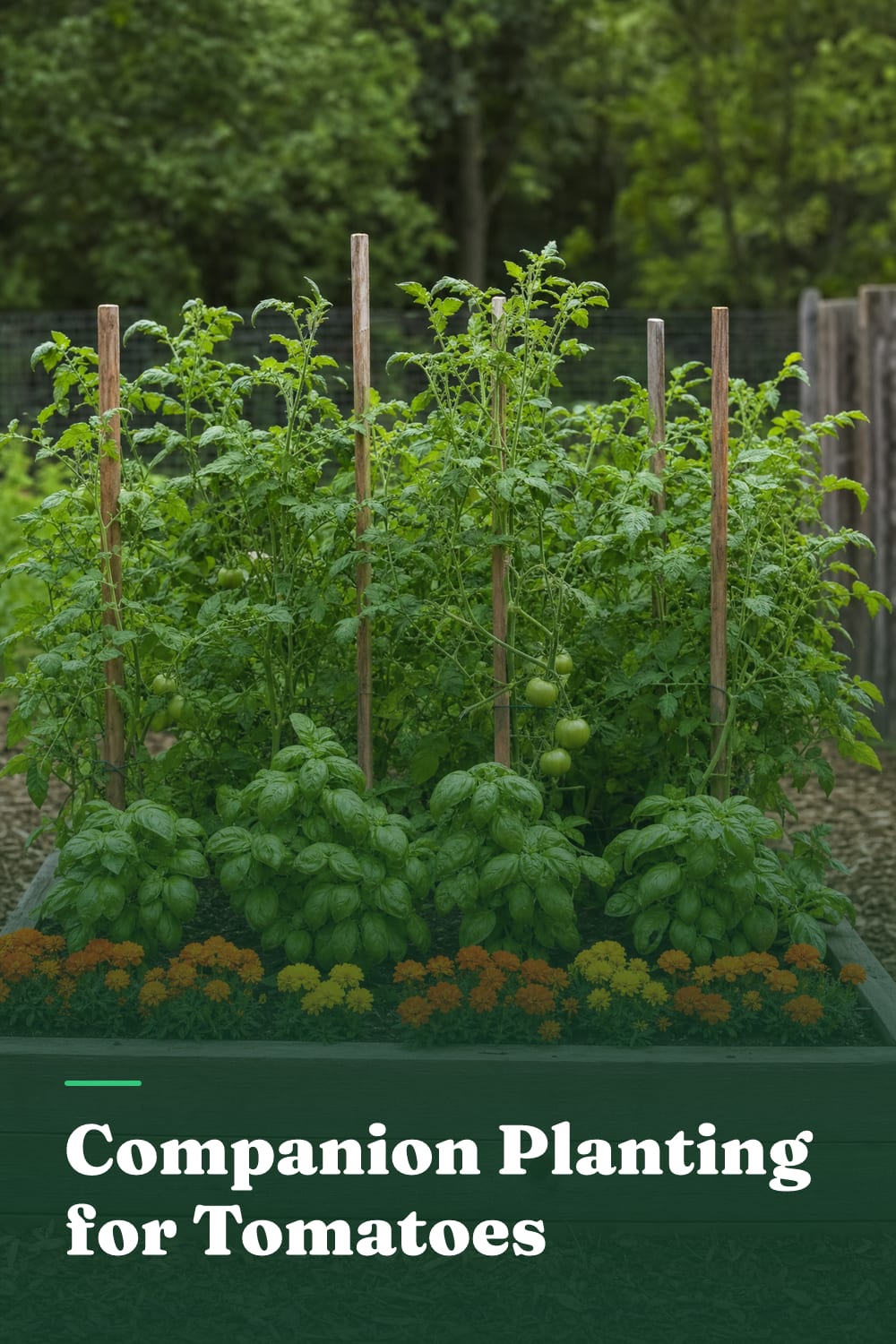
Companion Planting for Tomatoes: What to Plant (and Avoid)
I want to be upfront about something, because a lot of companion planting writing isn’t: most of what you’ll read on this subject is folklore.
Not malicious, just handed down. Charts get copied between websites for twenty years, nobody checks where the original claim came from, and eventually “plant borage with tomatoes to deter hornworms” appears as fact on four hundred pages because it appeared as fact on one. I planted to those charts for years without asking any questions about them.
Some of it holds up well. Some is harmless and might be doing something. And a few pairings genuinely matter, mostly on the list of things to keep apart. This is how I’d sort it now.
The ones I’d actually plant
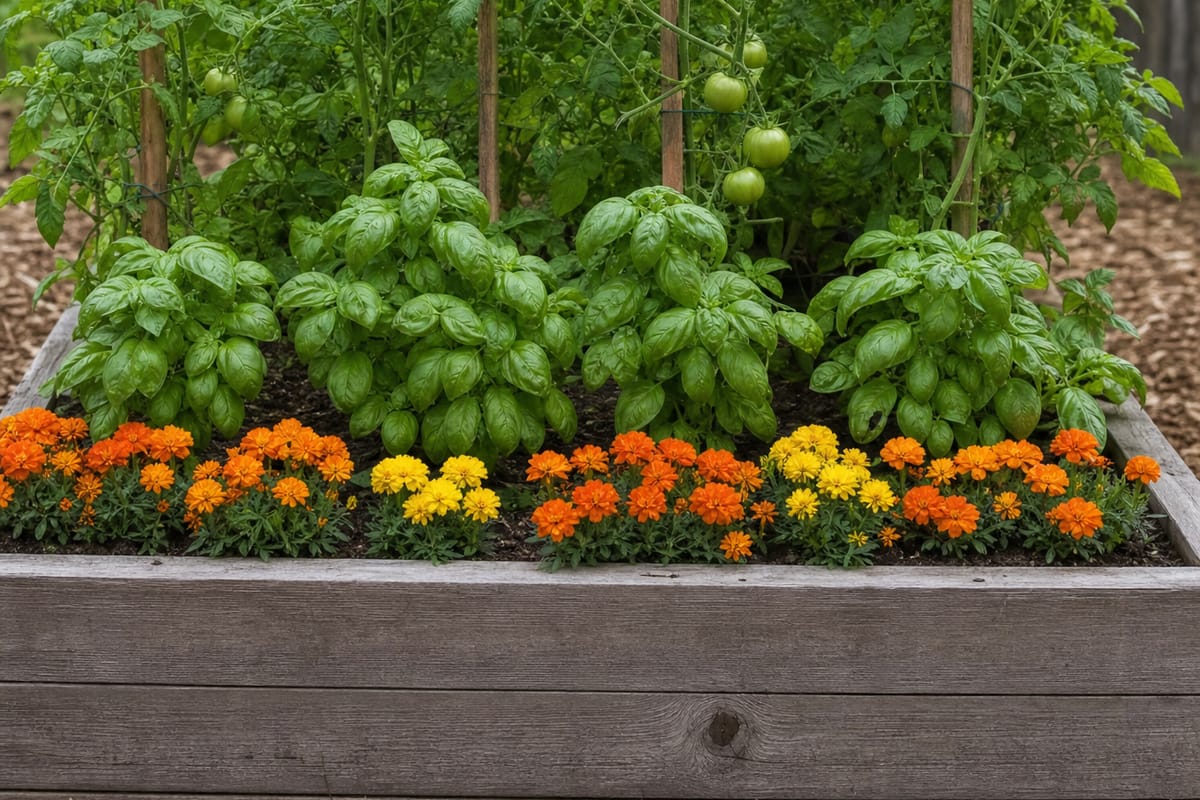
Marigolds are the strongest case on the list, specifically French marigolds. Their roots release compounds that suppress root-knot nematodes, microscopic soil pests that damage tomato roots, and this is one of the few companion planting claims with real research behind it rather than tradition. Plant them as a border and let them work underground. Worth knowing the effect happens in the soil, so a marigold sitting in a pot beside the bed isn’t doing this for you.
Basil is the classic pairing, and the benefits are real if slightly different from the ones people cite. The strong scent does appear to make it harder for pests like thrips and whiteflies to locate tomatoes, and letting some of it flower pulls in pollinators. The famous claim that it improves tomato flavor has never been demonstrated, and I’d file it under nice story. The practical argument is simpler anyway: basil and tomatoes want identical conditions, so they’re easy to grow in the same square foot.
Nasturtiums work as a trap crop. Aphids genuinely do prefer them and will colonize the nasturtiums instead of your tomatoes, which concentrates the problem somewhere visible and easy to handle. Be prepared to actually handle it, though. A trap crop you ignore is just an aphid nursery with extra steps, which I found out the hard way.
Low growers like lettuce, spinach and carrots aren’t companions in any mystical sense. They’re good use of space. Tomatoes grow up and are open underneath, greens grow low and appreciate afternoon shade in high summer. Two crops, one square foot, no folklore required.
Borage brings in bees reliably and is nearly impossible to kill. The hornworm-deterrent claim attached to it is the sort of thing I’d treat as unproven. Plant it for the pollinators and count anything else as a bonus.
The ones to genuinely keep apart
This list matters more than the one above, because these failures are real and expensive.
Potatoes. Both are nightshades and they share diseases, including early and late blight. Planting them together builds a bridge for disease to walk across. This is the pairing I’d break up first.
Corn. The corn earworm and the tomato fruitworm are the same insect. Growing both together is catering.
Fennel. It releases compounds that inhibit the growth of a long list of neighbors, tomatoes included. Fennel gets its own corner away from everything, which is a shame, because it’s a beautiful plant.
Brassicas (cabbage, broccoli, kale, cauliflower). Heavy feeders competing for exactly the same nutrients, and they’d rather be cooler than tomatoes want to be. Nothing dies. Both crops just do worse than they would have apart.
Why any of it works
When companion planting does something, it’s usually one of three fairly mundane mechanisms.
Scent masking, where a strongly aromatic plant makes it harder for a pest to find its target by smell. Trap cropping, where something more appealing pulls pests off the crop you care about. And habitat, where flowering companions feed the pollinators and predatory insects that then patrol your beds free of charge.
There’s no mysticism in it anywhere. It’s chemistry, insect behavior, and real estate.
A layout worth copying
| Position | Plant | Why |
|---|---|---|
| Center | Tomatoes | Main crop |
| Interplanted | Basil | Scent masking, pollinators once flowering |
| Border | Marigolds | Nematode suppression in the soil |
| Edges | Nasturtiums | Aphid trap crop, if you’ll tend it |
| Beneath | Lettuce | Uses the shade, saves the space |
Potatoes, corn, fennel and brassicas go in a different bed entirely.
Garden Planner Pro includes companion planting guidance and filtering across 440+ plants, including which are pet-safe, which helps when you’re working out what can share a bed before you commit the space to it.
None of this substitutes for the basics. A tomato in poor soil, crowded against its neighbors and watered erratically, is not going to be rescued by a marigold. Get soil, spacing and water right first. Then use companions to tilt the odds a little further your way.