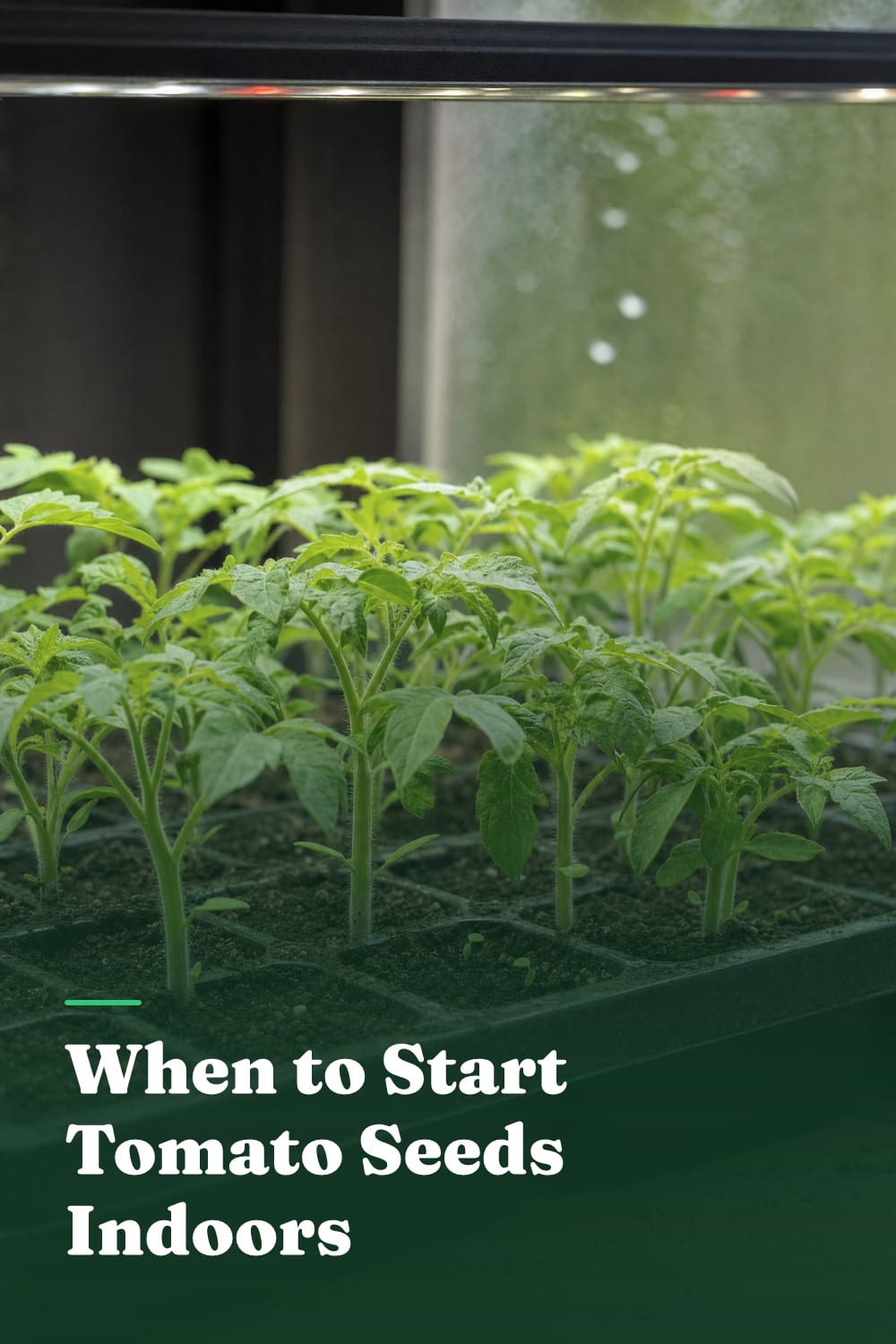
When to Start Tomato Seeds Indoors (by Frost Date)
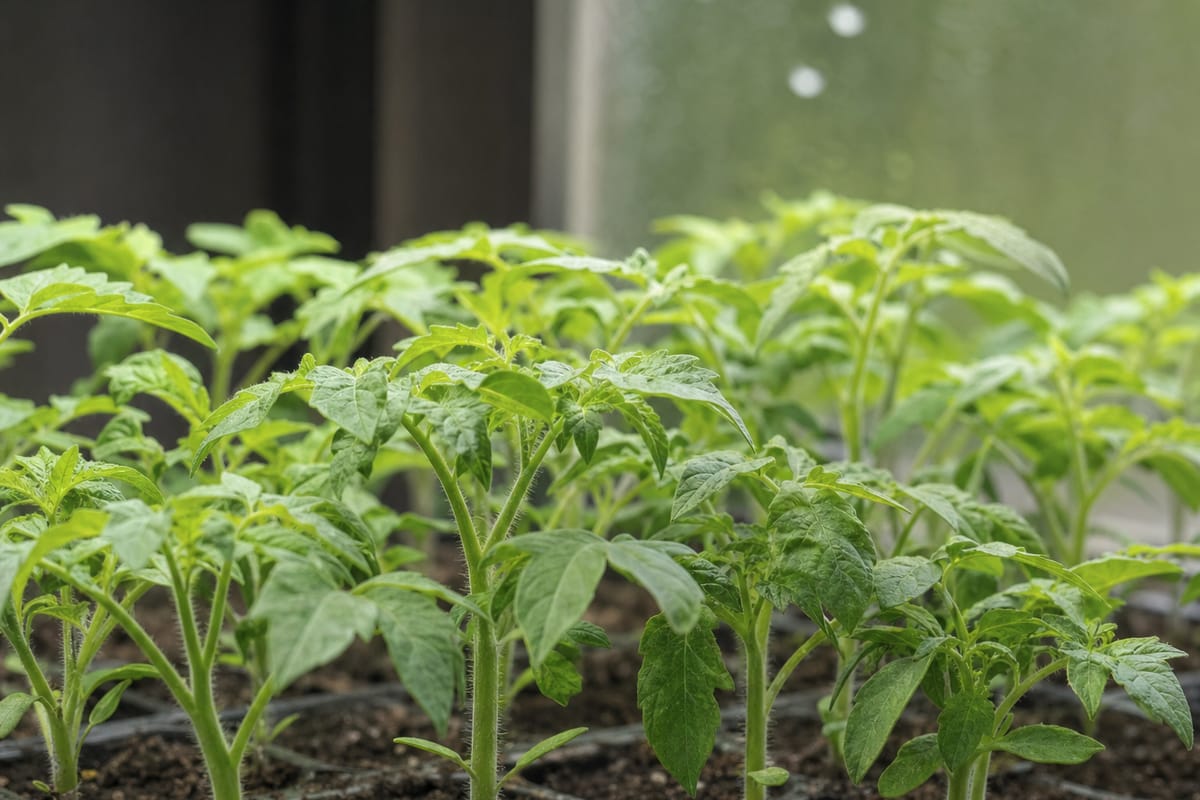
I started tomatoes in January once.
It was February that felt unbearable, the seed catalogs had arrived, and sowing something seemed like the obvious cure. By the time it was safe to plant them out I had a windowsill of pale, floppy, two-foot plants that had been outgrowing their pots for a month. I potted them up twice. I staked seedlings, which should have told me something. They went in the ground exhausted, and a neighbor’s plants started six weeks after mine caught up and passed them by the middle of June.
Starting too early is the most common way to ruin a tomato season, and it’s entirely a discipline problem. The rule that avoids it is short.
Six to eight weeks before your last frost
That’s it. Count back six to eight weeks from your average last spring frost date and sow then.
Tomatoes have no frost tolerance whatsoever, so they can’t go outside until frost danger has passed, and six to eight weeks of indoor growing produces a plant that’s big enough to transplant without being so overgrown it stalls when it gets there.
Where you land in that range depends on your light. If you’re working with a sunny windowsill, take the six. Weaker light produces leggier seedlings, so you want less time for that to happen, and smaller transplants catch up fast anyway. If you have decent grow lights, eight weeks gives you a bigger plant and earlier fruit.
Counting it out
Say your last frost is May 10.
Six to eight weeks back puts sowing between roughly March 15 and March 29. Sow in that window, grow them on indoors, then transplant after May 10 once nights are staying above about 50°F.
The same method covers most warm-season crops and only the number changes. Peppers and eggplant want 8 to 10 weeks, so they go in earlier than tomatoes, which surprises people who assume everything starts at once.
If you don’t know your frost date, look it up by ZIP code through NOAA or the National Gardening Association, or ask your regional extension service, which usually has better local resolution. Garden Planner Pro fills your frost dates in from your location and counts back for 440+ plants, which removes the arithmetic and, more usefully, removes the temptation to start early because a date on a screen is harder to argue with than a feeling in February.
Getting seedlings that are worth planting
Timing gets you to the starting line. These are what produce a stocky plant rather than a tall sad one.
Light, and more than you think. Seedlings want 14 to 16 hours of bright light a day, and a windowsill in March doesn’t come close, whatever it looks like to your eye. A cheap LED grow light a few inches above the plants beats the sunniest window in the house. This one factor causes most legginess.
Warmth to germinate, then take it away. Tomato seed sprouts fastest at 75 to 85°F. A seedling heat mat speeds germination considerably. Take it off once they’re up, because heat after germination encourages stretching.
Pot up once, and bury the stem. When the first true leaves appear, move them into a larger pot and set them deeper than they were. Tomatoes grow roots along any buried stem, so a leggy seedling can be partially rescued by burying it, and any seedling gets a stronger root system this way.
Harden off before they go out. Over 7 to 10 days, put them outside for gradually longer stretches. Seedlings moved straight from indoors into full sun get scorched in an afternoon, and it’s a miserable way to lose plants you’ve grown for two months.
The two other timing mistakes
Ignoring soil temperature is the big one. Air can feel like summer while the ground is still cold, and tomatoes set into cold soil sit and sulk for weeks rather than growing. Wait for consistent 60°F soil, and a five-dollar soil thermometer settles the argument.
Skipping hardening off is the other, and it’s usually impatience at the very last step, which is a frustrating place to lose a season’s work.
Find your last frost date, count back six to eight weeks, and then hold your nerve through February. That last part is genuinely the hardest, and it’s the one that made the difference for me.